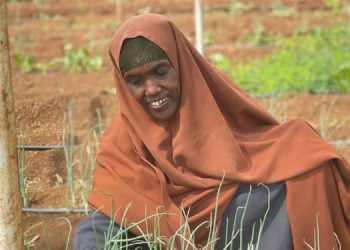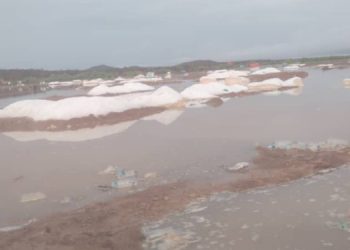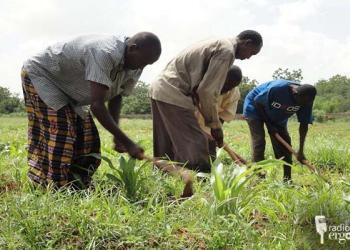


(ERGO) – Mohamed Ali Mohamed, a farmer in southern Somalia’s Marka district, has been faced with uncertainty after his coveted 1.5-hectare farm was suddenly flooded by water from an irrigation canal, destroying the sesame, tomatoes, pumpkin, beans and cucumbers he had planted in January.
He is among 150 farmers in Buufow Ba’ad village on the outskirts of Marka, Lower Shabelle, counting losses after the canal overflowed. He is struggling to support his family and his wife now goes out to collect firewood and livestock fodder to sell to feed their eight children.
“We make a living from the firewood and grass that my wife sells, that is how we provide for our children. Our farm is no more. I took loans from a shop to invest in my farm, I was hoping to repay it when I get the harvests,” said Mohamed.
He had invested $400 to cultivate his farm and buy seeds and doesn’t know how he will repay.
Mohamed noted that the water canals has not been repaired in the past two years. He said a group from the farmers’ association used to do routine repairs to the canals although they stopped providing the services due to financial constraints.
“I worked on this farm for days; we can’t wait for the water to dry up and then start planting again. We need food. We invested our money in the farm and we don’t have money. I’ve been a farmer since the Somali civil war, I don’t know anything else. I don’t know how to make a living from the sea, I was always a farmer,” he said.
Mohamed had been planning to take his children to school for the first time after harvesting in March.
Isaq Abdulle Yabarow, a father of five children, also lost his crops on his 1.25-hectare farm. He had planted sesame seeds last October for the first time since returning to the village from a decade away living in camps in Mogadishu.
He had invested $700 including a a$500 loan and had planned to harvest on 15 February.
“I had left my farm 10 years ago, I was an IDP in Mogadishu. I returned to my farm as I felt there was peace and order in the area. I started working on the farm that was passed on to me by my parents. My farm is far from the city and there is insecurity, people don’t walk at night, and the water started to flood our farm at night,” he said.
Ishaq said that they had been receiving $70 cash aid from Marginalised Communities Advocacy Network (MCan) since coming home, but he really hoped he would no longer need to depend on aid if his farm became productive again.
“The losses we incurred were caused by flood water. We don’t know where to begin now, we are stranded now, we don’t know what to do. We are appealing for help with this issue,” he said.
Hussein Abdi, an elder in the area, said that the volume of water in the river at Janale had risen unexpectedly, forcing excess water into the stream that enters the canal in Marka.
Those affected included people who had returned to their farms from IDP camps as well as locals who had never left their village. the river Hussein said the flooding had devastating effects on the productivity of the village as farmers had not planted their crops for a long time, due to recurring droughts and floods. They had shared their concerns with local authorities who are tasked with opening and closing the gates to the water canals.
“If it was during the day we would have dealt with the water, but people are not allowed to walk at night. We spoke with the authorities and they told us that they didn’t have the capacity to deal with the unexpected flood water,” he said.
Hussein said their farms are located next to a military base and farmers and locals are expected to stay at home during the night time due to possible insecurity incidents. He added that farmers were unlikely to plant again until the canal had been repaired, which in turn would have huge effects on those dependent on farms for a living.