

(ERGO) – Sanag pastoralist, Yusuf Hassan Ismail, walked a gruelling 75 km from Goof to Erigabo with his four camels he wanted to sell in the market last month, only to find himself left high and dry without anything in his pocket to take back home.
He had heard about the cash crisis in Erigabo livestock market but had judged the alternative of walking to Burao market 420 km away as impossible for him and his camels without transport.
He clinched sales of his two younger camels for $450 each and his two older camels for $900 each in Erigabo, hoping to return home with $2,700 and pay off some of his debts at local stores back home in Goof.
However, despite the agreed sales of the camels, he was not able to get any of the money he was owed due to the buyers’ inability to come up with the cash immediately.
The downturn in the local economy in this part of Somaliland is having a major effect on livestock markets as well as on the local pastoralist communities.
“That was harsh! I came with four camels and I am leaving with nothing! I still have dust on me from the long walk and I’ve not even taken a cup of tea. I brought the animals here but I can’t get to a hotel or restaurant or have a rest because I don’t have my payment. Now I have to search for people I know in the town and think about whom I should visit to get lunch,” Yusuf complained.
Pastoralists bringing their animals to sell in the biggest market in Erigabo have been experiencing delays of at least two months before they receive their money.
Like most pastoralists, Yusuf’s family has always depended on income from their livestock to pay for what they need. Every month, he sells off one of his goats to buy food supplies. Currently, he is worried about his eight children and nephew who have dropped out of school as he couldn’t pay the $225 fees. He has been contemplating a move to the town to look for ways to make ends meet.
“This is very difficult. So my message is that whomever it concerns or can do something to alleviate the crisis should swiftly try to avert the situation and give orders to the livestock brokers, because the pastoralists are getting vulnerable,” he stated.
Pastoralists normally sell their livestock through brokers like Hussein Warsame Farah, who works as a broker in Erigabo market. Hussein says the current lack of spending power has slowed the livestock trade, with sellers having to wait weeks before receiving payment for their livestock.
In one case, he brokered the sale of livestock worth four million Somaliland shillings (about $430) although the buyers were unable to meet their obligation to pay.
Last year, Hussein was called four times to the local police station as livestock sellers reported him for failing to pay them their money. He was forced to pay the pastoralists with his own money, whilst he waited for the buyers to pay him.
“The number of goats and camels arriving at the market were increasing but as there was no money around the animals were just accumulating there on sale in the market. Eventually the brokers started selling the livestock on credit,” Hussein explained.
Brokering means ensuring a workable deal for both buyers and sellers, so the brokers came up with a policy of giving the buyers two months to make their payments. Pinning them to this agreement is proving challenging.
“We ask the business people buying the animals to pay us back, we try to make noise in every way. We don’t get the money easily. There are some people who do just pay back, but they are not many. The pastoralists selling are not always paid on time,” he said.
Some of the pastoralists push the brokers for a down payment or to pay for food supply from the local stores to cover their immediate needs.
Pastoralist Mohamud Abdi Osman brought two goats to the market. He sold them both but has not been paid at all.
“This is discouraging, by God. We might as well slaughter our animals and not even come to the livestock markets. So that is a big issue in this area. You give up your animals and you have to wait for a long time for payment. We don’t have food, or clothing, it’s hard to make ends meet,” Mohamud complained.
Meanwhile, butchery owners in Erigabo have witnessed a drop in demand for meat as locals with little disposable income are cutting down on meat consumption.
Siham Awil Ismail, a meat seller in Erigabo, says the economic crisis is affecting everyone, and she is struggling to earn a living from her butchery to support her nine children.
“Some families take just 5,000 shillings [half a dollar] worth of meat and some of them take it on credit to pay back in a month. Sometimes it takes two months to collect the money,” she said.
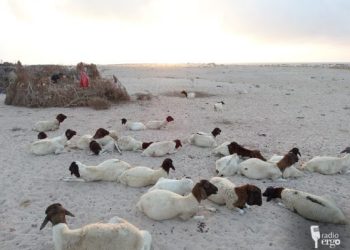
As word of the difficulties spreads, many pastoralists in the rural areas are choosing to keep their livestock for the time being rather than sell for credit in Erigabo market.