

(ERGO) – Farmers in Somalia’s Bari region are struggling to recover from the impact of drought that has forced many of them to abandon agriculture and turn to other ways of making a living.
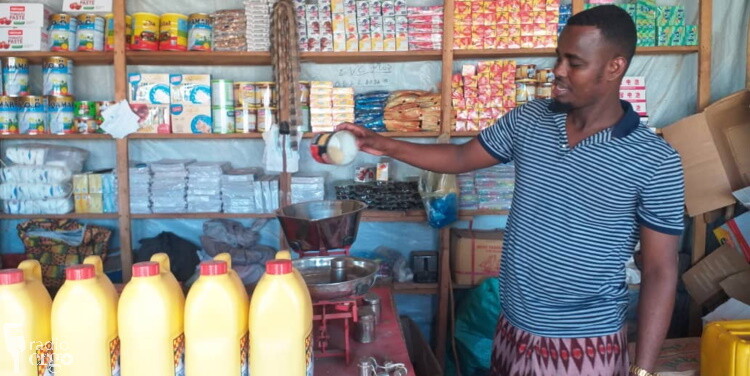
Mohamed Yasin Mohamed, 58, lives in Bareda district on the far northeastern tip of Puntland with his wife and 13 children. Last year, he put aside his farm tools after being defeated by a succession of livelihood frustrations and opened a shop instead.
He had been in farming for nearly 10 years, depending on the sale of fresh vegetables and dates. However, prolonged water shortage meant he could no longer sustain the farm.
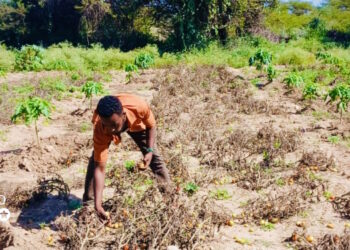
He told Radio Ergo’s local reporter that a combination of drought and crop pests destroyed all his produce and in February 2023 he lost the entire $500 he had invested in seeds and other farm inputs.
He tried a brief stint as a middleman selling fish from fishermen to wholesalers but that didn’t work very well.
Last March, he managed to put together substantial investment of $15,000 comprising of $10,000 in loans and a $5,000 contribution from his relatives to open a large shop. The business is currently making him $20 profit a day.
“Since I started my business we thank God as my family is doing well,” Mohamed said. “I run around taking care of my business and that’s how I’m now making a living for the family.”
The business has enabled him to re-enroll four of his children back into Bareda school after they had dropped out due to financial constraints. He is able to pay $60 for their school fess and to put three meals a day on the table.
Nevertheless, Mohamed holds out hope of being able to revive his two-hectare farm one day in future.
“My plan after I settle my debts is to resume farming and install irrigation pipes. I see that there is no better source of living that the farm. So my aim is to resume farming and improve the farm,” he stated.
Finding an alternative to farming has been more challenging for an older farmer, Mohamud Mohamed Salah, 65, whose 1.5 hectare farm in Bareda hit the rocks in January, when an important water well serving the area dried up.
He managed to get jobs on local construction sites for about two days a week, making $10 whenever he is called for a shift.
“I work in construction, although previously I was a farmer. But as this is a small village, we only occasionally get construction jobs because this is not a big city. You can only find permanent construction jobs in cities,” he said.
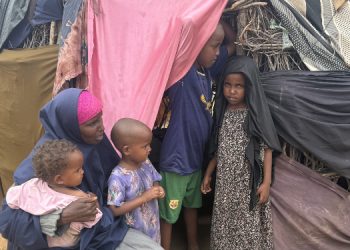
As a father of seven, he is struggling to support the family. His children have dropped out of the school they were attending as he was unable to pay their fees in December and January.
They have lived and farmed for more than a decade in Bareda, where he sees the major challenge to successful productivity as the lack of access to water.
“Our situation is difficult as farmers. We need help to resume farming. What we need is solar pumps to help us get access to water. The water is close to the surface of the ground so if we could get a solar system we could resume our work,” Mohamed explained.
A little further south down the Bari coastline in Bargal, water shortage has had similarly dramatic effects on people’s lives and farming livelihoods.
Abdi Mohamed Bilal dropped out of farming in January due to severe water shortage and pest infestations. He walked away as his $350 worth of seeds wasted on his 1.5 hectare of parched land.
“When the crops started growing, pests locally known as dhamcado attacked them. These pests attack people, goats and we didn’t even know they also invade crops. The pests descend on the leaves and the crop turn white,” he said, describing to Radio Ergo the loss of his farm in Abar-yar village.
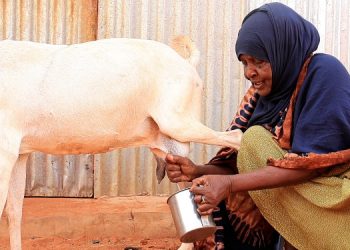
Drought also took a toll on his goats, leaving him with just 30 from an original herd of 100. They were not enough for him to rely on for a stable income.
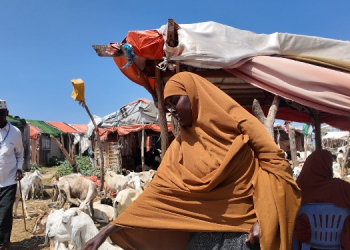
To create an alternative living, Abdi succeeded in putting together enough money to open a shop in Bargal.
He sold his last 30 goats for $2,200 and collected $2,000 from his friends. He was also given another 21 goats which he sold for $1,500.
“The business has changed our lives and we are getting profits again,” Abdi said, estimating his daily income from the shop at $35.
“We sell clothes and that is how I take care of my children. We also offer tailoring services to make further income.”
He has been able to afford the $75 fees to put his six children back in school after seven months out of education due to financial constraints.