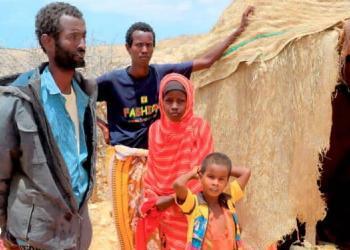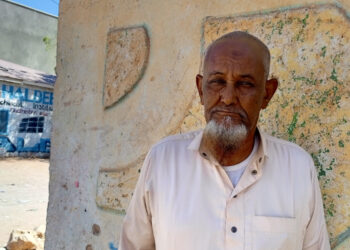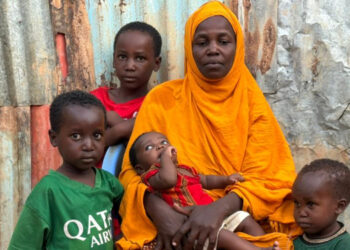


(ERGO) – Guled Elmi Warsame, a pastoralist, is blaming the invasive tree growing rampantly in his village in Awdal, Somaliland, for the deaths of a large number of his valuable livestock.
When all other fodder sources were scarce due to the drought, he allowed his herd to graze on the prosopis juliflora trees.
However, he says that 40 goats and three donkeys died after eating the trees and 12 more of his goats are sick.
He has moved them nine kilometres away from home in Beeyo-Liban to an area where there are fewer of these trees, hoping to keep his remaining 50 goats healthy.
“I attribute the death of my livestock to the garanwa tree,” he told Radio Ergo, using the local name for prosopis juliflora, also known locally as algaroba.
“The livestock teeth get damaged. They get swollen necks and their front and hind legs become weak. When they get weak they die. This month 17 animals have died,” Guled complained.
Failed rain over the past seven months has led to a shortage of grazing, leaving little option for animals to feed on except the ubiquitous prosopis that they would otherwise have ignored.
Guled and his family had five donkeys that they used for transport. Three died in September and another is sick. He fears losing the last donkey they need to fetch water from the well three kilometres away.
“When they consume the garanwa tree their bones get weak. When we load them with heavy things, they sweat and won’t move,” he explained.
He has been unable to sell his goats in such poor condition, which has affected income for his wife and nine children. Relatives have been helping him with occasional food, but mainly he has resorted to taking food on credit from local stores.
“Just recently when my loan reached $1,000, the shop stopped giving me more credit, so now I depend on whatever my relatives give me, that is how we live,” he said.
Guled said he sought advice from a veterinarian in Lughaya and was told to give the animals antibiotics, which he did with no improvement.
There are around 150 pastoralist families in Beeyo-Liban and many have also reported problems resulting from the algaroba tree.
Mahdi Maydal idris says he has lost 44 goats and a camel since July and fears for his remaining 60 goats and nine camels.
He observed that eating these trees made the livestock’s teeth and bones break, as well as causing stomach complaints and general body weakness.
“When the livestock couldn’t get any other fodder, this tree became important. This was the tree they ate most and it led to this problem. It has affected the goats, camels and donkeys,” he complained.
Mahdi has not had any camel milk to sell in the past month, as six of his camels are sick and the goats are thin. He has taken food on credit for the fifth time from a store to feed his family of 12.
“I owe $700 and I am still taking food. I need to pay them back. When you take food and you don’t pay the next thing is that they’ll ask you to pay. That’s the problem we are facing,” he said.
A veterinary advisor to the Somaliland livestock ministry, Dr Mohamed Muhumed Mayrane, told Radio Ergo’s reporter that the prosopis juliflora tree posed health risks to livestock when it was the sole content of their diet. He said the plant carried many strains of bacteria and if consumed in large amounts could affect the respiratory system.
“If animals are dying, people will be reporting the livestock deaths because it’s a major issue for them, so to save the livestock they need to move them to other areas with other grazing and less of these trees,” he said.
He urged the Somaliland government to send experts to the areas that have experienced livestock deaths from the algaroba tree. He advised pastoralists to administer oxytetracycline antibiotics to their animals.
Some research has shown that the green algaroba tree pods have a toxic effect, causing tooth decay and death of animals in the absence of supplementary feeds in the dry seasons. Loss of teeth leads to weakened livestock condition and starvation.