

(ERGO) – Hundreds of Somali families, who returned from refugee camps in Ethiopia two years ago when aid was reduced there, are struggling to survive in a displacement camp in southern Somalia’s Dollow region – where aid has been cut there too.
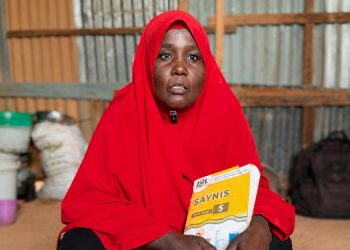
Madino Mohamed Aden, a mother of nine, returned to Dollow after the Ethiopian government and aid agencies cut support for Somali refugees.
Since returning to Dollow, she depended on a portion of aid that her relatives were receiving in Kabaaso displacement camp in Dollow. The cash aid in Kabaaso was cut in May due to overall funding shortfalls.
According to Madino, all she can do now is to ask for small contributions from residents in local neighbourhoods to feed her family.
“Right now, apart from the little breakfast we manage, we can’t afford anything else. The people who used to help us also have nothing any more so they barely find enough for themselves. Everything has been cut off from us. My children are really suffering. We were depending on whatever our hosts got that they shared with us,” she said.
Madino used to be given five kilos of assorted items and 2.5 litres of oil by her neighbours in the camp, after they had collected their $80 cash aid from WFP.
Now she walks around the camp most of the day looking for small cleaning jobs or handouts, but there is little work and too many women looking for it.
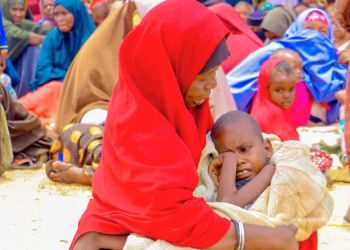
Some of her children have developed malnutrition.
“I have one child who is severely malnourished. I take him to the place where children are measured, and they also give him nutritional sachets. I gave him the five sachets they hand out. There is no organisation or any other place from which we receive help. Hunger is our biggest problem right now,” she said.
Three of her school-age children are at home because she cannot afford the $5 monthly fees. Some free schools exist, but they are full. She said the worry about her children’s future weighs heavily on her, as she is the only one supporting them because their father is elderly and unable to contribute.
Madino’s family returned to Somalia in 2023 after more than a decade as refugees in Ethiopia, leaving only when ration cuts made life in the refugee camps unsustainable.
Many others in Kabaaso share a similar experience. Amino Abdi Ali, a mother raising six children alone, relies on the few dollars she earns from occasional cleaning jobs. She makes no more than $3 a week, which isn’t enough for their basic needs. When she finds no work, she begs or puts the children to bed without food.
Access to minimal supplies of water is another challenge.
“Everything, including water, costs money. We often cannot afford the $0.6 needed to buy a jerrycan from the camp taps. Sometimes we rely on carrying water from the River Juba or sending the children to fetch one container. When God provides, we buy; otherwise, we carry it ourselves,” she said.
Her daughters aged 10 and 12 have to walk more than half an hour to the river and due to hunger they are exhausted, often taking a whole day to fetch and bring back 20 litres of water. She also fears for their safety on the walk and because neither child can swim.
Amino has suffered from chronic illness for three years and the lack of nourishment is affecting her badly.
“I am sick and struggle with anaemia. A few years ago, I was given blood during childbirth. The heat of the sun and heavy work affect me badly, but there is no one else to look after my children except me. I cannot sleep while they are hungry. I am forced by necessity to go out and look for whatever they can eat,” said Amino, who is separated from her children’s father.
Amino’s family returned in 2024 to Gedo from Ethiopia’s Liban zone, where they had lived as refugees for more than a decade.
Others who returned to Dollow in 2024 include Suldano Abshir Ali, who left Boqol-Maayo refugee camp in Ethiopia when life became too hard without aid.
She set up a small grocery stall in Kabaaso IDP camp in Dollow, taking small loans to keep it going. She earned two to three dollars a day from her stall.
However, her business collapsed in July after the aid cuts were implemented, which left most of her customers without cash to buy from her.
She fed her remaining food stocks from the shop to the children. She also has a $50 debt outstanding with no means to repay.
“We are under a lot of pressure. We are suffering from extreme food shortages, and I only cook once a day for my children. We have to buy water – a 10-litre container costs us between five and 10 shillings and we have to queue for it,” she said.
“We need support in the form of food, water, and whatever else is possible.”
Squeezed on both sides of the border, these struggling Somali families who have lost their livelihoods face an uncertain future without any assistance and no alternative sources of living.