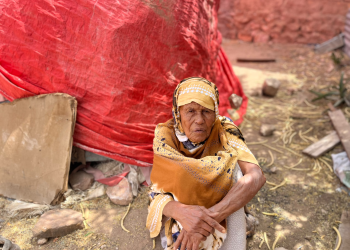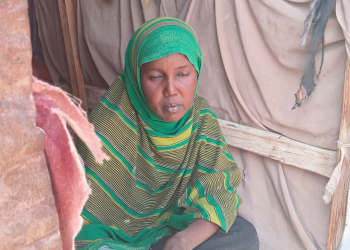


(ERGO) – Since setting up a small food shop in the shabby camp she lives in in Mogadishu, Fadumo Adan Warsame, a 44-year-old widow, has not had to worry about how to put food on the table for her children.
“We get to cook every day now and we don’t go hungry,” she said. “I was getting worried before, if someone doesn’t have support they worry, you know. Since we received funds to invest in a business the anxiety has disappeared,” she said.
Fadumo was one of 100 women breadwinners in IDP camps in Kahda and Garasballey districts to receive $350 to buy supplies or equipment to make their businesses more sustainable.
“Personally, I opted to invest the money in buying more food items such as flour, rice, sugar, which is what I focused on. I thank God that I’m able to sell things as food items move comparatively fast,” she said.
Compared to the $3 a day she was earning from a table beside her shack in Haq-dhowr camp in Kahda, she is now making $5-10 a day from the shop she opened in the camp centre. This covers the family needs and allows her to save. She valued the business training she received alongside the fund.
“I was advised to set up my business in a strategic place. I’m also told to train someone else to run it in case I fall sick or get busy with something else. I learned about the importance of books and pens too as the business needs a record of the stock and profits,” she said.
Fadumo, her elderly mother and six children were displaced from Yaaq-Bari village in Lower Shabelle in 2019. She ran a shop there but had to leave everything behind when they fled. As an experienced businesswoman, she knows how important it is to manage funds well.
“You can’t watch your neighbour go hungry so of course you have to give food out on credit, but I have to be careful not to run out of everything. I need to be repaid to restock but some people move away before repaying me,” she complained.
Safiyo Abdi Malin, 25, used her funds to open and equip a shop selling her own woven mats, baskets, and cultural items that she makes. She bought rattan, reed, sticks to make hand fans, needles and thread. She learned her skills from her mother at a young age.
Now making $8-12 a day, her family is eating well. Life has improved from when she used to hawk her handicrafts in the city.
“It has transformed us, I never thought I would get to this level,” she said.
Safiyo, her husband, her parents, and siblings were displaced from Oflawe village, 80 kilometres west of Baidoa. They were farmers doing well until the recent drought pushed them to destitution and displacement and destitution. In 2021 they joined Al-Hidaya camp in Garasballey.
Her husband was earning a pittance digging waste pits but now works with her in the business that they hope will enable them to save to move out of the camp.
A younger family breadwinner, Shukri Abdinor Ibrahim, 17, developed her tailoring skills and opened a women’s clothing and repair shop.
Her father is paralysed and cannot work so the family was dependent on her mother washing clothes.
“Life for my family has got better, I take care of all the bills now,” said Shukri, now making $5-7 a day to support her parents and eight siblings.
“I was trained in tailoring and business practices including working to a timeframe and marketing my products. I have a large customer base and many people in the area come to me for clothes.”
Shukri and her family were displaced from Kuntawarey, Lower Shabelle, where drought ruined their three-hectare farm and killed off their 50 camels and 70 goats forcing them to migrate in 2017.
This small business investment project funded by the German government was implemented by NGOs, Nomadic Assistance for Peace and Development and Terre des Hommes.