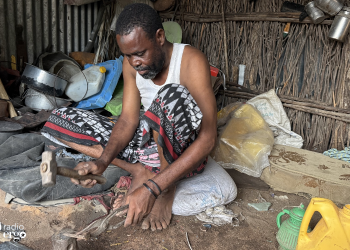


(ERGO) – Abdi-Hodan Mohamud and his family of 12 people have been faced with food shortage since their farm harvest was destroyed by flash flooding in Burtinle in May.
He is among 350 farmers in this part of Nugal, in Somalia’s northeastern Puntland state, who lost their crops to the floods. They had taken loans to invest in planting and were mostly planning to harvest in June.
Abdi-Hodan, wo has been farming for four years, was growing tomatoes, pepper, watermelons, oranges, papayas, and bananas on his one-hectare farm. He will not have any harvest this month.
They can only cook one meal a day using food from their relatives, who found out about their situation.
“If I tell you the truth, things have changed. We used to pay for our children’s school fees but they were expelled from the schools. We also used to get three meals but now we only eat once,” he said.
His three children dropped out of grades three and four in Burtinle Primary and Middle School in May as he could not pay the fees.
He was unable to borrow money for their education because business people found out that his farm was ruined and therefore would not offer him any more credit. He already took $1,300 in loans for his farm and family needs before the floods.
“Vegetables were a very important source of income for us. When we pay the workers and the fuel and other farm inputs, we were still expecting to have $3,000 in income from the farm,” he said.
Abdi-Hodan described how farmers in the area had been yearning for rainfall and had turned to well water for irrigation as the climate in Burtinle had been erratic. However, when the rain came on 13 May the torrents of water unexpectedly gushing down a valley caused major destruction.
Another local farmer, Abdiaziz Ilmi Haji, has also been struggling to make ends meet since the flooding destroyed his crops.
His family of 10 children has been living sparingly since mid-May on the $100 sent by their relatives abroad.
He hoped to earn at least $2,500 from his crops that included various vegetables and grains. Now he has had to turn to his friends and relatives for food handouts.
“I have laid off my six employees. We now depend on other people; some people get help from local relatives while others get help from the diaspora. But there is nothing left on the farm that we are counting on,” he said.
He sold off a 20 by 15 metre plot of his land for $500 that he is saving to continue paying school fees for his five children in Burtinle School.
Abdiaziz, who has been a farmer for 16 years, told Radio Ergo he was only 10 days away from harvesting his crops. With huge demand for the fresh produce, he hoped to sell to various towns in Puntland.
“When Burtinle has enough food supply, we used to send the food to Garowe or Galkayo. We would send hot peppers, peppers, okra, and tomatoes. These four crops were profitable,” he said.
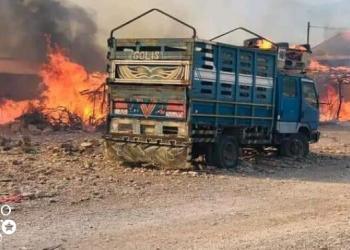
Besides the farms that were washed away, 40 families have lost their houses, according to Burtinle local authority.
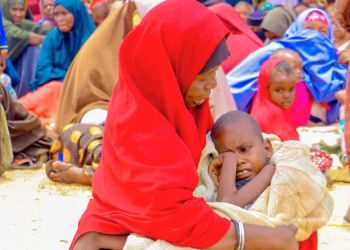
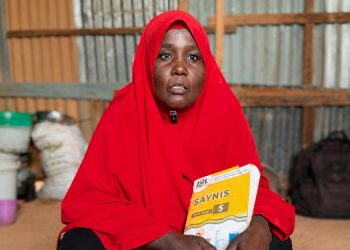
Wardi Said Ismail and her eight children lost their iron-sheet house and small stall. She has now moved to higher ground although they are short of food and do not have proper shelter.
“It rained at night, we hadn’t been prepared for the rain,” she recalled. “It has had a huge impact on us. It didn’t wash away any people but we have lost our property. We have moved to higher ground and it gets very cold here, it’s not a good place to live. This place is a danger to the young children who could get sick,” she said.
Her small business valued at $600 was the only source of income for her family. They now depend on food they get on credit from stores in Burtinle. They have not received any aid.
The chairman of Burtinle district authority, Sayid Mohamud Hirsi, told Radio Ergo that they are working to provide food and clean water to the flood-affected families.