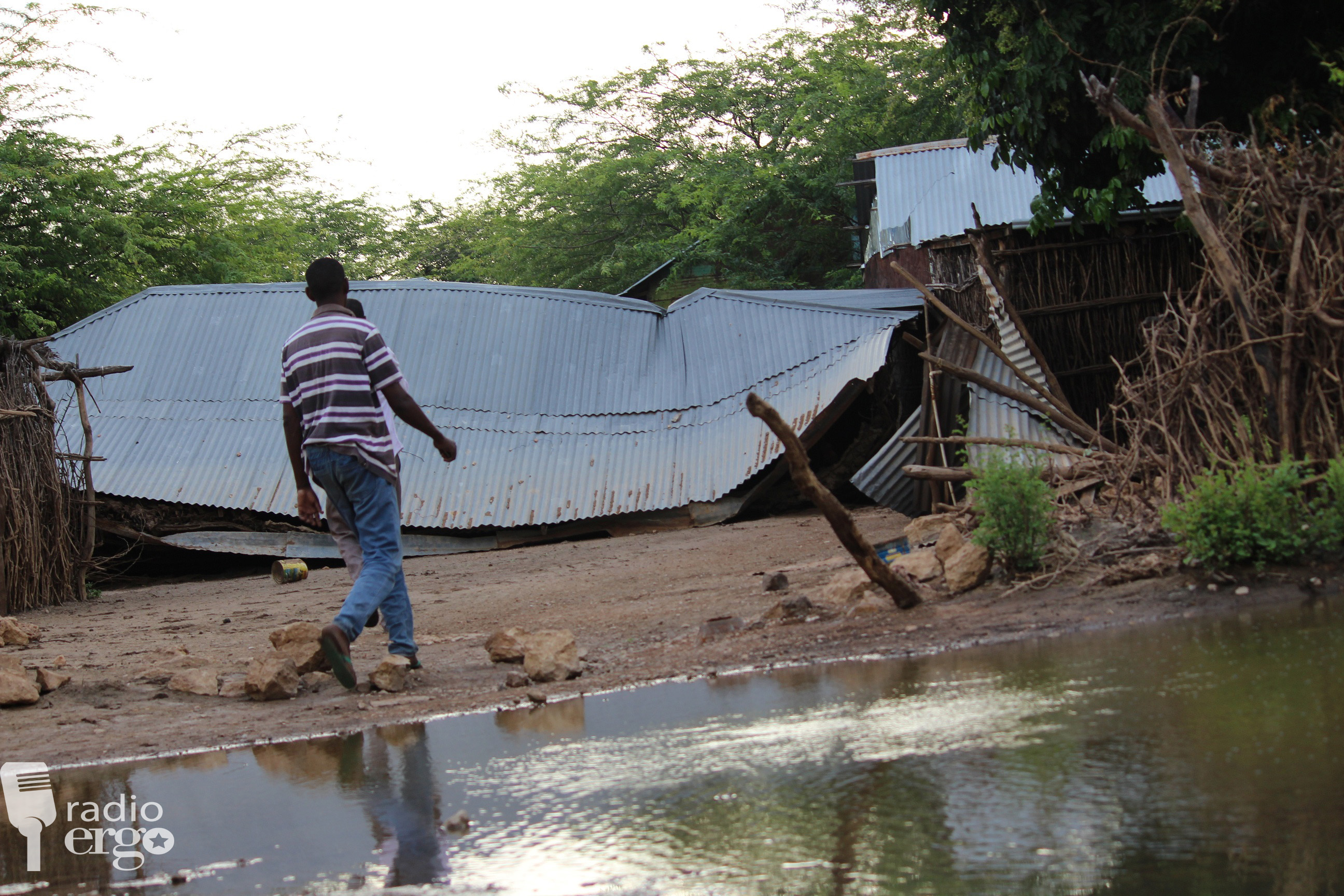


(ERGO) – Hassan Mohamud Godah and his family have been short of food since being hit by Shabelle river floods and forced to flee their home in Badad village, 23 kilometres from the town of Beledweyne on 5 April.
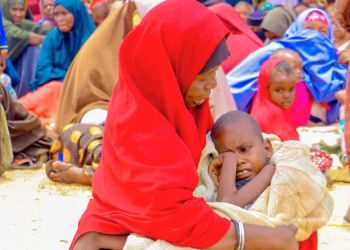
Hassan, his wife and 10 children moved to Guryo-ade where they depend on the villagers for food handouts, eating just one meal a day, and sleeping under a tree.
“We are living under an Ali-Garoob tree. There is no shelter or toilets – if it rains tonight we won’t have any protection. So our situation is hard, it gets very cold at night and we don’t have a place to shelter us,” he said.
The floods struck as he was preparing to plant his crops in the rainy season. Water gushed into their iron-sheet house, washing away their bedding and utensils, and he had to pay $50 to transport them away to safety.
“It was a dark night while we were asleep when the water came in. Unexpectedly, it took the house. We cried for help, I asked the people to help us deal with the children. We got a van to evacuate the children, although the roads were totally impassable,” he explained.
His four hectare farm, where he had planted different crops including watermelons, cantaloupes, and tomatoes in February, was washed over. He had taken $2,500 in loans from local businessmen to invest in his farm and hoped to repay everything after reaping his harvest. His hopes have now been dashed.
“For us, who depend on farm produce to earn a living, we have been faced with hardships. The farm has been flooded, and we don’t have the money to cultivate the land or to get rid of the water, there are no seeds,” he said.
The village they are in now has no job opportunities and they still cannot go back to their home as it is underwater.
They are among more than 1,500 families displaced by floods in nine villages in Beledweyne.
Arabo Omar Abdulle, a mother of 12, also lost her crops in the floods. They moved from Leebow village to Shir-Kane’o where she quickly put up a hut.
At the beginning of April her family had now worries about getting food, but after this setback they are taking food on credit and cooking one meal a day.
“My children don’t have a house or food and for me that is my biggest concern, that is our situation and we pray for God’s help. We have fled the floods and we are now sleeping under a makeshift shelter,” said Arabo.
Their new village has no wells and locals depend on water collected in ponds or brought by water trucks that bring water from 20 kilometres away. A barrel costs $3, which is out of Arabo’s reach, so they sometimes drink rainwater that collected on the ground and is not clean.
The floods destroyed her five hectare farm where she she had tomatoes, watermelons, peppers and onions that were almost ready for harvest. Arabo’s elderly husband does not work and the farm was their only source of income.
In the last four months, she has incurred a debt of $1,000 on food for her family. She can no longer take more debts before paying off the previous ones.
Six of her children were in primary and middle school although the school closed after the floods.
“My children were studying although they are now at home, there is no school here, we are just struggling to survive,” she said.
According to the Ministry of Relief and Disaster Management in Hirshabelle, the flood-hit families have generally not received any aid.
Coordinator of the ministry in Hiran region, Abdisalan Farah Ahmed, told Radio Ergo that these families are vulnerable and need urgent humanitarian aid. He indicated that the ministry does not have the capacity to help them.
“We as a ministry until now have visited all the displaced people, and we have noted down their situation. We shared our reports with the aid organisations, the Hirshabelle administration, and the Somali government. In fact, as a ministry, we are striving to provide immediate assistance to those people in terms of shelter, food and water,” he said.
The villages of Bad, Qoqane, Garash, Leebow and Shinile have seen a mass exodus of residents fleeing floods. The ministry warns that the impact of the floods may increase as the Gu rains still continue and the water levels in the river remain high.