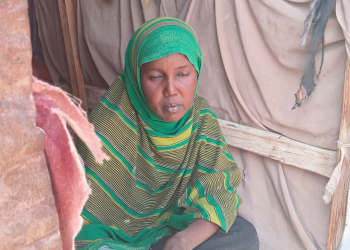


(ERGO) – Shamso Mohamed Isaaq, a small businesswoman retailing locally grown produce in the southern Somali town of Baidoa, has finally been able to put three meals on the table and pay her children’s school fees for the first time in months.
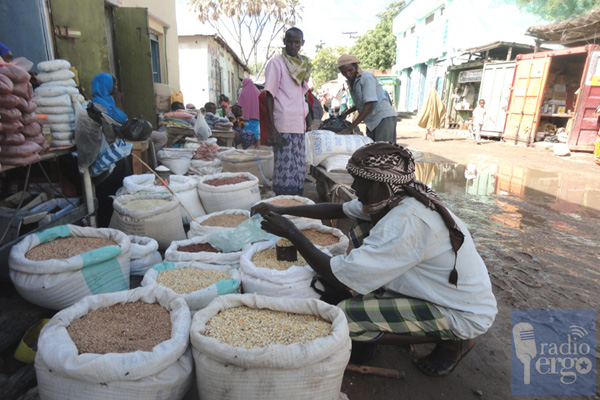
She recently bought three sacks of maize, beans, and sorghum harvested by local farmers at an affordable price. At her stall in Godey market, she has been selling the produce in small amounts, and making 400,000 Somali shillings ($15) a day.
Since the beginning of the year, with little agricultural produce available due to the drought, prices of scarce grain were out of Shamso’s reach, forcing her out of the market.
“I was unable to sell anything when sorghum prices rose. I didn’t do any business at all for four months and just stayed in the house,” she said.
Her hardships were compounded by her husband walking out on her and their seven children last November. She was forced to ask for help from relatives for one meal a day.
Shamso is among those who have gained from the availability of local produce after the recent harvest season that has pushed down prices.
According to the head of the farmers’ cooperative in Bay region, Abdinor Ibrahim Hassan, more than 6,000 farmers in Baidoa achieved successful harvests after the recent deyr rainfall. A lot of food is now available locally and demand has been high during the month of Ramadan.
However, the picture is mixed as whilst small businesspeople and local consumers are satisfied by the drop in food prices, local farmers have been disappointed.
Local farmer Mohamed Ibrahim Addow harvested 21 bags of sorghum, 24 bags of beans and 18 bags of maize from his five-hectare farm in Bohol. He sold it all in Godey market but complains that the prices were low.
It was the first time he had harvested anything in four drought-stricken years, which should e something to celebrate. The last money he made from the farm was in 2019.
He has been able to pay off the five million shillings he borrowed from local stores to buy seeds for the farm and food for his family of five children over the last long months.
However, he is very concerned about the low prices.
“The market has become unprofitable. The grain I took to the market didn’t turn out the way I wanted it to. We sold our produce at low prices – I got eight million and a few hundred thousand. I paid for the seeds and the loans but I didn’t get much income besides that,” he complained.
He kept aside eight bags of maize, beans and sorghum, for his family’s own consumption.
“I was taking loans from people in the city and asking for help. I had to move the family to the IDP camps and sometimes we used food aid. That’s how we tried get by for those four years that our farms had laid bare,” he noted.
He and other local rain-fed farmers will be planting again this rainy season, hoping for better returns on the next harvest.
Meanwhile, cheaper food has brought relief to many people in Baidoa, including poor households and families living in internal displacement camps.
Mohamed Ali Derow, 60, has 10 children. He was recently able to buy a kilo of millet for 7,000 shillings, down from 20,000 shillings, so they can now enjoy three meals instead of just one meal a day.
“If grain becomes expensive, it has a heavy impact on the poor people. Now life is very good and everyone is cooking as much as they can,” he told Radio Ergo.
His family had received $70 monthly cash aid from the UN’s World Food programme, which he said was not enough to tide them through the bad times.
Three years ago, he gave up farming on his land just outside Baidoa because the prolonged drought made it impossible to continue growing vegetables and maize. However, he hopes to resume farming if the rain continues and he can find enough money to buy seeds and other inputs for the farm.