Radio Ergo - Somali Humanitarian News and Information
  • Home
  • Topics
    • Latest Stories
    • IDPS/Refugees
    • Natural Disasters
    • Health
    • Social
    • Food Security
    • Education
    • Agriculture & Livestock
  • Programmes
    • Locust Programme
    • Farming Programme
    • Radio Doctor Programme
    • Women Programme
    • Entertainment Programme
  • About Radio Ergo
  • Contact Us
  • blankSomali
  • blankEnglish
No Result
View All Result
Radio Ergo - Somali Humanitarian News and Information
  • Home
  • Topics
    • Latest Stories
    • IDPS/Refugees
    • Natural Disasters
    • Health
    • Social
    • Food Security
    • Education
    • Agriculture & Livestock
  • Programmes
    • Locust Programme
    • Farming Programme
    • Radio Doctor Programme
    • Women Programme
    • Entertainment Programme
  • About Radio Ergo
  • Contact Us
  • blankSomali
  • blankEnglish
No Result
View All Result
Radio Ergo - Somali Humanitarian News and Information
Home AGRICULTURE & LIVESTOCK

Drought-hit Gedo herders turn to farm work near the river Juba

Radio Ergo by Radio Ergo
February 27, 2023
in AGRICULTURE & LIVESTOCK, LATEST STORIES, NATURAL DISASTERS
0
RETURNED REFUGEE FARMER SAYS LIFE IN BAIDOA HAS IMPROVED

Farmers in Southern Somalia cultivating farmland/File Photo/Ergo

0
SHARES
Share on FacebookShare on Twitter

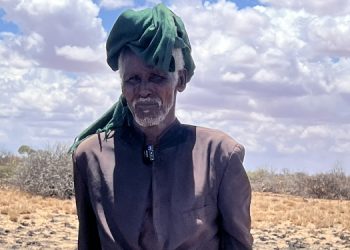
(ERGO) – Abdi Dahir Shide, 48, picked up farming tools for the first time to earn a living for his family after losing his entire herd of 200 goats to the drought towards the end of last year.

He is working on a two-hectare farm in Salbay, 12 kilometres from Luq, after migrating with his family to this area close to the river Juba.

Although there has been a water shortage in the region, the farms in this area use generators to pump water from the river.

Abdi works alongside his two older sons aged 17 and 15, producing maize, beans, and other vegetables for the owner of the farm. He earns $60 a month and the boys, who do not work every day, earn $1.5-2 for the days they work.

Despite leaving his pastoralist lifestyle behind in the village 30 kilometres away, Abdi says he is getting used to the arduous work on a farm and is happy to be able to support his wife and eight children on two meals a day.

“People like us are now doing these jobs to earn a living. We are earning a living whether it’s small or big, although some days we might not earn much if there is no work to do on the farms,” he said, adding that many other people in a similar situation as his were still unemployed.

Around 500 pastoralist families displaced from other villages in Gedo after losing their livestock have also turned to farm labouring on land near the river.

Some of those with some livestock remaining have moved their animals to villages near the river, where they can access cheaper fodder for them.

Ibrahim Gedi Abdi and his family migrated to Awara village, 13 kilometres from Luq, where he was able to get water and fodder for his drought-stricken goats.

His 16 remaining animals have been recovering grazing on a farm owned by a relative, where Ibrahim is putting in work as a farm labourer to compensate.

He sold off four goats in Luq market and has been using the income to support his family of six children.

Ibrahim said they were faced with a difficult situation after losing 150 goats and 30 cows in the drought in Surtage village, 25 kilometres south of Luq.

“We arrived here because of the drought and if you look at it, we have got water and fodder and we now have livestock that we can sell in the market. The healthier goats re fetching good prices currently in the livestock market,” he said.

Most of these migrant families from pastoralist areas are living in poor shelters in villages near the river Juba. However, they are earning a living and avoiding displacement to IDP camps in the region.
Previous Post

Young woman graduate succeeds in her own laundry business

Next Post

Sand dunes burying Mudug village lead to food shortage

Related Posts

Silent disease diabetes takes toll on families in Somaliland
FOOD SECURITY

Silent disease diabetes takes toll on families in Somaliland

June 3, 2026
Teachers jobless as Baidoa IDP schools close due to funding cuts
EDUCATION

Teachers jobless as Baidoa IDP schools close due to funding cuts

May 22, 2026
Somalia live news, Somalia latest news, Mogadishu live news, Somali news
FF Feedback

Radio Ergo audience feedback report 14-20 May 2026

May 21, 2026
Young Somali refugees in Dadaab invest in family-supporting businesses
FOOD SECURITY

Young Somali refugees in Dadaab invest in family-supporting businesses

May 20, 2026
blank
AGRICULTURE & LIVESTOCK

Livelihoods support aids displaced households in Middle Shabelle

May 18, 2026
Small family savings evaporate overnight as Somali 1,000 shilling notes rejected by businesses
LATEST STORIES

Small family savings evaporate overnight as Somali 1,000 shilling notes rejected by businesses

May 16, 2026
Next Post
Somali fishing villages in Mudug battle against sand dunes

Sand dunes burying Mudug village lead to food shortage

FOLLOW US ON FACEBOOK

DAILY PROGRAMMES

IDAACADDA 04-JUN-2026

IDAACADDA 04-JUN-2026 by Radio Ergo

IDAACADDA 04-JUN-2026
Episode play icon
IDAACADDA 04-JUN-2026
June 4, 2026
Episode play icon
IDAACADDA 03-JUN-2026
June 4, 2026
Episode play icon
IDAACADDA 02-JUN-2026
June 2, 2026
Episode play icon
IDAACADDA 01-JUN-2026
June 1, 2026
Episode play icon
IDAACADDA 31-MAY-2026
May 31, 2026
Search Results placeholder
Radio Ergo Weekly Newsletter
We respect your privacy.
blank
blank
blank

© Copyright 2014 - 2024 Radio Ergo

No Result
View All Result
  • Home
  • Topics
    • Latest Stories
    • IDPS/Refugees
    • Natural Disasters
    • Health
    • Social
    • Food Security
    • Education
    • Agriculture & Livestock
  • Programmes
    • Locust Programme
    • Farming Programme
    • Radio Doctor Programme
    • Women Programme
    • Entertainment Programme
  • About Radio Ergo
  • Contact Us
  • blankSomali
  • blankEnglish

© Copyright 2014 - 2024 Radio Ergo