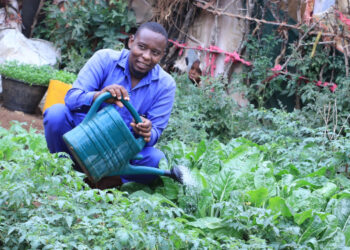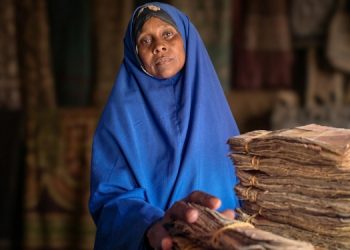


Sahra Hassan Said, 46, made $900 profit from the watermelons, tomatoes, peppers, kale, and pawpaw she harvested in December, and the income has been instrumental in providing food and other basic needs for her seven children.
It is impressive given that she is new to farming in Dharjale, in Iskushuban district of northern Somalia’s Bari region, where until four years ago she lived a pastoralist way of life.
“I sell the produce in Bosaso, Armo, Iskushuban and Timirshe. We load it all onto trucks to be transported and wherever we take it we have other women helping us with sales. We already reaped harvests twice and we are now looking forward to the third harvest,” Sahra told Radio Ergo.
She reinvested half of her profits back into her farm while the rest of the money takes care of her family expenses. She enrolled her children in Dharjale school for the first time in August with income from her farm and is now paying $20 a month for their education.
At the height of the drought in 2019, Sahra’s 100 goats all died and she migrated with her children to the outskirts of Dharjale town, where she has been living with relatives.
Turning to farming with the support of local NGO, KAALO Aid and Development Organisation, has given 160 ex-pastoralist families like Sahra’s a fresh start.
After being given a piece of land and seeds, Sahra was trained for two months in cultivation techniques to increase yields.
“The farm has changed our life. We are doing better and our lives has improved. I have learned about farming and how we can get some income from the fields and how we can take care of the crops. I can even tell if the crops are sick or healthy,” she said proudly.
KAALO installed generators and piping from a borehole, leaving the farmers in Dharjale to pay for the fuel to run the generators for irrigation of their farms.
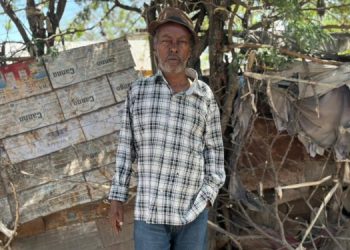
Abdi Ali Omar, 67, has also made a good income to support his family of 12 from the vegetables and grain he harvested on his two-hectare farm. The family can now eat fresh produce while he sells off the rest for cash.
Abdi’s formerly pastoralist family suffered food and water shortage that killed their livestock and left them destitute in 2018.
“The drought destroyed everything, we lost the meat and the milk. But we have now got a farm that has transformed everything, we now get food as well as income,” he said.
Abdi said the KAALO skills training encouraged him to work hard on his farm. He is now planning to plant again for the third time after reaping two harvests since April 2022.
“We sell the tomatoes in the town, and we get them from our land. We get money to be able to buy milk, firewood, and other food stuffs. That is our livelihood now,” he said.
KAALO project manager, Muse Ahmed Muse, said Dharjale’s pastoralist communities have been reeling under recurrent drought conditions since 2016, killing off thousands of domestic animals and causing multiple challenges for the local population.
“We were looking at different dimensions: we wanted to improve food security in the town and also to provide alternative income for the families that have lost their livestock in the drought, as well as looking at improving the nutrition of children,” he explained.