Radio Ergo - Somali Humanitarian News and Information
  • Home
  • Topics
    • Latest Stories
    • IDPS/Refugees
    • Natural Disasters
    • Health
    • Social
    • Food Security
    • Education
    • Agriculture & Livestock
  • Programmes
    • Locust Programme
    • Farming Programme
    • Radio Doctor Programme
    • Women Programme
    • Entertainment Programme
  • About Radio Ergo
  • Contact Us
  • blankSomali
  • blankEnglish
No Result
View All Result
Radio Ergo - Somali Humanitarian News and Information
  • Home
  • Topics
    • Latest Stories
    • IDPS/Refugees
    • Natural Disasters
    • Health
    • Social
    • Food Security
    • Education
    • Agriculture & Livestock
  • Programmes
    • Locust Programme
    • Farming Programme
    • Radio Doctor Programme
    • Women Programme
    • Entertainment Programme
  • About Radio Ergo
  • Contact Us
  • blankSomali
  • blankEnglish
No Result
View All Result
Radio Ergo - Somali Humanitarian News and Information
Home LATEST STORIES

Mudug farmers abandon fields in drought despair

Radio Ergo by Radio Ergo
May 24, 2022
in LATEST STORIES
0
Somalia live news, Somali live news, Radio Ergo news, Humanitarian news, latest Somalia news

File Photo/Ergo

1
SHARES
Share on FacebookShare on Twitter

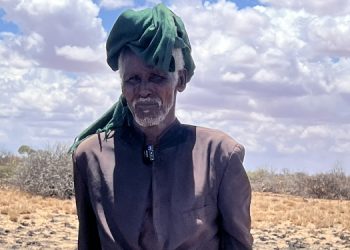
Ali Hussein Yussuf’s last attempt at farming his three hectares of land in central Somalia’s south Mudug resulted in the distressing loss of the 25 kilograms he had planted of beans, maize, sesame, and watermelons. All the plants shrivelled up in the drought-wracked soil.

Ali and his wife and 11 children are now squeezed into a room in his uncle’s house in Amara, two kilometres away, where they fled after abandoning the farm. He took his 30 goats with them, but they are all too thin to either slaughter or sell.

He feeds his family with food that he takes on credit from a local shop. His debt has now accumulated to $457. He fears he might be banned from purchasing any more food. He tried to look for work but could not find a job.

“We used to get seeds for planting from our farms, because we divided the produce into two, one for sale and domestic use and the other for planting. As we did not harvest anything in the last three seasons, we have no seeds now for planting. We can’t afford to buy crops from the markets because the prices have gone up,” Ali told Radio Ergo’s reporter.

“Only Allah can ease our situation if we don’t get help, I can’t imagine what our situation will be in the coming days. Think of a person whose crops have all died. This new life is too much for us.”

Last May, Ali requested the school management to allow his children to continue their studies until he could settle his fee arrears, but his three children in primary school were sent home in November.

The Amara area is controlled by Al-Shabab. There are no IDP camps, so people moving in from the countryside have put up a home near their relatives. Those without relatives have erected huts wherever they could find an open space.

The lack of water and employment are the main reasons for abandoning their farms. Yet they are also struggling in Amara as there are no jobs and the local residents are in difficulties themselves.

According to the Amara village commissioner, there are a total of 1,500 families in Amara now, including the farmers who moved from the rural surroundings in the first two weeks of April, when the drought became unbearable and there were no rains in sight.

Fatumo Muse Yasin, a widowed mother of 12, left her two-hectare farm to come to the village, where she built a room made of corrugated iron on land given by a relative. She feeds her family using dry food she barters for the firewood that she and her three oldest children collect from the forest. She cooks her children one meal a day.

“I make little money from the firewood, it buys me a quarter of sugar and a cup of maize,” she said. “When I have cooked, I use cups to measure out what each child gets to eat.”

Duran Adan Ali used to grow watermelon, beans, sorghum and maize to sell in Galkayo, Adado and Bahdo towns. The farm produce was the only source of income for his family. He abandoned his two hectares after three failed rainy seasons and moved to Amara to work on building sites.

However, the economic impact of drought has made building work hard to find. Duran lives with his wife and seven children in a room he built on land owned by his mother.

“I have nothing except that which Allah gives us, and I have nowhere to go,” a hopeless Duran told Radio Ergo’s local reporter.

Previous Post

Somali students and graduates turn to online education

Next Post

Somali blacksmiths out of business as drought crushes livelihoods in Hudur

Related Posts

Airstrikes wipe out livelihoods in Lower Shabelle farming village
FOOD SECURITY

Airstrikes wipe out livelihoods in Lower Shabelle farming village

April 17, 2026
Somalia live news, Somalia latest news, Mogadishu live news, Somali news
FF Feedback

Radio Ergo audience feedback report 9-15 March 2026

April 17, 2026
Hard-up Awdal farmers turn to gold digging
FOOD SECURITY

Jobless men turn to gold mining in Sanag region

April 16, 2026
Marginalised families in Puntland displacement camps face hunger, discrimination and neglect
FOOD SECURITY

Selling thatching grass in Bari valley provides new income for drought-hit families

April 15, 2026
School closes as UNICEF cuts funding leaving IDP children in Baidoa out of education
EDUCATION

Schools close across Galmudug due to drought

April 14, 2026
Drought-hit Lower Juba pastoralists flee towards the Somali-Kenyan border
IDPS/REFUGEES

Drought-hit Lower Juba pastoralists flee towards the Somali-Kenyan border

April 13, 2026
Next Post
Somalia live news, Somali live news, Humanitarian news, Radio Ergo news, Mogadishu live news, IDPs

Somali blacksmiths out of business as drought crushes livelihoods in Hudur

FOLLOW US ON FACEBOOK

DAILY PROGRAMMES

IDAACADDA 21-APR-2026

IDAACADDA 21-APR-2026 by Radio Ergo

IDAACADDA 21-APR-2026
Episode play icon
IDAACADDA 21-APR-2026
April 21, 2026
Episode play icon
IDAACADDA 20-APR-2026
April 20, 2026
Episode play icon
IDAACADDA 19-APR-2026
April 19, 2026
Episode play icon
IDAACADDA 18-APR-2026
April 18, 2026
Episode play icon
IDAACADDA 17-APR-2026
April 17, 2026
Search Results placeholder
Radio Ergo Weekly Newsletter
We respect your privacy.
blank
blank
blank

© Copyright 2014 - 2024 Radio Ergo

No Result
View All Result
  • Home
  • Topics
    • Latest Stories
    • IDPS/Refugees
    • Natural Disasters
    • Health
    • Social
    • Food Security
    • Education
    • Agriculture & Livestock
  • Programmes
    • Locust Programme
    • Farming Programme
    • Radio Doctor Programme
    • Women Programme
    • Entertainment Programme
  • About Radio Ergo
  • Contact Us
  • blankSomali
  • blankEnglish

© Copyright 2014 - 2024 Radio Ergo