

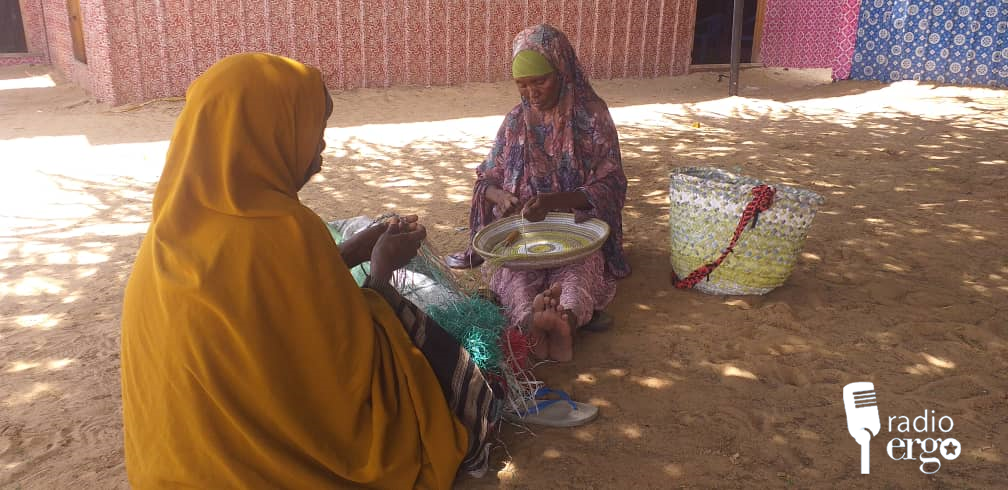
(ERGO) – Halimo Hussein Osman is among 12 poor women whose self-help handicrafts group has changed their lives for the better in Haq-dhowr IDP camp in the Somali capital Mogadishu.
Starting in February by each contributing a small amount of money to buy materials, they have developed their skills and made a name locally a variety of household items.
“We now have a decent life, if it was difficult for you to get a meal a day and now you have something on the plates, you only thank Allah. We feed ourselves from what we make with our hands. Before, we used to idle at home from when the sun rose till the sun set not knowing where to go for work,” Halimo said.
The women make mats, brooms, ropes and baskets for sale at affordable prices. Their creativity has become a source of income earning.
Halimo focuses on rope making. She has managed to send two of her children to Koranic school and hopes in the near future to enroll four of her children in secular school.
The women meet during their free time under an acacia tree to learn from each other’s skills.
Halimo’s family was displaced by conflict from Juba region, where they had a farm and a small restaurant. They never worried about food or shelter until having to flee, leaving their property and some goats behind them.
Warsan Abdullahi Ali, who cares for her three grandchildren, has honed her basket-weaving skills.
“What we earn from our products is quite good for us, although you can’t really compare all the effort we put in with the returns we get! Sometimes we sell a baskets for two or three dollars or on a lucky day we can sell a basket for five,” Warsan said.
Warsan’s family moved from Fafahdhun in Gedo region last year after her 40 goats all died in the drought and their farm dried up. When she came to Xaq-dhowr camp in Kahda district, she found life incredibly harsh. At first she stayed with her niece in a crowded hut until putting up her own makeshift house nearby. Joining hands with the other women in the handicrafts group, she said, has improved her situation immensely.
The group has not been supported by any external agencies, and the women are ready to teach others the skills they have developed. Group member Alia Haji Omar, who has 13 children and also takes care of her elderly mother, said they share the profits they make.
“We divide the profits equally. Although sometimes we don’t make much at all from our sales, generally these technical skills we are practising bring me enough at least to feed my family,” she said.