Radio Ergo - Somali Humanitarian News and Information
  • Home
  • Topics
    • Latest Stories
    • IDPS/Refugees
    • Natural Disasters
    • Health
    • Social
    • Food Security
    • Education
    • Agriculture & Livestock
  • Programmes
    • Locust Programme
    • Farming Programme
    • Radio Doctor Programme
    • Women Programme
    • Entertainment Programme
  • About Radio Ergo
  • Contact Us
  • blankSomali
  • blankEnglish
No Result
View All Result
Radio Ergo - Somali Humanitarian News and Information
  • Home
  • Topics
    • Latest Stories
    • IDPS/Refugees
    • Natural Disasters
    • Health
    • Social
    • Food Security
    • Education
    • Agriculture & Livestock
  • Programmes
    • Locust Programme
    • Farming Programme
    • Radio Doctor Programme
    • Women Programme
    • Entertainment Programme
  • About Radio Ergo
  • Contact Us
  • blankSomali
  • blankEnglish
No Result
View All Result
Radio Ergo - Somali Humanitarian News and Information
Home LATEST STORIES

Livestock survival or children’s education, a stark choice facing Somali pastoralist parents in Hiran

Radio Ergo by Radio Ergo
December 3, 2021
in LATEST STORIES
0
Somalia live news, Somali news, Radio Ergo news, Humanitarian news

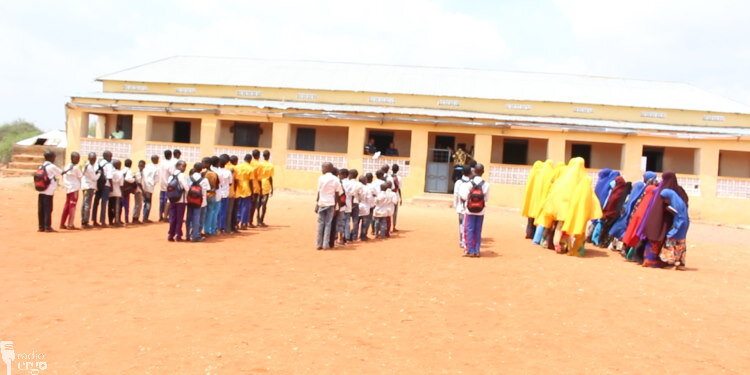
Schools in Hiran fear losing remaining pupils as pastoralist families flee to save their livestock/Abdirizack Ahmed Hussein/Ergo

0
SHARES
Share on FacebookShare on Twitter

(ERGO) – Pastoralist parents in central Somalia’s Hiran region are being forced to pull their children out of school in order to save their livestock from the drought.

Abdulkadir Ali Idow, a father of eight in Mataban, said he had little choice but to sacrifice his children’s education temporarily to safeguard the family’s livelihood and future.

He fled with his family from Jiracle village in Mataban to Garasta village in Mahas seeking water and fodder for his animals. Three of his children, who were studying at Osman Maalin primary school in Jiracle, are now out of the classroom.

“The livestock were our only source of income,” explained Abdulkadir. “The money I use to pay the school fees and the bills came from the livestock. As the situation deteriorated and the area did not receive any rain, we were forced to move with the children to save the livestock.”

There is no well in Jiracle and the family was buying water from delivery trucks selling a 200 litre-barrel for four dollars. Abdulkadir could not afford this and moved with their 200 goats and 59 camels to Garasta.

“I feel education is important as it is a light for humanity,” said Abdulkadir, adding that his livestock are his only assets. “My plan is to enroll the children back in school as soon as we receive rain and life returns to normal.”

However, his five older children have remained in high school and university in Beledweyne. He hopes he can continue to afford the fees as long as his herd survives the drought.

The headteacher of Osman Maalin primary school in Jiracle, Khalif Hassan Ahmed, told Radio Ergo that 70 of the school’s 320 pupils have dropped out because of the drought. He worries that more will leave if the drought persists. Some teachers have also left the school and fled with their livestock in search of water and pasture to areas that received rainfall.

Mohamed Osman, a father of seven, packed up his family and belongings to move with their livestock from Beergadiid village in Mataban district near the end of October. Five of his children at Beergadiid primary school are now looking after the family’s remaining 138 goats and 38 camels in Teedan village in Mahas.

“As a parent, I am very worried because you can understand I had to flee our village with my children who were in school and follow the rains because of the drought. This place itself hasn’t received much rain and the temperature is still hot. It wasn’t possible to let our children stay back in the village to continue with their studies while we left,” he said.

Mohamed’s children are also helping fetch water for the family, as the area is 21 km away from the nearest well.

The family spent five days walking the 109 km from Beergadiid. The livestock are now recovering after finding pasture and water in Teedan.

Mohamed said he made the decision to leave Beergadiid after the animals started dying and he lost 12 goats, five of which were nursing goats, to the drought. He is doing everything he can to keep the rest alive.

“Five of the goats that died were nursing their young kids. Up to now, I am taking care of the kids, sometimes I let them suckle milk from lactating goats around. When I take them to the grazing field, I cut small plants to feed them,” he said.

Mohamed’s family is cooking two meals a day using food he bought on credit from a shop in Beergadiid, hoping to pay back the bills if the livestock can recover their health and value.
Previous Post

Radio Ergo audience feedback report, 25 November – 1 December 2021

Next Post

Somaliland expert advises on how to mitigate effects of climate change

Related Posts

Somali families cut off from aid after verification process in Dadaab refugee camps
FOOD SECURITY

Somali families cut off from aid after verification process in Dadaab refugee camps

April 28, 2026
Clan conflict causes hundreds of families to flee burnt farms in Bay region
FOOD SECURITY

Clan conflict causes hundreds of families to flee burnt farms in Bay region

April 24, 2026
Somalia live news, Somalia latest news, Mogadishu live news, Somali news
FF Feedback

Radio Ergo audience feedback report 16-22 April 2026

April 24, 2026
Fresh food sellers in Galmudug put out of business by Hiran floods
FOOD SECURITY

Women traders in Kismayo losing customers in new off-road market

April 23, 2026
Credit crunch faces drought-stricken pastoralist households in Adado
FOOD SECURITY

Credit crunch faces drought-stricken pastoralist households in Adado

April 22, 2026
Families in Lower Shabelle get new chance to build up a living
FOOD SECURITY

Families in Lower Shabelle get new chance to build up a living

April 20, 2026
Next Post
Somalia live news, Somali live news, Radio Ergo news, Humanitarian news, Droughts

Somaliland expert advises on how to mitigate effects of climate change

FOLLOW US ON FACEBOOK

DAILY PROGRAMMES

IDAACADDA 30-APR-2026

IDAACADDA 30-APR-2026 by Radio Ergo

IDAACADDA 30-APR-2026
Episode play icon
IDAACADDA 30-APR-2026
April 30, 2026
Episode play icon
IDAACADDA 29-APR-2026
April 29, 2026
Episode play icon
IDAACADDA 28-APR-2026
April 28, 2026
Episode play icon
IDAACADDA 27-APR-2026
April 27, 2026
Episode play icon
IDAACADDA 26-APR-2026
April 26, 2026
Search Results placeholder
Radio Ergo Weekly Newsletter
We respect your privacy.
blank
blank
blank

© Copyright 2014 - 2024 Radio Ergo

No Result
View All Result
  • Home
  • Topics
    • Latest Stories
    • IDPS/Refugees
    • Natural Disasters
    • Health
    • Social
    • Food Security
    • Education
    • Agriculture & Livestock
  • Programmes
    • Locust Programme
    • Farming Programme
    • Radio Doctor Programme
    • Women Programme
    • Entertainment Programme
  • About Radio Ergo
  • Contact Us
  • blankSomali
  • blankEnglish

© Copyright 2014 - 2024 Radio Ergo