(ERGO) – Abdisalan Ali Said and his large family were among the first pastoralists to arrive with their livestock in the Qalwada valley, after a long and costly journey by truck inland from the drought-hit coastal district of Eyl in Somalia’s Puntland state.
In their village of Biyacadde village, about 30 kilometres northeast of Eyl in Nugal region, Abdisalan watched over the months as 100 of his goats died between June and October due to acute water shortage and lack of pasture.
When they heard of some rainfall in Bari region, he hired a lorry to transport his two wives and 18 children, along with their remaining 200 goats and two donkeys, at the cost of $600. He paid $200 and owes the remaining $400, which some relatives promised to help him pay when he gets back on his feet.
They spent a day and a night travelling about 320 kilometres to the Qalwada valley – only to find no resources there.
“People are hungry here and the livestock don’t have any meat on them, even if we were to slaughter some to eat ourselves. All of us are displaced and we don’t have money, as we are pastoralists whose livestock are dying because of the drought,” he told Radio Ergo.
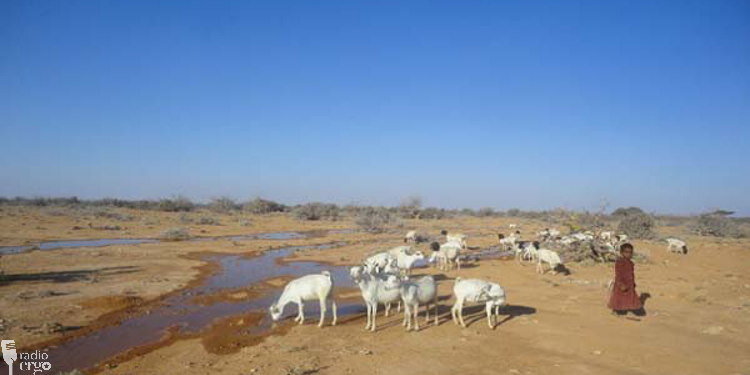
Abdisalan was hoping to find pasture and water for his livestock, but the influx of hundreds of other families to the valley caused the reservoirs – topped up by a little rainfall in October – to shrink. The grass that grew was scanty and inadequate for so many animals.
“We fled to Karkaar [Bari] region, following the prolonged dry season. We all settled here in Giruunka area. We are sharing the scarce water in the berkeds (reservoirs),” he said.
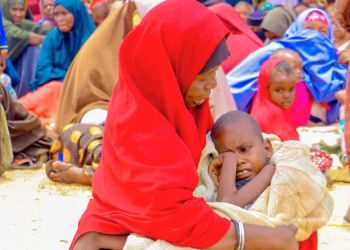
Abdisalan has witnessed pastoralists pouring in daily to the valley, 20 kilometres from Rako town. In the two days prior to his interview with Radio Ergo, he estimated that 200 families from Qarxis and Biyacadde villages in Eyl reached the valley with their livestock.
Ahmed Abdi, who fled from Ban-xaar village, between Eyl and Dangorayo, where half of his animals died in the drought. He moved the 15 camels and 200 goats that survived but found neither food nor shelter in the valley.
He has not yet paid the $500 cost for the truck that transported his animals and his four wives and 30 children. He can only pay if his livestock recover from the drought.
“The people know each other well. I asked someone to help me transport my livestock and they accepted. Both those who could afford to pay the vehicle’s petrol money and those who couldn’t were all transported. No one has been left behind,” he said.
However, Ahmed said he is concerned about the harsh existence they are facing now and asked for help from the government and aid agencies.
Rako town commissioner, Amin Osman Said, said dozens of pastoralist families from Nugal, Mudug, Sool, Sanag, and other villages in Bari region have converged on Qalwada valley. Speaking to Radio Ergo by phone, the commissioner noted that the nomadic families in the area are in dire straits and need immediate assistance.
He said his administration has distributed tents, as most families had neither shelter, nor water storage tanks and utensils.
“The valley hasn’t received much rain. Some nomadic families had already herded their livestock here, and now new families have migrated, overcrowding the valley. Livestock is everywhere in this valley,” he said.