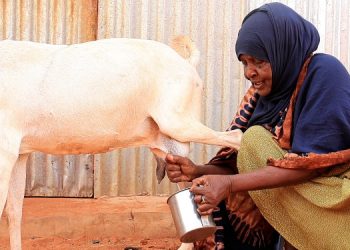


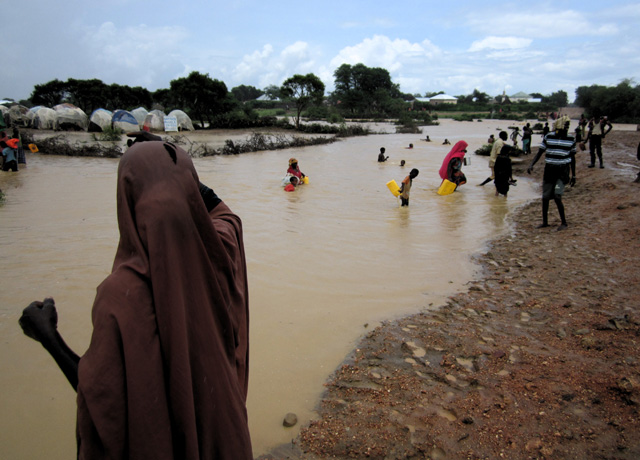
(ERGO) – Fadumo Warsame Roble, a mother of 10, packed children and belongings onto a donkey cart and migrated from the family’s home in Miriq, in the Shabelle valley, after their small farm was flooded by the nearby river in November.
The floods washed away all the vegetables, beans, and maize she had planted on the two hectare plot. The $350 she spent on seeds was all lost too.
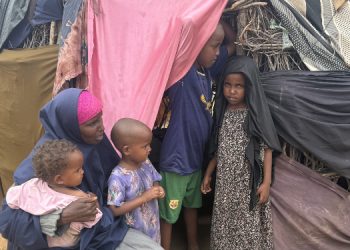
Like hundreds of others displaced by floods in this agricultural part of Somalia, Fadumo is now trying to keep the family going in a makeshift hut in the overcrowded Nagarwayne camp, outside Beletweyn town in Hiran region.
“The children don’t have enough space. We made this hut from cartons and clothes we collected from neighbours. There is no place for us to sleep, I just spread out a mat I borrowed from a lady for the children to sleep on. The whole hut is so fragile that it sways back and forth with the wind,” Fadumo said.
An estimated 180 families who lost their farms are crowded into the site at Nagarwayne. There is not enough food or aid to go round.
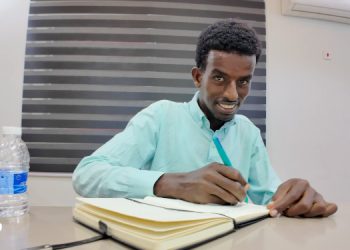
Mohamed Mahamud Ali and his family of eight were displaced from Quraley. He told Radio Ergo that he invested $350 in seeds and other inputs and has nothing to show for it. He also has a debt of $200.
“The raging waters even towed away my irrigation pumps. The people I borrowed money from, including the tractor rental, keep calling me,” he told Radio Ergo.
He built a makeshift home for the family at Nagarwayne, but it is very flimsy and has no waterproofing against the rain. He and some of his children go to town each day to try to earn a dollar to buy food.
“My children and I go out to collect firewood to sell in the market. We get something once in a while, but all we are left with is the suffering,” he said.
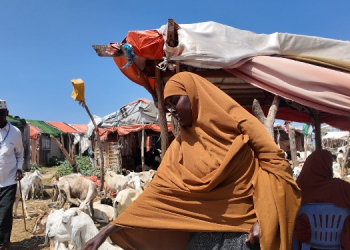
Beletweyne district administrator, Osman Dhiisow Dhubow, told Radio Ergo that there is a shortage of housing and latrines in the overcrowded camp. More and more families have been arriving, displaced by flooding in both the deyr and gu’ seasons. There is not enough food or other essentials to go around.
The administration gave land for the IDPs to settle and jerrycans to fetch water but says it lacks the resources to provide anything more.
“These are very vulnerable people. They don’t have adequate housing and forget about latrines. We have welcomed them and provided what we have, but as you can imagine, the needs of a displaced person coming to a new place is much greater,” the administrator told Radio Ergo.
Recurring floods have led many farmers in this breadbasket region to stop farming, causing shortages of fresh produce in Beletweyn.