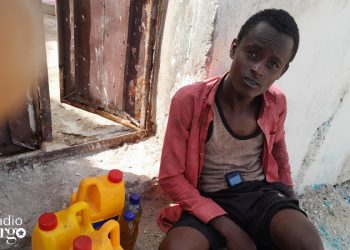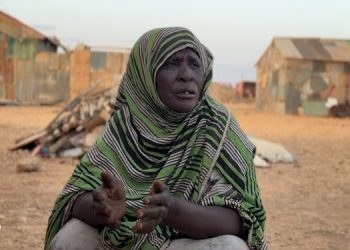


(ERGO) – Nasra Farhan Gara, a blind mother of seven, runs a small store and canteen at Ayaha-dhore IDP camp on the outskirts of the central Somali town of Galkayo. Her business was severely affected by Coronavirus but is now picking up again thanks to a cash grant.
In July, Nasra was one of 56 small business owners, 47 of them women, selected to receive a grant from local NGO, Galkayo Education Centre for Peace and Development (GECPD). She is now seeing the results.
“When the Coronavirus came, I stopped cooking for customers and I was not able to sell any goods. Some of the items I had got spoiled and others were consumed by my family,” she said
She received $300 in cash and will be assessed before receiving the second installment of $200.
“I’ve used the money to purchase food stocks, children’s powdered milk, cartons of bottled water, and other items,” she said.
Nasra’s family depends on the business. Her children help out and her husband, a casual labourer, is currently out of work.
Fatuma Ali Farah, a mother of six, sells fresh tea by the road. Her business also crashed with the arrival of Coronavirus.
“Travellers from outside were my biggest customers. I used to cook and sell at least four pots of tea, but later I could barely sell one pot,” she said.
With her $300 cash, Fatuma expanded her stall to include the sale of hair lotions, shampoos, detergents and other household goods.
Another grantee, Fadumo Yusuf Adan, who lives in Hala-Bokhad on the outskirts of Galkayo, has six children and was recently widowed. Her restaurant was on the verge of closure.
“Each morning I used to serve breakfast to 10 or 15 people, but the numbers reduced to only five. For lunch, I’d serve about 20 people, but that too fell to just seven or eight.”
She paid off a debt and bought new stock including clothing and food items to sell with her grant. The business is supporting her household and school fees of $15 for five of her children.
Said Warsame Farah, the manager of GECPD’s education and skills development programme, told Radio Ergo that the grant scheme was originally planned to start at the beginning of the year. It was delayed by the onset of the pandemic, which has given it an added urgency. The majority of grantees were women, who have been in business for at least two years and have a recognizable market for their business in the community.