Radio Ergo - Somali Humanitarian News and Information
  • Home
  • Topics
    • Latest Stories
    • IDPS/Refugees
    • Natural Disasters
    • Health
    • Social
    • Food Security
    • Education
    • Agriculture & Livestock
  • Programmes
    • Locust Programme
    • Farming Programme
    • Radio Doctor Programme
    • Women Programme
    • Entertainment Programme
  • About Radio Ergo
  • Contact Us
  • blankSomali
  • blankEnglish
No Result
View All Result
Radio Ergo - Somali Humanitarian News and Information
  • Home
  • Topics
    • Latest Stories
    • IDPS/Refugees
    • Natural Disasters
    • Health
    • Social
    • Food Security
    • Education
    • Agriculture & Livestock
  • Programmes
    • Locust Programme
    • Farming Programme
    • Radio Doctor Programme
    • Women Programme
    • Entertainment Programme
  • About Radio Ergo
  • Contact Us
  • blankSomali
  • blankEnglish
No Result
View All Result
Radio Ergo - Somali Humanitarian News and Information
Home AGRICULTURE & LIVESTOCK

Voracious locusts drive Somali farmers away in Dalyare, Lasanod

Radio Ergo by Radio Ergo
June 23, 2020
in AGRICULTURE & LIVESTOCK, LATEST STORIES
0
Voracious locusts drive Somali farmers away in Dalyare, Lasanod

File Photo/Ergo

0
SHARES
Share on FacebookShare on Twitter

(ERGO) – Abdirahman Mohamed, a farmer in Dalyare in northern Somalia’s Sool region, watched helplessly as his four hectares of tomatoes, onions and peppers were all destroyed by invading locusts.

“I am devastated – all the crops I planted have been eaten up by the locusts,” he told Radio Ergo. “I’ve lost about $4,000 which I had borrowed.”

Abdirahman and other farmers in Dalyare say the locusts landed in mid-May and stayed in the area for 20 hours, devouring the crops, grass, and all other vegetation.

They tried everything they had heard might work, including lighting fires to smoke the insects out, honking horns and even firing guns. None of their efforts worked and they are now concerned about the larvae that were left behind that will hatch into new waves of locusts.

Abdinasir Mohamed Salad, who has six hectares of farmland in Dalyare, had borrowed $3,000 to plant for the season and he has been left with nothing to show for it.

“My worry now is how I’ll pay for my family’s expenses and the loan, which I was hoping to pay back from the profits I would be earning after selling the crops,” he told Radio Ergo.

He described the locust swarms as so dense that they blocked out the sunlight. He says he is quitting farming for the time being because he has lost hope.

“I’m leaving the farm because whatever I planted now would be eaten up by the larvae that the locusts have left behind,” he declared.

The head of Dalyare farmers’ association, Abdirizak Astur Warsame, told Radio Ergo that all 256 farms in the area were affected in one way or another. Some of the farmers have even moved away into the interior livestock herding areas, after losing out in farming.

“Around this time of the year there would normally be about three trucks loaded with farm produce heading out to Galkayo, Qardho, Garowe and Lasanod, but now we only have one delivery going to Lasanod,” Abdirizak said.

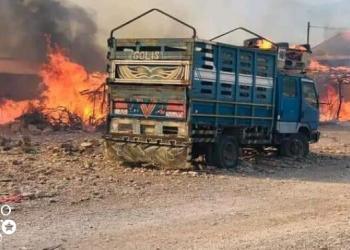
Whilst the farmers did all they could to fight off the locusts as they descended, some of their efforts turned sour. Several farms were burnt to the ground by the fires deliberately lit to ward off the locusts.

Dalyare in Lasanod district is known for its rich soil and access to water conducive to farming. Farmers have been growing a variety of produce here for the past 30 years. The area has been a settlement for more than a century.
Previous Post

Sheikh advises people in charge of public transport to use sanitisers to protect passengers from spread of Coronavirus

Next Post

Somali refugee mothers walk for work in Dadaab

Related Posts

Airstrikes wipe out livelihoods in Lower Shabelle farming village
FOOD SECURITY

Airstrikes wipe out livelihoods in Lower Shabelle farming village

April 17, 2026
Somalia live news, Somalia latest news, Mogadishu live news, Somali news
FF Feedback

Radio Ergo audience feedback report 9-15 March 2026

April 17, 2026
Hard-up Awdal farmers turn to gold digging
FOOD SECURITY

Jobless men turn to gold mining in Sanag region

April 16, 2026
Marginalised families in Puntland displacement camps face hunger, discrimination and neglect
FOOD SECURITY

Selling thatching grass in Bari valley provides new income for drought-hit families

April 15, 2026
School closes as UNICEF cuts funding leaving IDP children in Baidoa out of education
EDUCATION

Schools close across Galmudug due to drought

April 14, 2026
Drought-hit Lower Juba pastoralists flee towards the Somali-Kenyan border
IDPS/REFUGEES

Drought-hit Lower Juba pastoralists flee towards the Somali-Kenyan border

April 13, 2026
Next Post
Somali refugee mothers walk for work in Dadaab

Somali refugee mothers walk for work in Dadaab

FOLLOW US ON FACEBOOK

DAILY PROGRAMMES

IDAACADDA 17-APR-2026

IDAACADDA 17-APR-2026 by Radio Ergo

IDAACADDA 17-APR-2026
Episode play icon
IDAACADDA 17-APR-2026
April 17, 2026
Episode play icon
IDAACADDA 16-APR-2026
April 16, 2026
Episode play icon
IDAACADDA 15-APR-2026
April 15, 2026
Episode play icon
IDAACADDA 14-APR-2026
April 14, 2026
Episode play icon
IDAACADDA 13-APR-2026
April 13, 2026
Search Results placeholder
Radio Ergo Weekly Newsletter
We respect your privacy.
blank
blank
blank

© Copyright 2014 - 2024 Radio Ergo

No Result
View All Result
  • Home
  • Topics
    • Latest Stories
    • IDPS/Refugees
    • Natural Disasters
    • Health
    • Social
    • Food Security
    • Education
    • Agriculture & Livestock
  • Programmes
    • Locust Programme
    • Farming Programme
    • Radio Doctor Programme
    • Women Programme
    • Entertainment Programme
  • About Radio Ergo
  • Contact Us
  • blankSomali
  • blankEnglish

© Copyright 2014 - 2024 Radio Ergo