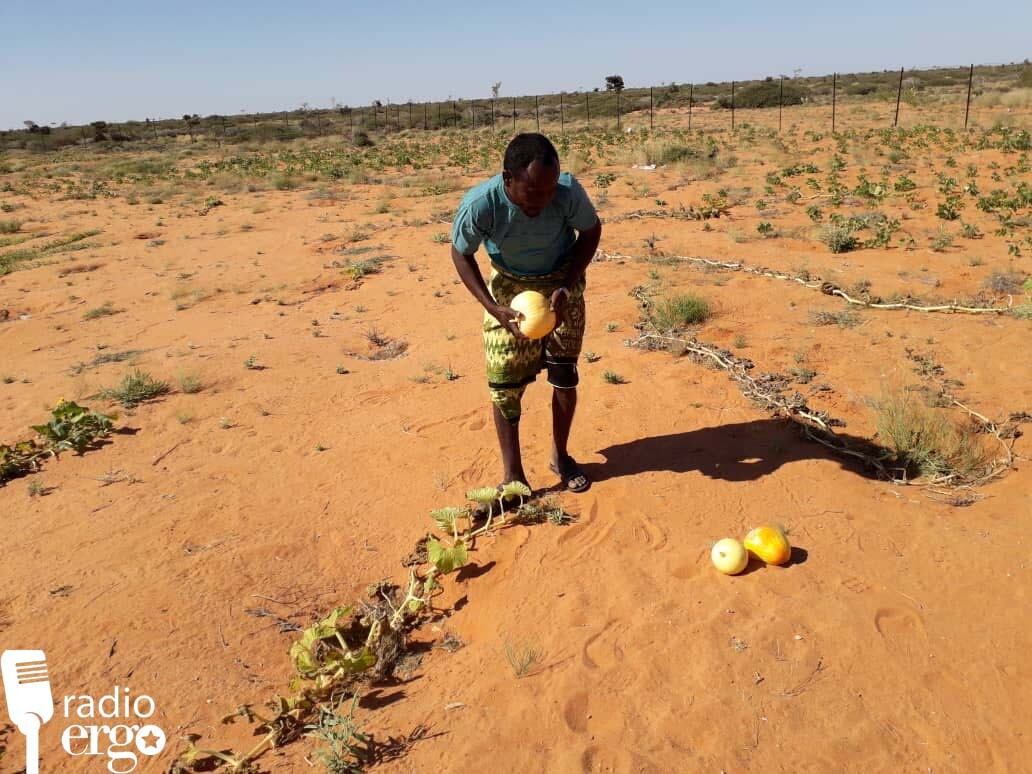
(ERGO) – Over 70 former nomadic families in Bangeelle in central Somalia’s Galgadud have taken up farming, after losing their livestock in past droughts.
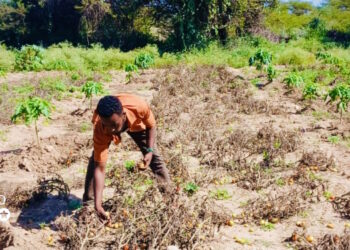
Abdiwali Igalle Farah, who started farming seven months ago, told Radio Ergo that he harvested his first crops of beans, tomatoes, capsicum and hot peppers at the end of March and sold his produce in the nearby towns of Abudwaq and Balanballe.
He said he invested $1,200 which he raised by selling two of his remaining camels to get started in farming. He received training on farming and irrigation from the World Food Programme (WFP).
“They trained me on how to till the land, how to irrigate it, and how to fertilize it with animal dung. They really helped me and I have since earned about $1,800 from the farm,” he said.
Abdiwali lost 300 goats and 20 camels in successive droughts that hit Bangeelle in recent years. In 2017, he moved with his family to an IDP camp where he was dependent on food aid from relief organisations and intermittent support from relatives.
Farming, he said, was not easy as he had to deal with several challenges, such as losing his crops in the 2019 locust invasion. However, it has improved his lot in life, as he is now able to feed his family from the harvest and sell off the rest to cover other expenses. He also built a tin-and-wood house for his family near the farm.
The Bangeelle area commissioner, Hundul Mohamed Adde, told Radio Ergo that many livestock herders who lost their animals have adapted well to the farming lifestyle.
“Farming in Bangeelle is a success story. A number of families have settled and are cultivating large farms in the area,” he said.
He added that many families who had been totally stripped of their livelihood have become independent again. This is the second harvest, in which they have made a good profit.
Ahmed Abdulqadir Abdulle, a former herdsman who started farming in Bangeelle eight months ago, told Radio Ergo that he used to see himself as a burden on relatives but is now self-sufficient thanks to the training from WFP.
“My friends encouraged me to pick up farming, telling me that it is a better livelihood. I’ve attained some success and I am very hopeful about the future,” he said.
Many of the nomadic livestock herders who were dispossessed in past droughts have been exploring alternative livelihoods. Some have enrolled in vocational training for employment, but many of those in the central regions of Mudug and Galgaduud have taken up farming as a preferred livelihood.