Radio Ergo - Somali Humanitarian News and Information
  • Home
  • Topics
    • Latest Stories
    • IDPS/Refugees
    • Natural Disasters
    • Health
    • Social
    • Food Security
    • Education
    • Agriculture & Livestock
  • Programmes
    • Locust Programme
    • Farming Programme
    • Radio Doctor Programme
    • Women Programme
    • Entertainment Programme
  • About Radio Ergo
  • Contact Us
  • blankSomali
  • blankEnglish
No Result
View All Result
Radio Ergo - Somali Humanitarian News and Information
  • Home
  • Topics
    • Latest Stories
    • IDPS/Refugees
    • Natural Disasters
    • Health
    • Social
    • Food Security
    • Education
    • Agriculture & Livestock
  • Programmes
    • Locust Programme
    • Farming Programme
    • Radio Doctor Programme
    • Women Programme
    • Entertainment Programme
  • About Radio Ergo
  • Contact Us
  • blankSomali
  • blankEnglish
No Result
View All Result
Radio Ergo - Somali Humanitarian News and Information
Home LATEST STORIES

Women doing well in central Somalia livestock trade

Radio Ergo by Radio Ergo
December 13, 2019
in LATEST STORIES, SOCIAL
0
blank

File photo/Ergo

0
SHARES
Share on FacebookShare on Twitter

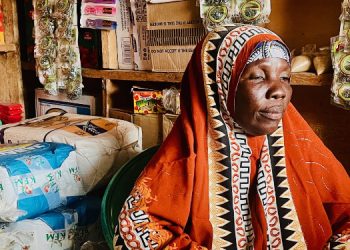
(ERGO) – Somali women are making inroads into the traditionally male domain of livestock marketing in the central Somalia town of Adado.

Sirad Ibrahim Abdulle was one of the first local women to venture into the business with an initial investment of $1,000 four years ago.

Sirad told Radio Ergo that many women like her are heading households and have to provide income for the daily needs and education of their children.

“We are about 40 women and we decided to join this business to change our lives.  We really benefit from this market, although sometimes you don’t get any profit as there are no fixed amounts,” she said. “We make a daily average of $5 to $6.”

The women buy the animals from the pastoralists coming to sell their livestock at the market. They sell them on at variable profit margins to butchers and restaurants.

Sirad send the animals that do not attract a decent price to her relatives in the rural areas, hoping to fatten them up and breed from them for a future sale.

“After a while those goats might come back to me with young ones, so then I sell them at a good price,” she said. “We keep circulating the animals like that.”

She is managing to pay $28 per month for the education of her two daughters and two sons.

Nesteho Adawe, another female livestock trader, joined the sector in 2017 with an investment of $1,000, after hearing about the success of other women.

“When I started in this business of buying and selling livestock, I had only an idea about it but did know how to really manage. I have learnt a lot and now want to expand my business,” she said.

Nesteho keeps the goats that fail to sell at a nearby camp run by business people, who charge 0.1 dollar per goat per night.

“There are some [animals] that do not make a cash sale immediately, so in the evening I take them to nearby camps until the next morning when the market opens again,” she explained.

“This business is helping to feed our children; we manage our lives on this income.”

Nesteho spends $128 on education for her three daughters and four sons, including two studying at university in Mogadishu.

It is not an easy business, especially in this rainy season when conditions are muddy. But Duh Mohamed Hassan, a widow, says it has been worth overcoming the challenges.

“At first I used to buy one or two goats from the pastoralists at $100 or $130, and sold them again at a profit of just one or two dollars,” she said.

Since her entry into the livestock market in 2015, with animals worth $250, she has come a long way and can support single handedly her four daughter and three sons.


Previous Post

Small traders in Galgadud lose out from decline of Somali shilling

Next Post

First secondary school in Somali border town celebrated by local families

Related Posts

Women pushing heavy loads support displaced families in Mogadishu
FOOD SECURITY

Women pushing heavy loads support displaced families in Mogadishu

May 4, 2026
Somali families cut off from aid after verification process in Dadaab refugee camps
FOOD SECURITY

Somali families cut off from aid after verification process in Dadaab refugee camps

April 28, 2026
Clan conflict causes hundreds of families to flee burnt farms in Bay region
FOOD SECURITY

Clan conflict causes hundreds of families to flee burnt farms in Bay region

April 24, 2026
Somalia live news, Somalia latest news, Mogadishu live news, Somali news
FF Feedback

Radio Ergo audience feedback report 16-22 April 2026

April 24, 2026
Fresh food sellers in Galmudug put out of business by Hiran floods
FOOD SECURITY

Women traders in Kismayo losing customers in new off-road market

April 23, 2026
Credit crunch faces drought-stricken pastoralist households in Adado
FOOD SECURITY

Credit crunch faces drought-stricken pastoralist households in Adado

April 22, 2026
Next Post
blank

First secondary school in Somali border town celebrated by local families

FOLLOW US ON FACEBOOK

DAILY PROGRAMMES

IDAACADDA 04-MAY-2026

IDAACADDA 04-MAY-2026 by Radio Ergo

IDAACADDA 04-MAY-2026
Episode play icon
IDAACADDA 04-MAY-2026
May 4, 2026
Episode play icon
IDAACADDA 03-MAY-2026
May 3, 2026
Episode play icon
IDAACADDA 02-MAY-2026
May 2, 2026
Episode play icon
IDAACADDA 01-MAY-2026
May 1, 2026
Episode play icon
IDAACADDA 30-APR-2026
April 30, 2026
Search Results placeholder
Radio Ergo Weekly Newsletter
We respect your privacy.
blank
blank
blank

© Copyright 2014 - 2024 Radio Ergo

No Result
View All Result
  • Home
  • Topics
    • Latest Stories
    • IDPS/Refugees
    • Natural Disasters
    • Health
    • Social
    • Food Security
    • Education
    • Agriculture & Livestock
  • Programmes
    • Locust Programme
    • Farming Programme
    • Radio Doctor Programme
    • Women Programme
    • Entertainment Programme
  • About Radio Ergo
  • Contact Us
  • blankSomali
  • blankEnglish

© Copyright 2014 - 2024 Radio Ergo