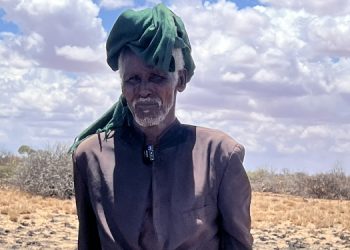
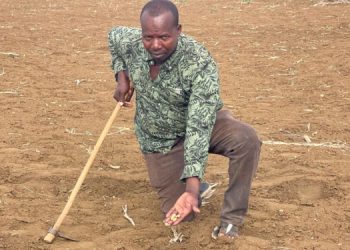
(ERGO) – Sahal Abdi Mohamed has sadly watched his family’s livelihood slip away, as drought and water shortage dried up his farm in Sayn village, in Puntland’s Bari region.
Since the beginning of the year, he has been unable to cultivate anything and the loss of farming income has left his family facing food shortages and mounting debt.
“Our livelihoods have collapsed, and drought has made things worse. When you lose the vegetables that sustained your family, you feel the impact immediately. We lost our work and the source of our income. Some people have abandoned their farms altogether,” he told Radio Ergo.
In January, Sahal planted vegetables twice on his two-hectare farm, but both attempts failed because he could not secure enough water for irrigation. Water trucks from Bargaal, more than 100 kilometres away, charge around $12 per barrel, which is far beyond his reach. Sahal’s date palms have lost their leaves and fruit and he fears the trees may die if they are not watered soon.
Natural water channels that once supplied farms in the area have been damaged by land erosion. Wide gullies have cut off roads and damage the natural springs and manmade reservoirs.
Sahal owes more than $1,000, including older loans and money borrowed in recent months to feed his family. Creditors demand repayment, but he has no means of settling the debts. Three consecutive poor rainy seasons have also weakened his livestock, damaging another income source.
Sahal cares for his 78-year-old diabetic mother, who requires regular medication and a special diet.
“Medicine is expensive, laboratory tests cost money, and poor people can’t afford them. There are no nearby services. Everything has become difficult. Imagine an elderly person unable to get milk or the food she needs, that is a huge challenge,” he said.
Five of his children dropped out of school in May after he failed to pay three months’ fees of $20 per child. The children were in grades three, five, and seven at the local primary school.
The villagers in Sayn are all affected. Rooble Mohamed Osman, 59, has also been unable to cultivate his one-and-a-half-hectare farm on the outskirts this year because of the water shortages. Several seasons of poor rainfall dried up the streams that supplied irrigation water, while the area’s rugged terrain makes access difficult.
“The biggest challenge we face is water scarcity. We have endured drought for three years and this year has been the worst. Water levels dropped, roads were cut off, canals and reservoirs were damaged, and large rocks collapsed onto farms and we can’t remove them,” he said.
Rooble, who has farmed for more than 30 years, says he has never experienced such severe conditions. His family is living on the 15 kilograms each of flour, rice, sugar, and cooking oil purchased by his brother in Bosaso on 27 May.
“This crisis has affected us deeply. Compared to last year, the difference is huge. The dates and crops that my children used to eat are gone. We are struggling even to provide rice for the children. We have no source of income. Our lives depended on this farm,” he said.
Rooble owes about $1,500, including money invested in crops that failed because of water shortages, food and water purchased during recent months, and older debts. He says creditors continue to pressure him despite his inability to pay.
Two of his children were forced to leave primary school in April after he failed to pay three months of fees totaling $180.
The chairman of the Sayn Farmers’ Cooperative, Abdalle Ahmed Mohamed, said the challenges facing 2,500 local farmers were beyond the community’s ability to address. He said some damaged areas affected by erosion had been repaired, but the scale of destruction was far beyond local resources.
“These farmers need agricultural equipment, pesticides, irrigation systems, pumps, and solar-powered water systems. Many farms have dried up and been abandoned because of water shortages. We tried to help, but we lacked the necessary equipment and resources,” he said.
Abdalle said the cooperative had repeatedly informed Puntland authorities and aid organisations about the situation, but no substantial assistance had arrived. He warned that agricultural production in the area could collapse entirely, leaving farming households destitute.