Radio Ergo - Somali Humanitarian News and Information
  • Home
  • Topics
    • Latest Stories
    • IDPS/Refugees
    • Natural Disasters
    • Health
    • Social
    • Food Security
    • Education
    • Agriculture & Livestock
  • Programmes
    • Locust Programme
    • Farming Programme
    • Radio Doctor Programme
    • Women Programme
    • Entertainment Programme
  • About Radio Ergo
  • Contact Us
  • blankSomali
  • blankEnglish
No Result
View All Result
Radio Ergo - Somali Humanitarian News and Information
  • Home
  • Topics
    • Latest Stories
    • IDPS/Refugees
    • Natural Disasters
    • Health
    • Social
    • Food Security
    • Education
    • Agriculture & Livestock
  • Programmes
    • Locust Programme
    • Farming Programme
    • Radio Doctor Programme
    • Women Programme
    • Entertainment Programme
  • About Radio Ergo
  • Contact Us
  • blankSomali
  • blankEnglish
No Result
View All Result
Radio Ergo - Somali Humanitarian News and Information
Home AGRICULTURE & LIVESTOCK

Invasive trees hurt livelihoods of Somali herders and farmers in Sool

Radio Ergo by Radio Ergo
June 13, 2019
in AGRICULTURE & LIVESTOCK, LATEST STORIES
0
Somalia live news, Radio Ergo news, Humanitarian news, Somali live news

File Photo/Ergo

0
SHARES
Share on FacebookShare on Twitter

(ERGO) –  Pastoralists and farmers in Teleh, in northern Somalia’s Sool region, are increasingly worried about an invasive parasite tree that is threatening their livelihoods.

Prosopis juliflora tree, locally know as Ali-Garoob, is an invasive and drought-resistant weed that been spreading uncontrollably for the past three years. It has thrived in harsh dry weather, spreading through the grassland where the livestock normally graze.

Local people report that the tree is now dominating vegetation in Margamal, Gabi-geedh and Heri-heere valleys. Pastoralist families in the area can barely find any grazing grounds for their livestock.

Around 1,500 pastoralist families used to graze their livestock in Dhumay valley, but only 200 are still doing so because they fear that excessive consumption of Ali-Garoob is harming their livestock.

Mohamed Abdi Hassan has recently returned to Dhumay valley after migrating away to southern Sool at the height of the drought in search of water and fodder for his livestock.

“This valley used to be famous for grass which was high in nutritional value, but it [the weed] has blocked off the other trees. It has become a habitat for other wild animals. I n the last 20 days I have lost four goats to hyena and wild cat attacks,” Mohamed told Radio Ergo.

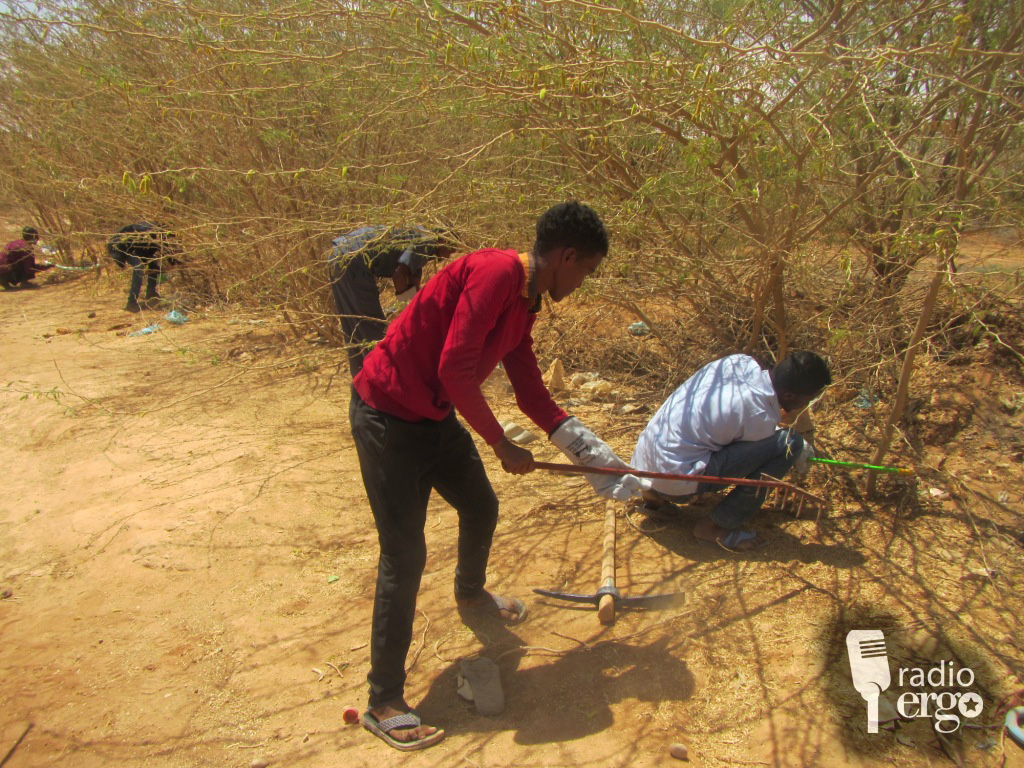
Local efforts to contain the spread of the trees have proved futile. They have tried to cut, burn and spray kerosene on the bushes without lasting effect.

Qulle Mohamed, a pastoralist in Gebi-dhero area, told Radio Ergo that his pregnant camel died after consuming Ali-Garoob seeds.

“This camel that used to provide milk for my children has consumed the prosopis juliflora tree and it suffered days of stomach pain. We tried to save it but sadly she died. To find out what killed the camel we cut the stomach open, and we saw inside many seeds of the tree,” said Qulle, who returned to the area following the onset of rain.

Hussein Halane, the head of the farmers’ association in Halin, told Radio Ergo that 80 farms had been invaded by the trees. The farmers had been forced to leave the area, and had moved to Lasanod looking for a living.

Mohamed Suleyman Ali, the head of the Da’algaarshe Environmental Conservation Centre in Sool, noted that the most effective way to deal with Ali-Garoob is to burn it.

“The tree leaves are green in both rainy and dry seasons. When the seeds of this tree fall to the ground they quickly germinate into a tree, and when the livestock eat the seeds and defecate elsewhere they help spread the seeds,” said Mohamed.
Previous Post

Overcoming the odds to stay in school in Garowe IDP camp

Next Post

New dam brings water to dry Puntland villages

Related Posts

Baidoa farmers reap benefits of climate knowledge and irrigation
AGRICULTURE & LIVESTOCK

Baidoa farmers reap benefits of climate knowledge and irrigation

May 5, 2026
Women pushing heavy loads support displaced families in Mogadishu
FOOD SECURITY

Women pushing heavy loads support displaced families in Mogadishu

May 4, 2026
Somali families cut off from aid after verification process in Dadaab refugee camps
FOOD SECURITY

Somali families cut off from aid after verification process in Dadaab refugee camps

April 28, 2026
Clan conflict causes hundreds of families to flee burnt farms in Bay region
FOOD SECURITY

Clan conflict causes hundreds of families to flee burnt farms in Bay region

April 24, 2026
Somalia live news, Somalia latest news, Mogadishu live news, Somali news
FF Feedback

Radio Ergo audience feedback report 16-22 April 2026

April 24, 2026
Fresh food sellers in Galmudug put out of business by Hiran floods
FOOD SECURITY

Women traders in Kismayo losing customers in new off-road market

April 23, 2026
Next Post
New dam brings water to dry Puntland villages

New dam brings water to dry Puntland villages

FOLLOW US ON FACEBOOK

DAILY PROGRAMMES

IDAACADDA 08-MAY-2026

IDAACADDA 08-MAY-2026 by Radio Ergo

IDAACADDA 08-MAY-2026
Episode play icon
IDAACADDA 08-MAY-2026
May 8, 2026
Episode play icon
IDAACADDA 07-MAY-2026
May 7, 2026
Episode play icon
IDAACADDA 06-MAY-2026
May 6, 2026
Episode play icon
IDAACADDA 05-MAY-2026
May 6, 2026
Episode play icon
IDAACADDA 04-MAY-2026
May 4, 2026
Search Results placeholder
Radio Ergo Weekly Newsletter
We respect your privacy.
blank
blank
blank

© Copyright 2014 - 2024 Radio Ergo

No Result
View All Result
  • Home
  • Topics
    • Latest Stories
    • IDPS/Refugees
    • Natural Disasters
    • Health
    • Social
    • Food Security
    • Education
    • Agriculture & Livestock
  • Programmes
    • Locust Programme
    • Farming Programme
    • Radio Doctor Programme
    • Women Programme
    • Entertainment Programme
  • About Radio Ergo
  • Contact Us
  • blankSomali
  • blankEnglish

© Copyright 2014 - 2024 Radio Ergo