

As part of its ongoing series, Radio Ergo visited a camp for the displaced in Jowhar and found many households headed by children. Some of them are orphans, whilst others have parents incapable of making ends meet without their children working. The children take on whatever jobs they can find.
Twelve-year-old Ali Muse Ali is one of the principal earners among his family of seven siblings, who live in a shack in an IDP camp in the southern Somali town of Jowhar.
In fact he has been playing such a role since his childhood was cut short by the tragic death of both parents in 2013, as he explains:
“My parents were rushing home to evacuate us after clan clashes broke out. They were coming from a farm on the other side and had to cross the river. But my mother slipped into the river and dad tried to rescue her but they both drowned,” he said.
Ali’s parents left behind six boys and two girls, aged from 13 down to a one-year-old baby.
The orphans now live in Sheikh-Omar displacement camp in Jowhar.
Ali takes the other children to collect leftover leaves and twigs of Khat, known as garaabo, from around the market. They sell it to people who can’t afford the freshest leaves to earn a pittance to buy food.
“Sometimes you get kicked or shoved but there is no alternative,” Ali told Radio Ergo. “Sometimes I get 10,000 Shillings ($0.4) or at times I get 20,000 shillings ($0.8).”
Mohamed Muse Ali, Ali’s elder brother, also shines shoes to add some income. He says he and Ali have inherited the burden of bringing up the other children.
“Life has ups and downs but it needs hard work. We are struggling to take care and provide for these children. To fulfill this task every morning, I wake up early to cook for them before going to work,” Mohamed told Radio Ergo.
Another teenager, Mohamed Isack, is the sole breadwinner for his family living in the same camp. Mohamed’s father died in 2015 and since then he has been supporting his six siblings and their mother, who has been bedridden for three years.
Carrying an old milk-powder tin containing his shoe polish, Mohamed leaves the house early in the morning to go out looking for jobs.
“I roam checkpoints and restaurants looking for customers. I polish a pair of shoes for 2,000 shillings. Sometimes I am lucky and I get between 20,000 and 30,000,” he said.
Mohamed had once hoped to become a Koranic teacher but his hopes were dashed by his father’s death, forcing him to quit school for lack of fees.
In another part of the camp, 13-year-old Halima Ali Farah goes out to do domestic work in better off people’s houses to put food on the table. Her parents separated in 2016 and she lives with her mother.
Halima’s domestic labour brings in 400,000 Somali shillings ($16) a month to support the family of eight members.
The work is a long, hard slog with abuse and harassment by some members of the family employing her.
“I wake up after dawn prayers and I do my routine work until 10 at night. Sometimes I am kicked while carrying the child on my back. They don’t like to see me resting even for a second,” she said.
Halima told Radio Ergo’s local reporter the harassment had become so bad that she was planning to quit the job at the end of this Ramadan month.
“As soon as Eid starts, I am planning to stop working for them and find work from other families,” she stated.
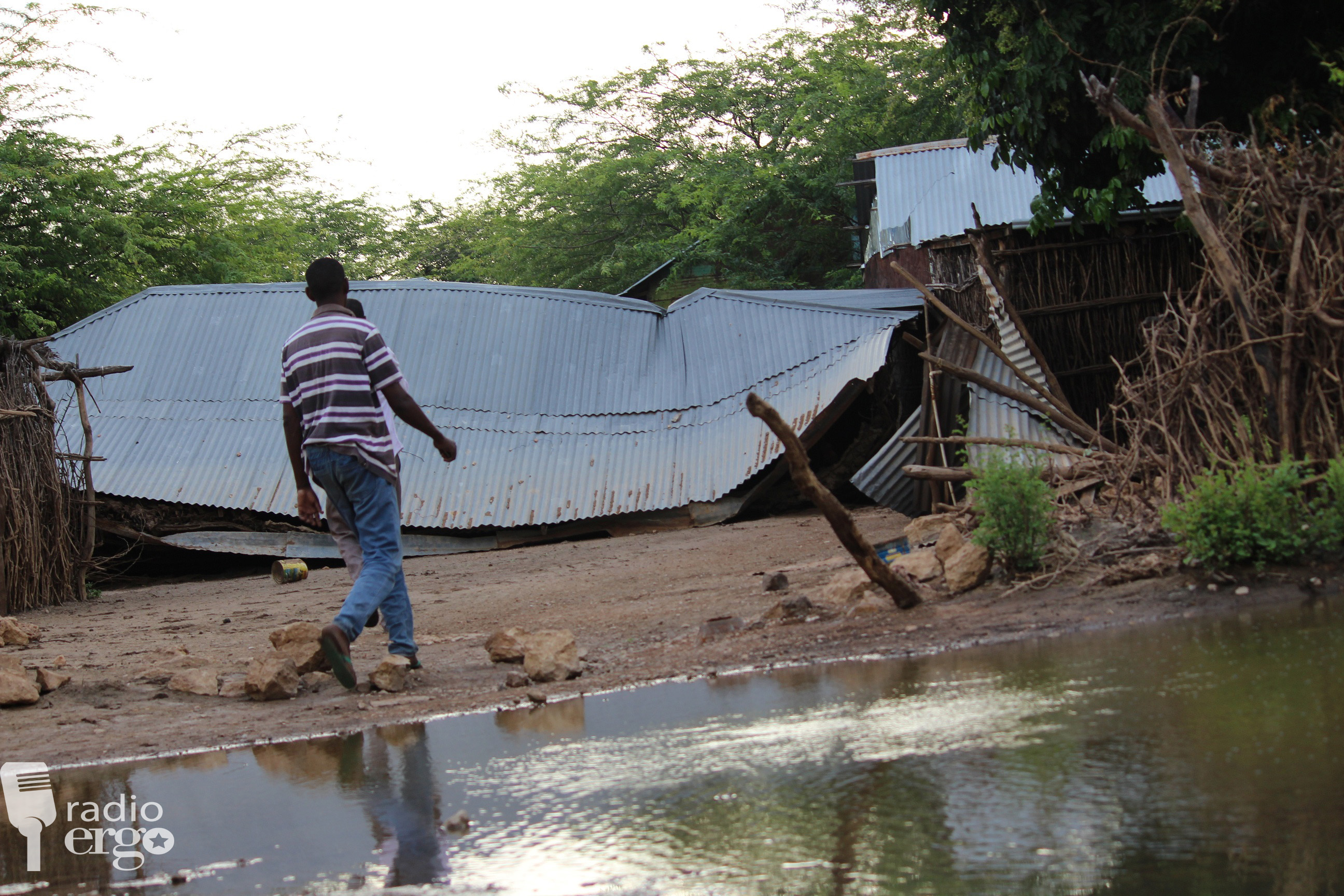
Sheikh-Omar camp was established in 2005 and is home to around 150-200 families. Most of them were displaced from villages around Jowhar by conflict. Others fled from Mogdishu when Ethiopian forces entered the city, while a few were displaced by drought in Lower Shabelle.
The camp is on privately owned land, where people have put up makeshift houses made of cardboard and pieces of cloths. Whilst there is a water well and toilets, there are no health or education services and no aid from aid organizations.