Radio Ergo - Somali Humanitarian News and Information
  • Home
  • Topics
    • Latest Stories
    • IDPS/Refugees
    • Natural Disasters
    • Health
    • Social
    • Food Security
    • Education
    • Agriculture & Livestock
  • Programmes
    • Locust Programme
    • Farming Programme
    • Radio Doctor Programme
    • Women Programme
    • Entertainment Programme
  • About Radio Ergo
  • Contact Us
  • blankSomali
  • blankEnglish
No Result
View All Result
Radio Ergo - Somali Humanitarian News and Information
  • Home
  • Topics
    • Latest Stories
    • IDPS/Refugees
    • Natural Disasters
    • Health
    • Social
    • Food Security
    • Education
    • Agriculture & Livestock
  • Programmes
    • Locust Programme
    • Farming Programme
    • Radio Doctor Programme
    • Women Programme
    • Entertainment Programme
  • About Radio Ergo
  • Contact Us
  • blankSomali
  • blankEnglish
No Result
View All Result
Radio Ergo - Somali Humanitarian News and Information
Home AGRICULTURE & LIVESTOCK

Somali farmers in Middle Shabelle try to combat destructive Fall Armyworm crop pest

Radio Ergo by Radio Ergo
June 25, 2018
in AGRICULTURE & LIVESTOCK, LATEST STORIES
0
blank

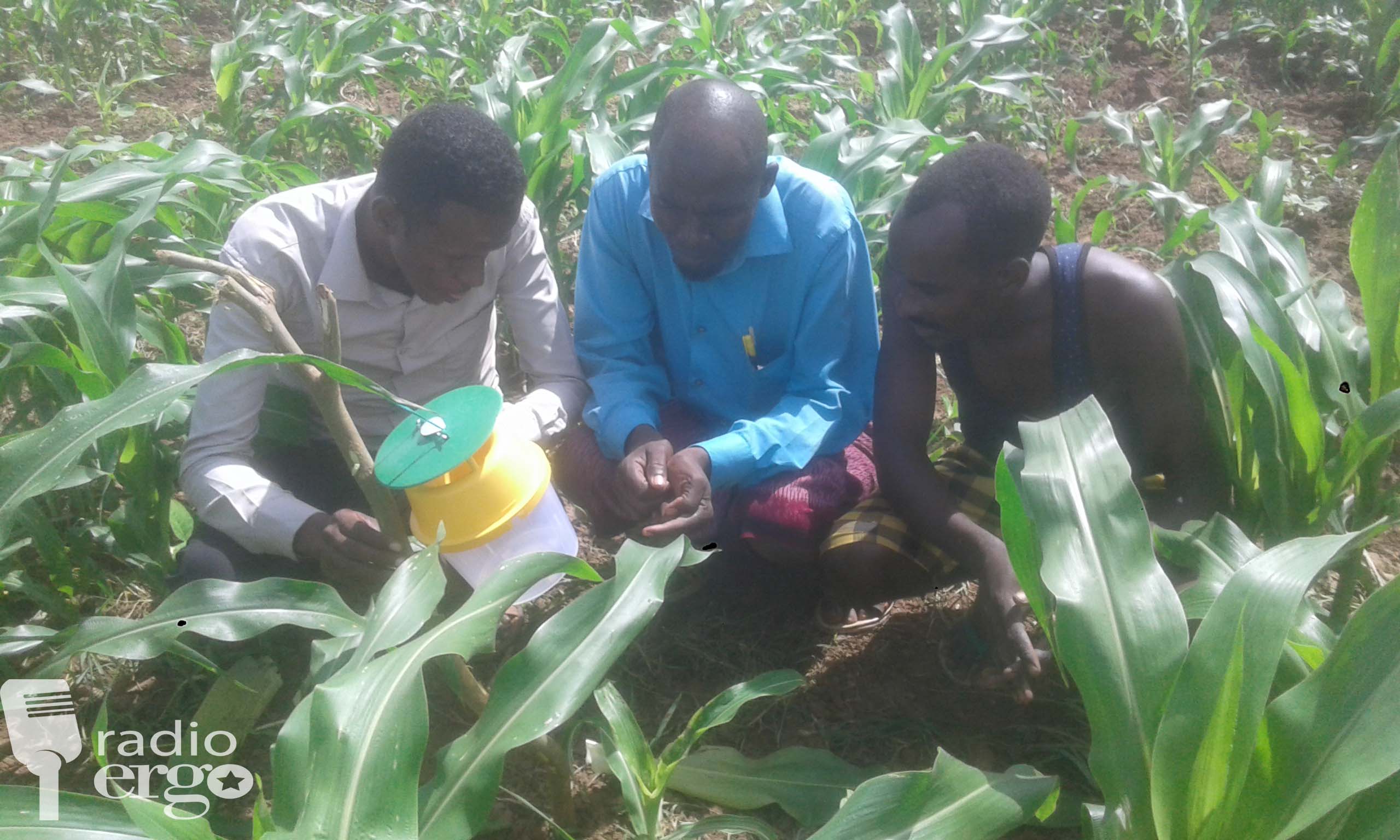
Qaar ka mid beeralayda Jowhar oo dhegeysanaya sanqarta qalabku bixinayo/Sawir/Maryan/Ergo

0
SHARES
Share on FacebookShare on Twitter

(ERGO) – Yakub Bule, 48, first noticed the unusual insects eating his crops on his farm in Bananey, just outside Jowhar, during the Gu season last year.  He sprayed several times using the normal pesticide, but the five hectares of maize, sorghum and beans he had planted were ruined as the insects did not respond to the treatment.

He lost the 13 million Somali shillings he had invested in the farm and is still struggling to repay his loans.

The culprits turned out to be Fall Armyworm – a devastating pest that is working its way across Africa, and has been noticed in the Middle Shabelle region of southern Somalia over the last two rainy seasons.

The ‘worms’ are actually caterpillars laid by a moth originating in the Americas. The caterpillars are voracious and can eat up large areas of crops very rapidly.  They are proving difficult to manage.

Yakub has recently installed a set of Fall Armyworm traps on one hectare of his land, where he is growing maize and beans, to try to manage the pest. This part of his farm survived the flash floods from the Shabelle River that wiped out many farms in May.

The traps lure the moths using synthetic compounds that mimic the natural chemicals emitted by female moths to attract male moths for mating. The traps need regular checking and the lure needs replacing every few weeks.

The equipment was provided by the UN’s Food and Agriculture Organisation (FAO), which has conducted training of 12 people on installing the traps, in conjunction with the Hirshabelle State ministry of farming and irrigation.

The minister, Hassan Ahmed Muday, said they collect all the trapped moths from the farmers involved in the initiative. They pass them on to FAO for examination and analysis, so that they can decide on the appropriate control measure.

“The female moths lay up to 2,000 eggs a night which hatch in seven to 10 days. They infest the fields and can easily wipe out the crops, even feeding across 100 km distance in a night,” said Mudey.


Previous Post

Families in Elbarde, Bakool region, miss meals as shilling loses value and food becomes short

Next Post

Free fistula surgery in Borama hospital gives suffering Somali women their lives back

Related Posts

Silent disease diabetes takes toll on families in Somaliland
FOOD SECURITY

Silent disease diabetes takes toll on families in Somaliland

June 3, 2026
Teachers jobless as Baidoa IDP schools close due to funding cuts
EDUCATION

Teachers jobless as Baidoa IDP schools close due to funding cuts

May 22, 2026
Somalia live news, Somalia latest news, Mogadishu live news, Somali news
FF Feedback

Radio Ergo audience feedback report 14-20 May 2026

May 21, 2026
Young Somali refugees in Dadaab invest in family-supporting businesses
FOOD SECURITY

Young Somali refugees in Dadaab invest in family-supporting businesses

May 20, 2026
blank
AGRICULTURE & LIVESTOCK

Livelihoods support aids displaced households in Middle Shabelle

May 18, 2026
Small family savings evaporate overnight as Somali 1,000 shilling notes rejected by businesses
LATEST STORIES

Small family savings evaporate overnight as Somali 1,000 shilling notes rejected by businesses

May 16, 2026
Next Post
Free fistula surgery in Borama hospital gives suffering Somali women their lives back

Free fistula surgery in Borama hospital gives suffering Somali women their lives back

FOLLOW US ON FACEBOOK

DAILY PROGRAMMES

IDAACADDA 02-JUN-2026

IDAACADDA 02-JUN-2026 by Radio Ergo

IDAACADDA 02-JUN-2026
Episode play icon
IDAACADDA 02-JUN-2026
June 2, 2026
Episode play icon
IDAACADDA 01-JUN-2026
June 1, 2026
Episode play icon
IDAACADDA 31-MAY-2026
May 31, 2026
Episode play icon
IDAACADDA 30-MAY-2026
May 30, 2026
Episode play icon
IDAACADDA 29-MAY-2026
May 29, 2026
Search Results placeholder
Radio Ergo Weekly Newsletter
We respect your privacy.
blank
blank
blank

© Copyright 2014 - 2024 Radio Ergo

No Result
View All Result
  • Home
  • Topics
    • Latest Stories
    • IDPS/Refugees
    • Natural Disasters
    • Health
    • Social
    • Food Security
    • Education
    • Agriculture & Livestock
  • Programmes
    • Locust Programme
    • Farming Programme
    • Radio Doctor Programme
    • Women Programme
    • Entertainment Programme
  • About Radio Ergo
  • Contact Us
  • blankSomali
  • blankEnglish

© Copyright 2014 - 2024 Radio Ergo