Radio Ergo - Somali Humanitarian News and Information
  • Home
  • Topics
    • Latest Stories
    • IDPS/Refugees
    • Natural Disasters
    • Health
    • Social
    • Food Security
    • Education
    • Agriculture & Livestock
  • Programmes
    • Locust Programme
    • Farming Programme
    • Radio Doctor Programme
    • Women Programme
    • Entertainment Programme
  • About Radio Ergo
  • Contact Us
  • blankSomali
  • blankEnglish
No Result
View All Result
Radio Ergo - Somali Humanitarian News and Information
  • Home
  • Topics
    • Latest Stories
    • IDPS/Refugees
    • Natural Disasters
    • Health
    • Social
    • Food Security
    • Education
    • Agriculture & Livestock
  • Programmes
    • Locust Programme
    • Farming Programme
    • Radio Doctor Programme
    • Women Programme
    • Entertainment Programme
  • About Radio Ergo
  • Contact Us
  • blankSomali
  • blankEnglish
No Result
View All Result
Radio Ergo - Somali Humanitarian News and Information
Home AGRICULTURE & LIVESTOCK

ADADO PASTORALISTS TAKE UP FARMING

Hemed Abdiaziz by Hemed Abdiaziz
October 16, 2015
in AGRICULTURE & LIVESTOCK
0
CADAADO:-XOOLO-DHAQATO-BEERALEY-NOQONEYSA

Keydka sawirrada/Ergo

0
SHARES
Share on FacebookShare on Twitter

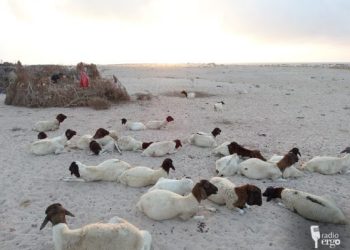
65-year-old Abdullahi Nur has been a pastoralist all his life. This year, however, having lost most of his animals because of drought and with nine children to support, he decided to turn to farming.

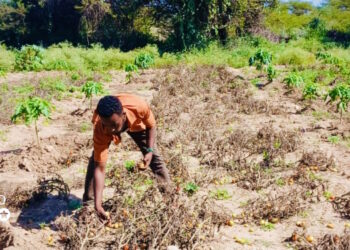
He planted beans and watermelons on a plot of land at God-Dhurqa location, 20 km from Adado town, and was delighted to earn $2,000 from selling the cash crops.

“It’s the largest amount of money I have ever made!” said Abdullahi. “My life is now much better than before. I keep livestock and farm at the same time.”

Farming means he does not have to trek for days in search of a pasture. Now, he grows and harvests enough grass to feed his herd of 160 goats.

Prolonged and repetitive drought has made the lifestyle of Galgadud region’s pastoralist communities precarious and more and more herders are now diversifying and taking up farming to secure a better future for their families.

The first small farm in God-Dhurqa was started 11 years ago by Abdirahman Abshir, whose entire herd was wiped out by drought.

He owns a four-hectare farm on which he grows beans, watermelons, paw paws and lemons. He sells his produce at markets all across the central regions.

Abdirahman, as a pioneer, has been joined by 50 other families also venturing into farming in Adado.

“We now lead a settled lifestyle, without moving any more from one place to another in search of water and pasture for our livestock,” said Abdirahman.

He explained that this has had the added advantage of enabling his children to get access to education. His oldest son, 13, is a student at a high school in Adado. His other children attend a local primary school.

“My children would never have got access to education if I had continued being a nomad up to now and not settled down” Abdirahman said.

Bashir Mohamed, an agricultural expert, said the lack of knowledge of modern agricultural practices was one of the biggest challenges facing these newcomers to farming.  Many of them did not know how best to use irrigation given the water scarcity in the district. Training was required, Bashir said, to enable them to make the most of their decision to change their livelihoods.
Previous Post

Bardhere residents shift food stores ahead of El Nino

Next Post

Floods displace 400 families in Beletweyne

Related Posts

Pastoralists with nothing left descend on Lasanod town and surroundings in Sool
AGRICULTURE & LIVESTOCK

Pastoralists with nothing left descend on Lasanod town and surroundings in Sool

February 10, 2026
Somali refugees in Dadaab decry cutting of cash transfers for food
AGRICULTURE & LIVESTOCK

War and drought in Puntland continue to punish displaced families in Bari region

February 3, 2026
Lower Juba farmers get good harvests that help recovery from 2023 river floods
AGRICULTURE & LIVESTOCK

Mudug pastoralists earning good income from farming vegetables

January 27, 2026
blank
AGRICULTURE & LIVESTOCK

Baidoa IDP camps fill up with drought-hit farming and herding families

January 26, 2026
Women in Kismayo make survival income selling acacia seeds as drought fodder
AGRICULTURE & LIVESTOCK

Women in Kismayo make survival income selling acacia seeds as drought fodder

January 19, 2026
blank
AGRICULTURE & LIVESTOCK

Greenhouse farm in Mogadishu employs displaced rural farming youth

January 16, 2026
Next Post

Floods displace 400 families in Beletweyne

FOLLOW US ON FACEBOOK

DAILY PROGRAMMES

IDAACADDA 10-FEB-2026

IDAACADDA 10-FEB-2026 by Radio Ergo

IDAACADDA 10-FEB-2026
Episode play icon
IDAACADDA 10-FEB-2026
February 10, 2026
Episode play icon
IDAACADDA 09 -FEB-2026
February 9, 2026
Episode play icon
IDAACADDA 08-FEB-2026
February 8, 2026
Episode play icon
IDAACADDA 07-FEB-2026
February 7, 2026
Episode play icon
IDAACADDA 06-FEB-2026
February 6, 2026
Search Results placeholder
Radio Ergo Weekly Newsletter
We respect your privacy.
blank
blank
blank

© Copyright 2014 - 2024 Radio Ergo

No Result
View All Result
  • Home
  • Topics
    • Latest Stories
    • IDPS/Refugees
    • Natural Disasters
    • Health
    • Social
    • Food Security
    • Education
    • Agriculture & Livestock
  • Programmes
    • Locust Programme
    • Farming Programme
    • Radio Doctor Programme
    • Women Programme
    • Entertainment Programme
  • About Radio Ergo
  • Contact Us
  • blankSomali
  • blankEnglish

© Copyright 2014 - 2024 Radio Ergo