

(ERGO) – Sharif Abdille Nur, 60, arrived in the central Somali town of Dusamareb in August with his family of 12 after drought and livestock losses forced them to leave Galkayo, and prior to that to flee their original home in Ethiopia’s Somali Region.
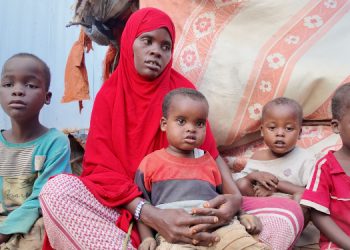
Their second displacement has brought little improvement, with the family struggling to find food, water and shelter in Oog camp on the outskirts of Dusamareb. They receive occasional donations of uncooked food from neighbouring families that isn’t enough to feed all of them.
“My children have not had breakfast today, and we don’t expect to have lunch. We are waiting for what God provides. This is the hardship we are facing,” Sharif said.
He had hoped to find casual work in Dusamareb but leaves home every morning looking for jobs and returns empty-handed. They depend on a neighbouring household for water, although that family is also struggling. He can’t afford the $3 monthly charge per household for piped water in the camp.
Their shelter has a badly worn covering and is too small, offering little protection from the cold at night or heat during the day. Sharif said he had lost hope of finding a better life through their second move this year.
“We first came from Ethiopia and settled in Galkayo. Now we are facing the same hardship in Dusamareb,” he said.
When they arrived, they knew nobody and initially sat under a tree until the camp chairman found them and brought them to Oog. “Nothing has changed since then. The people we depend on for support are facing the same difficulties as us.”
Three of his children were attending primary school in grades five and three, as well as Koranic classes, for which he paid a combined $35 a month. He can’t afford private school fees in Dusamareb, while Oog camp has no schools or healthcare facilities.
The family walked for three days to reach Dusamareb from Qorahey camp in Galkayo in early August. They had moved to Galkayo at the beginning of the year after drought wiped out their livestock in Qallafe zone in Ethiopia’s Somali Regional State.
Sharif said repeated drought and disease killed their 50 goats and sheep. Conflict between Somali communities and other ethnic groups in Ethiopia also contributed to their decision to leave.
Asha Omar Ali, with a family of nine members, said they were experiencing even worse conditions than those they had left behind in Galkayo when they arrived in Shabelle camp on the outskirts of Dusamareb early in October.
Her family manages the odd meal in a day from food they beg from people who settled in the camp earlier. The support is unreliable because those families are also poor and unable to help regularly.
“We are hungry as I speak to you. We went to bed hungry last night,” she told Radio Ergo. “We are helpless people in distress. We have never experienced hardship like this before, and we have nowhere to return to.”
Asha, 50, said she had no one to support her family. Her children’s father is elderly and unable to contribute to their upkeep, while her oldest child is 12 and too young to work in a quarry, a common source of employment in the area.
She walks around town looking for domestic work, including washing clothes, but many households tell her they have washing machines and no longer need to pay people to do their laundry.
Her family’s shelter was destroyed by strong winds and flooding caused by heavy rain on 11 October. The structure was made from bits of cloth and wooden poles collected from trees. The mattresses and few cooking utensils they’d been given were swept away.
The family spent their lives in the rural area and hoped to remain there. However, drought, poor pasture and disease killed their 40 goats in Odaale in Qallafe zone. Water shortages also destroyed food and vegetable crops on their three-hectare farm towards the end of 2025. Asha said they lost the entire $400 invested in seeds, cultivation and irrigation.
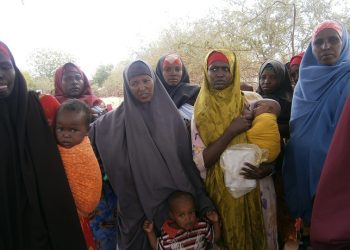
The chairman of Oog camp, Hassan Mohamed Dheere, said more than 200 families had arrived in Oog and three neighbouring camps over the past two months, fleeing conflict and the effects of climate change.
The families were facing severe hardship, while the communities they had joined were struggling and unable to provide meaningful support.
“The families are enduring severe humanitarian conditions. We are appealing to aid agencies to urgently reach them with assistance to address their lack of water, food and shelter,” he said.
The chairman said they had received no response to requests submitted to the town authorities. The withdrawal of aid organisations and a lack of economic opportunities, which had also reduced casual labour jobs, were further worsening conditions for the displaced families.