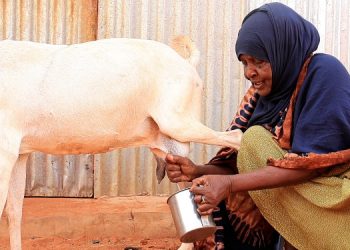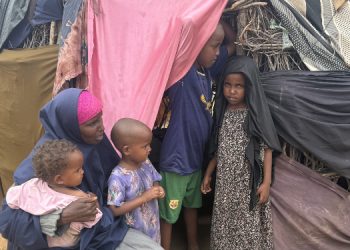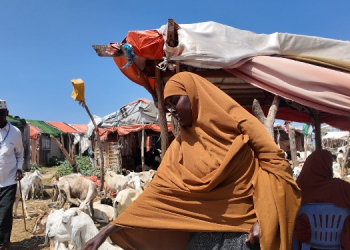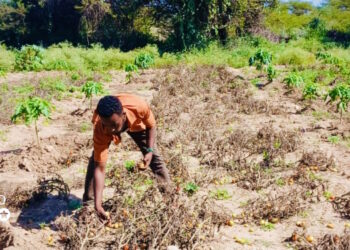


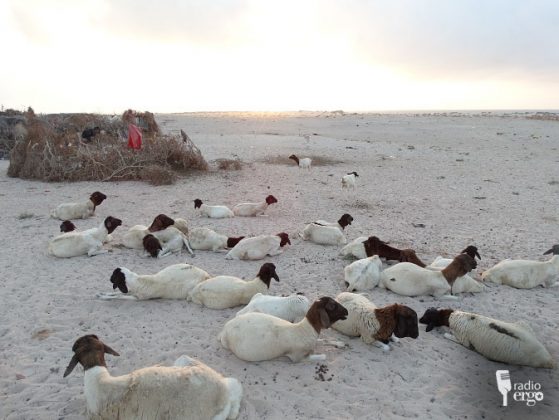
(ERGO) – Pastoralist families in Hodayga, Balli’ad and Jaleel villages in Abudwak, central Somalia’s Galgadud region, are struggling with livestock diseases that have killed large numbers of camels, goats and sheep since May.
Mohamed Adan Dhoore, who lives in Hodayga, has lost 50 camels and goats. He has 37 animals left, but 18 are sick and he is not confident they will survive.
The decline in his herd has severely affected his family of 14, which relies on milk and livestock sales. Their relatives in Abudwak occasionally provide them with food to help them out.
“We have lost the livestock we depended on. They became sick, and what we used to earn from selling them and their products has disappeared. Our family used to cook three times a day, but now we manage only once. We have no lunch or breakfast; the situation is very difficult,” he said.
Local shops stopped extending him credit at the end of June after his debt exceeded $700. He had repaid his previous debts when rainfall improved and his animals recovered.
He said he tried treating the sick animals with medicines bought on credit, but stopped after seeing no improvement and running out of money. There are no veterinary services in his village, and he can’t afford to bring a veterinarian from elsewhere.
Mohamed, who has spent more than 30 years as a pastoralist in Galgadud, said he had never experienced such severe conditions. With his livestock dying, and no other livelihood skills, he fears his family may be forced to leave their home.
The household is also struggling to access water. They collect 20 litres every 24 hours from a privately owned well three kilometres away, carrying it home because they have no transport.
In Jaleel, 15 kilometres north of Abudwak, Abdirisak Shaiye Adan said livestock disease had similarly devastated his household of 11. He has only 46 animals left out of thee 300 camels and goats his family once depended on.
The surviving animals produce little or no milk, cannot be sold easily and still require water and feed that the family cannot afford.
Abdirisak does occasional stone-breaking work, earning between $3 and $5 a week. When he finds no work, his children go without food.
“People’s lives are at risk. It has affected us badly. We eat once or twice a day. There is no market where we can take an animal, there’s no meat and no milk. The animals that were pregnant have died or miscarried. They had no pasture to feed on, so their productivity disappeared along with them,” he told Radio Ergo.
The family cannot afford a water container costing $8, forcing them to ask neighbours for a few litres each day.
Three of Abdirisak’s children have been sick for the past two months. He said he cannot afford medical tests, medicines or transport to a health facility. The children, aged between one and 12, have recurring fevers and severe weakness.
“The children are wasting away as I speak to you. None of them has died, but they are suffering badly and are very weak.,” he said. “I have nothing to treat them with. I can’t seek medicine or even find money to transport them. I have nothing left to give them.”
The financial pressure has disrupted their education. Two of Abdirisak’s children were expelled from Koranic school in June after he failed to pay two months of fees at $3 per child.
Gallad Mohamed Ibrahim, a livestock specialist who reviewed the symptoms reported by the pastoralists, said the diseases could include respiratory infections, sheep and goat pox, poisoning and mange disease. He linked the risks to changing weather patterns, the concentration of livestock, and worsening pasture conditions.
He advised pastoralists to provide clean water and adequate feed, isolate sick animals and seek veterinary assistance as soon as symptoms appeared. He also recommended timely vaccination and collective action among pastoralist communities to make treatment more accessible.
Gallad said government agencies and aid organisations had a role to play in supporting communities facing the combined effects of livestock disease, drought and climate-related pressures.