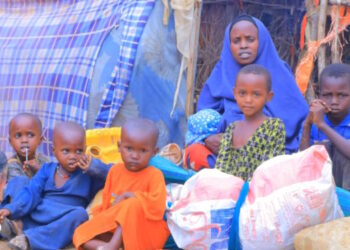
(ERGO) – More than 60 families who had been forced to flee conflict in Erigabo over a year ago are stranded in desperation, after walking long distances southwards through Sanag region and into Sool region seeking safety and assistance.
Having abandoned their homes and businesses in Erigabo at the end of 2024, they first sought safety near Damala-Hagare in Sanag, but the absence of support and harsh living conditions pushed them to move again.
The families walked south nearly 100 kilometres to the outskirts of Taleh in Sool, where they settled in Daawad camp – a barren landscape, where they are worse off than before and facing a lack of water, food, and shelter.
Saynab Ahmed Farah, a mother of 10, says she moves through the Taleh town neighbourhoods begging for food from long-term residents to provide her children with at least one meal.
“We only light the fire once a day, and it’s not enough. We can’t find anything to cook a second or third time. We are forced to endure with whatever little we get,” she said.
Saynab’s elderly husband is unable to work, leaving the heavy burden of providing for the household on her shoulders. Every day, she walks four kilometres to Taleh in search of cleaning or portering jobs, or handouts of food. But jobs are scarce, and as a newcomer, she lacks the social connections to secure work.
The long walks in the heat are exhausting and the family survives on just one jerrycan of water per day, which she often has to beg from a privately owned borehole nearby.
“When they refuse, we stay thirsty because we have no other option,” Saynab said, explaining that she cannot afford $0.60 per jerrycan.
The conflict in Erigabo robbed her children of their education. Five were enrolled in school before the violence broke out, but they have now been out of the classroom for 18 months. When she inquired about schools in Taleh, she was told the fees were $15 per child.
She owes about $700 to shops owned by relatives of her husband, where the family took food on credit after arriving in Daawad.
In Erigabo, she ran her own small business selling charcoal and food, which supported the family. She estimated losing $430 in stocks. They now live in conditions she had never dreamed they would have to accept.
“We are living in an old makeshift hut that can’t protect us from either the heat or the cold. It is overcrowded and not big enough for us. Since we have nowhere else to shelter and can’t afford house rent in town, we stay in it. Up to now, we have not received any proper shelter,” she said.
Anab Ahmed Ali, a 56-year-old mother of nine, is also experiencing the most severe hardship of her life in Daawad camp. She and her family walked for two days and nights to reach the outskirts of Taleh, almost 100 kilometres from where they were staying in Sanag.
She weeps thinking about her small shop back home selling tea and cooked food that used to support the family. She estimates her financial loss at $325.
“Our life before was better than here. We can’t return to our town [Erigabo] because the security and political situation are still unreliable. We are living in extremely difficult conditions, with water shortages, lack of shelter, and no education,” she said.
With her husband unable to find manual jobs, the family has to survive on credit. Anab has accumulated $300 in debt buying just basic food and water.
“Water shortage and thirst are unbearable and it’s the hardest thing for us as a family. A barrel of water costs six dollars, which we can’t afford. Sometimes we take it on credit. When we can’t get it, we are forced to stay thirsty,” Anab explained.
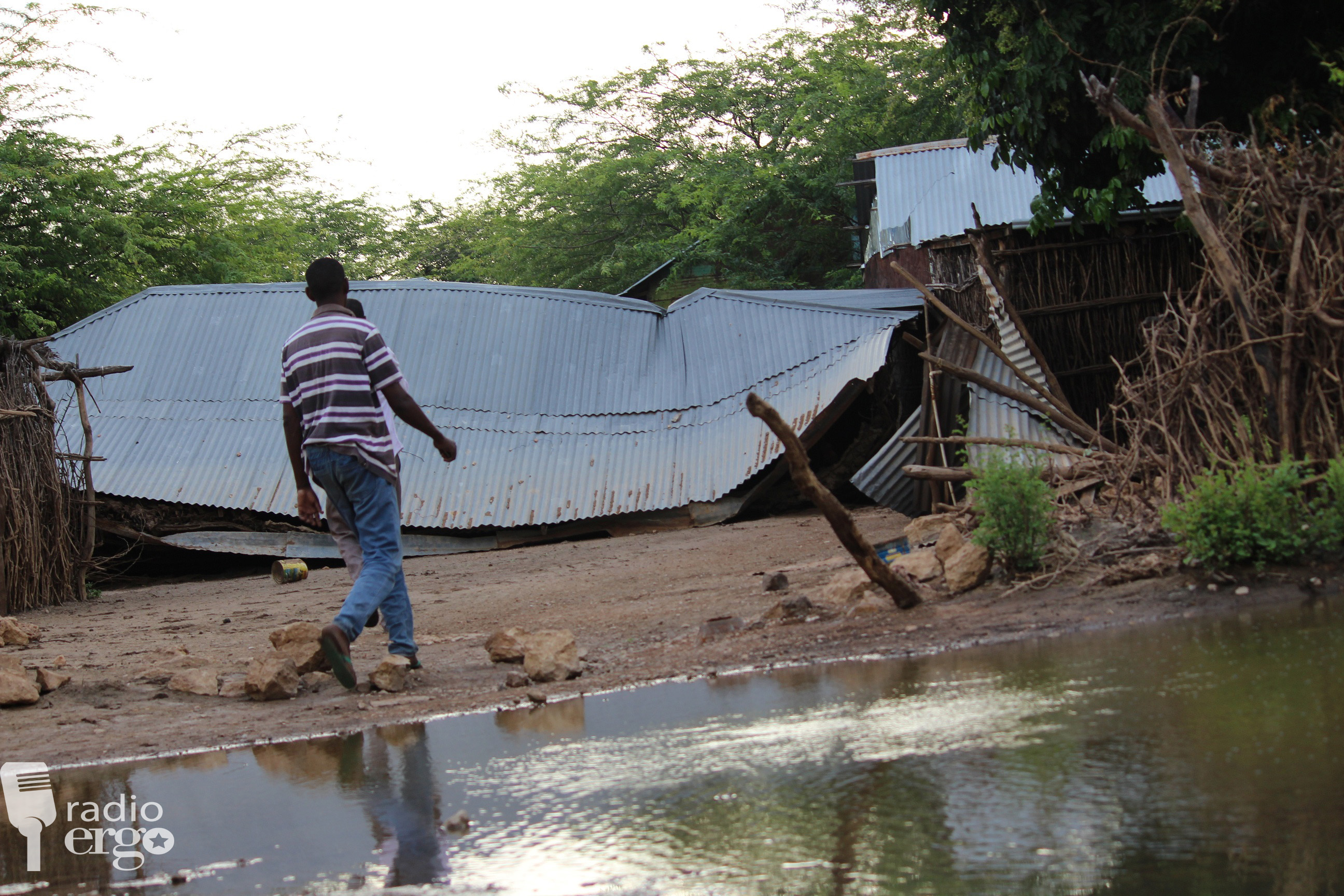
They live in a cramped shack built from old iron sheets and wooden boards. The structure is too small for a family of nine and provides no protection from the elements.
Four of her children, who were attending Koranic school in Erigabo for $20 a month, are now out of school.
With no educational or health facilities in Daawad camp, Anab says her children frequently ask when they can go back to school.
The future remains uncertain – they can’t return home, yet surviving in this camp without any basic services and racking up debts for food and water is not sustainable.
The chairperson of Daawad camp, Saleban Muse Duale, noted that the camp lacked even the most basic infrastructure and that people there had not received any aid or assistance.
“They are facing difficulties with food and water, and they also lack proper shelter. They cannot afford to build shelters because they are people displaced from their land. The camp has no health facility and no education centres. The children are completely out of school,” Saleban told Radio Ergo’s local reporter.