

Families who have fled drought and insecurity across Bakool region are now enduring dire conditions in camps around Hudur, after losing their farms and homes. Many arrived in August and September, hoping for aid and safety, but have instead found hunger, thirst, and despair.
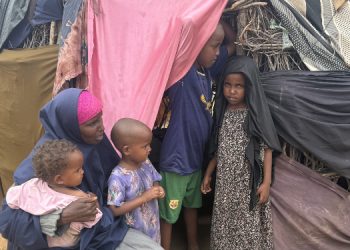
Among them is Habibo Yarey Ali, a mother of seven, who reached Mubarak camp in September. Her family sleeps under a torn plastic sheet stretched over sticks. When it rains, the shelter leaks, and it becomes unbearably hot in the sun.
Habibo said she leaves camp every morning to knock on doors in nearby neighbourhoods, asking for leftover food or small coins.
“Forget about food, we can’t even get used to the environment here,” she told Radio Ergo. “We just sit in the camp – there’s no life here. We face thirst, heat, no food, no water, there aren’t even any toilets. There’s a serious shortage of water, and not a single tree for shade. That’s how we live.”
Three of her children have been sick for two weeks, suffering from high fever and diarrhea, but she has been unable to take them to a health facility because she has no money.
Habibo thinks they fell ill from being exposed to mosquitoes, as well as contaminated water fetched from shallow hand-dug wells several kilometres away. She walks an hour there to spend most of the day queueing to fetch small amounts of water.
“Getting water is a real struggle. If there were enough wells, people would not spend hours in line. Sometimes the well runs dry halfway through the day. Some wells charge 2,000 shillings for a jerrycan. I tell them I don’t have any money, so they take pity and let me fetch some. I often spend from morning to midday just waiting for my turn, that’s how hard it is,” she told Radio Ergo.
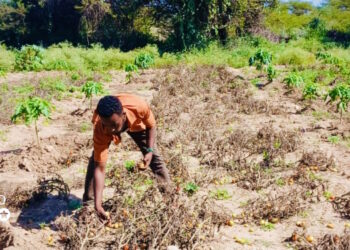
Habibo and her family fled Mubarak in Bakool region in August, after two years of poor rainfall destroyed their three-hectare farm.
Their situation worsened when Al-Shabaab, which controls the area, imposed new restrictions and penalties on residents.
Her husband has been missing since they fled. The last time she heard from him, he said he was looking for work to support the family. Since then, Habibo has been left alone to take care of the children.
Unfamiliar with the town, she tries daily to find any kind of job to earn food for her family, but so far, she has not been successful. She says she has not given up hope, as hard work is their only path forward.
Eebli Adan Hasan, another displaced mother of seven, said her children have been surviving on one meal a day since arriving in Hudur in August.
“In the first days before we settled here, I stayed with relatives, now I just knock on doors around town, telling people I need food for my children. Some give me something small. We don’t get three meals – sometimes we only have tea in the morning and a small meal at noon. There’s no dinner most nights,” she said.
Eebli and her children live in a makeshift hut made of cloth. She fetches water twice a day from a nearby well, carrying a single jerrycan to use only for drinking and cooking.
She said the long walks to fetch water are exhausting at her age and it takes more than three hours each day to carry just one jerrycan back. The strain of these daily struggles, she said, has left her deeply anxious.
Eebli and her family fled El-garas in Bakool region after two years of drought destroyed their five-hectare farm. She said she expected to find a better life in Hudur, but there is nothing there.
“There’s no security in El-garas – Al-Shabaab controls the area,” she explained. “There’s no work, and the drought has wiped out everything. People who used to farm can’t grow anything anymore. We had livestock, but the drought killed them all. There’s nothing left.”
She added that even if rain came, it would be difficult to go back home because Al-Shabaab continues to control the area, seizing harvests from farmers, and making life impossible.
The Bakool regional official overseeing the registration of displaced families, Ibrahim Abdirahman Mohamed, told Radio Ergo that living conditions in Hudur’s camps were deteriorating.
More than 1,000 displaced families have already been registered, with numbers growing daily. Most have fled from Tiyeglow, El-garas, Biyoley, Mubarak, and nearby villages.
According to Ibraahim, many of the new arrivals are now living with families who were displaced earlier. As humanitarian aid to the camps has sharply declined, everyone is living in equally dire conditions.