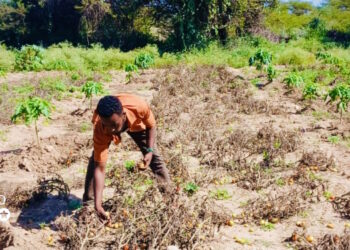


(ERGO) – A new veterinary treatment centre established by the Galmudug state administration has been welcomed by pastoralist communities in the rural areas of Bahdo, central Somalia’s Galgadud region.
Since opening on 1 June 2025, some 500 local families have brought in nearly 2,000 animals, including camels and goats, for treatment of prevalent diseases and vaccinations.
Coordinator of the Ministry of Livestock in Bahdo, Dr Jama Ali Mohamed, leads the centre’s five-person team of veterinarians, who are focused on protecting livestock from diseases that kill or make them unproductive, impacting the livelihoods of pastoralists.
Treatment is provided free of charge, alleviating the hardship experienced by many at this time of year.
“When the animals are sick, it’s hard for us as pastoralists to make a living. Since this veterinary centre started treating our sick animals, it has made a big difference and the livestock are thriving. Everyone is sending us congratulations. All camels and goats brought in are treated. We have experts in all types of animals like goats, cows, sheep and camels. As well as treating the sick animals, they are vaccinated against all the diseases,” Dr Jama told Radio Ergo.
The most common recurrent diseases affecting livestock are pneumonia, measles, and ticks. Dr Jama indicated that livestock owners in Bahdo and surrounding areas had lost many animals in the past three months to disease, especially as people migrated to different areas with their herds in search of water and pasture.
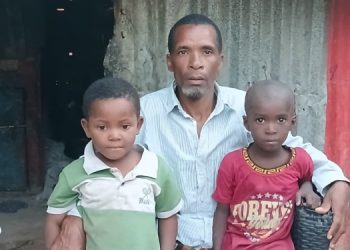
Livestock herder in Bahdo, Mahmud Osman Abdi, lost 47 goats to pneumonia in May because he could not afford treatment. He noted that his remaining 82 goats were treated two weeks ago at the centre for free and were now recovering.
“I saw the animals had symptoms like their hair falling off and they were dying off. They were just lying down and not getting up, sometimes dropping dead. Now the goats are healthy and moving around actively eating whatever plants they find,” Mahmud said.
He said this was the first time his livestock had received free treatment in his 18 years in pastoralism, at a time when he thought his whole herd was doing to die off.
His family of 11 children faced food shortages as the animals whose milk they drank and that they used to sell to make money were affected by pneumonia and became unproductive.
The difficult circumstances forced him to seek assistance from relatives in Bahdo and Adado, who sent him money to cover one meal a day.
Once the animals recover fully, he hopes to be able to sell them in the market again. He described how he coped with diseased animals before this free treatment:
“We used to dig up herbs and sometimes apply them to the animals’ skin and feed them medicinal plants. Some just died, and some recovered with those plants. There was no money, no free healthcare, and the livestock had no market value. We went through a period when livestock could not be sold, and sometimes we would slaughter some of them and live off the meat for 10 or 15 days,” he explained.
He sees access to the livestock treatment centre as a valuable resource. Their animals typically fall ill with diseases once or twice a year, often coinciding with the movement of nomads at the start of the rainy season. He has been advised to bring any animal showing signs of illness to the treatment centre.
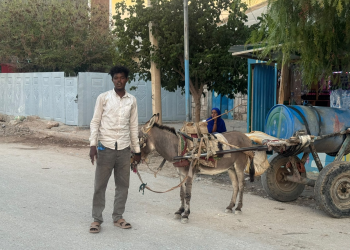
Another livestock herder Abdi Ali Dirshe’s 170 goats were treated in June for diseases including pneumonia, foot-and-mouth, and ticks.
These animals are the sole source of income for his 12-member family. When his animals were sick and whilst they recover, he is providing for his family with food obtained on credit from shops in Bahdo.
For the past two months, he has accumulated a debt of $160 for food and essential items that he hopes to repay when his goats recover their health and he can sell them in the market.
He faced a difficult situation in April and May when all his livestock fell sick and 22 of his goats died. He noted that diseases came from rain-following nomads who brought their sick herds to the area.
“An animal could be seen looking very sick and weak, and then it just died. Now the animals have been treated. They are healthy and better, and not like before. Those that were treated are well, and the sick animals are now moving around,” Abdi said.
Dr Jama said the team provided awareness to the community about diseases and treatment. The centre plans to establish a team of veterinarians to travel to rural areas monitoring livestock health.
“Now animals are brought in for treatment to the place where the livestock care centre is built, whilst previously animals were treated at their locations. We used to do rounds before, with non-governmental organisations that were in the area going round to areas as far as Eldher. We have been here for about a month now treating the animals brought into this centre,” he said.