(ERGO) – The seeds from a plant native only to Somalia and Somali Region of Ethiopia – and known for centuries to nomads as ‘famine food’ – are being harvested by a new trading cooperative in Mudug region giving work to drought-hit pastoralists.
The cooperative in Darasalam district, west of Galkayo in central Somalia, was set up in February 2025 and has been buying up to 15 sacks a day of the wild Yeheb nuts collected by pastoralists, who earn $110 per sack.
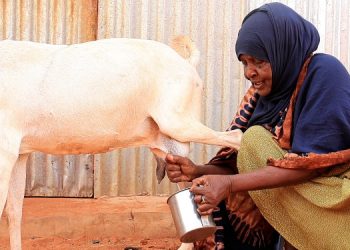
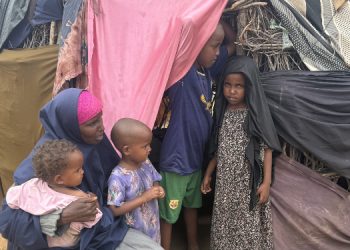
Ali Hussein Abdi, a former herder who lost 140 goats to three consecutive years of drought, gathers the protein-rich Yeheb nuts in the bush five days a week with two teenage helpers. The cash paid by the cooperative is a lifeline for this father of 12, who had spent months in a displacement camp after losing his livestock.
“Life has changed since we got into Yeheb (yicib) nuts. I moved out of the IDP camp and settled in the city, paying to rent two rooms. The children started school. We have our other needs met. It’s very good! Before, when we were displaced, we used to get food and other needs randomly but since we got into the Yeheb work, our cooking pot has been full,” he said.
The renewed harvesting of Yeheb nuts began after rainfall in early 2025 revived the growth of the bushes in Mudug and Hiran regions.
The plant is on the endangered species list since extreme drought, habitat loss, and over exploitation for use as firewood and animal fodder, have diminished its prevalence in dryland areas by almost half.
Traditionally, the nuts have been collected for centuries by nomads for food and medicinal use and were not traded. The traders in Mudug appear to have seen its commercial potential. A local market has emerged, with the nuts being sold in towns like Galkayo, Garowe, and Bosaso.
The Darasalam cooperative buys directly from poor and displaced families collecting Yeheb, offering fair prices, equipment and transport support.
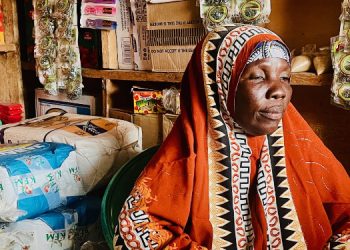
The cooperative founder, Abdulqadir Ali Aden, said up to 15 suppliers arrived daily with full or half sacks of Yeheb to sell.
“When they go to work, we help them with tools, expenses, and transport. We give food and other provisions to whoever needs it. Whatever they collect, we buy from them at the fair price. They benefit greatly. After we pay them in cash, they deduct what they owe, and what remains they take for their own needs. They are living from the honest sweat of their own labour,” he explained
For Ali, hope returned when a man from his home area told him about the cooperative. Humanitarian aid had stopped in the IDP camp where he lived, and neighbours could share only a meal a day. Elderly and unskilled, he couldn’t find jobs on building sites.
“I go with two boys to gather Yeheb nuts for about five or six days, that’s how we work. The next week we go back again. They buy from me for at least $70 if I bring half a sack and at least $110 if I bring a full sack, that’s how the company buys from us,” he said.
Ali’s income covers his $30 monthly rent for two corrugated iron rooms and has enabled him to save $600 to open a small tea shop in July as a second source of income.
.
Another former pastoralist, Farah Guled Farhan, says the nuts have ended the uncertainty he faced after drought killed off his entire herd in December 2024. He fills a sack after three days of gathering Yeheb in the bush and receives payment from the cooperative on the spot.
“Now I’m working again. I gather my Yeheb and they buy it from me. Therefore, the family now cooks three times a day. Before, it was only once. When I arrived with my family, we had nothing, and we couldn’t afford to rent a house. We became dependent on another family, staying in one room for about six months,” he said.
Farah rents a room for $20 a month for his family of nine, sends four children to Koranic school, and has cleared a $300 debt accumulated during two years of hunger.
“Many things are better now than before when we had to depend on other people, as now I’m working for my family and myself. I am in control of my daily life and our real life.
I’ve saved some money and want to start my own Yeheb nuts business, as the company buys full and half sacks from me. I want to become a big businessman and soon establish another company in the area, and take Yeheb to big cities like Garowe, Galkayo, and Bosaso,” he said.
Yeheb produces seeds, commonly described as nuts, that are highly nutritious. Other parts of the plan including its leaves also produce medicinal products and colour dye.
After hundreds of years of knowledge and use by Somali pastoralists, Yeheb was scientifically named as Cordeauxia edulis in 1907, when the eponymous colonial commissioner of Somaliland Protectorate took a sample from the Ogaden region to London for species identification.