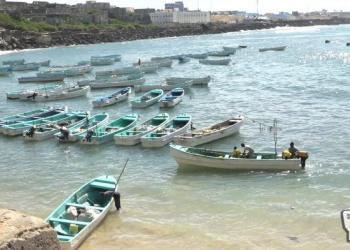


(ERGO) – Nearly 100 families were displaced from their homes along the coast of Saylac district in Somaliland’s Awdal region, when rising sea waters flooded the area.
Anab Farah Saleban and her nine children were terrified when the sea water entered their two-room home in April, forcing them out when it became too deep for them to remain inside.
“We fled with our lives to avoid being trapped by water. Our losses were huge. The water entered our house and lasted three nights. Every night it got higher. Eventually we took our children and ran. We didn’t lose a soul, but the flood took everything – our clothes, utensils, and even a few goats. It left me with nothing except my children,” Anab told Radio Ergo.
Anab, who raises her children alone, had a job earning $150 monthly cleaning offices and homes, providing three meals a day and covering school fees for four of her children. Now, she fears they will be expelled from school if she doesn’t pay the $40 fee. They are living with relatives, sharing part of a house and one daily meal.
“I used to have a good life. I lived in my own house with enough charcoal for cooking, food, and everything we needed. Now I have nothing,” she said.
Her children’s schoolbooks and clothes were destroyed and she can’t afford to replace them.
Layla Ahmed Muse and her family of 10 also lost their home to the ocean flooding. Her husband, a fisherman, was the family provider, although he had to stop going out to fish in April when the sea became too rough.
“We returned to our house when the water receded, but it was too damaged for us to repair it. We had just recovered from last year’s storm when this happened again,” Layla said.
Her husband’s boat and fishing equipment were destroyed, along with those of many other fishermen. They now survive on irregular food from relatives.
“People are poor, so the government gave some food, but not everyone received it. I wasn’t given any,” she complained.
Local schools have closed due to the flooding and widespread destruction.
The deputy district commissioner, Dahir Barkhad Ali, confirmed that the Somaliland government had provided limited food aid.
“It hasn’t met all the needs,” he said, acknowledging that many families remained unsupported.
A marine scientist formerly with Somalia’s ministry of fisheries, Ibrahim Ahmed Mumin, explained that
Saylac has flooded twice in the past decade due to its geographical situation.
“The city of Saylac is situated in a unique geographical location where parts of it are below sea level and other parts are above sea level. The surrounding mountains act as a natural barrier, but they are only effective when easterly winds are present.
These winds help to push the sea water away from the city. However, when these winds are absent or weak, the risk of flooding increases significantly. The easterly winds blowing over the surface of Saylac are crucial for keeping the nearby areas safe from flooding,” he said.