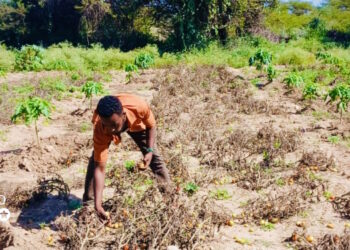


(ERGO) – Hassan Mahmoud cannot afford to feed his family of eight even once a day, since losing his vegetable and food crops on his farm in Tuulo-dheer village in central Somalia’s Mudug region, last December.
He is one of 53 farmers affected by insufficient irrigation, which caused their September-planted crops to wither due to failed deyr seasonal rains on top of earlier droughts.
The harvest Hassan had planned to reap in January 2025 was destroyed, leaving him without the $2,000 income he anticipated to support his family and repay debts.
“My life is poor now. The drought season has arrived, and everything has changed. I’m in debt everywhere. My family has nothing, no money for bills. The farm that used to sustain us is gone, and things have drastically worsened,” Hassan said.
He is burdened with a $1,350 debt, including costs for seeds and food purchased while awaiting the harvest. Shopkeepers in Galkayo, where he owes money, have stopped extending further credit until the existing debt is repaid.
Hassan had invested $800 in planting and irrigating his four-hectare farm this year. The absence of rainfall was devastating.
“The $10 to $15 I earned daily from selling crops in Galkayo, 10 km away, is now gone. I had no savings to fall back on after losing the farm,” Hassan explained.
In 2017, Hassan turned to farming after drought killed the herd of 250 goats he reared in Tuulo-dheer village. However, since that time the rainfall has been erratic and sparse and his farm productivity decreased, reaching its lowest point this year.
“This farm used to help me feed my mother and family. Now we live off debts, borrowing food from shops. They tell us to pay the old debt before giving new credit. My situation is bad, and I have no job,” Hassan added.
Hassan fears taking action toward reviving his farm because if he borrows more money for seeds and no rain comes, he would fall deeper into debt.
All farmers in the area face similar struggles due to prolonged dry spells affecting their livelihoods. Among them is Said Mohamed Ali, who had planted mostly vegetables on his three-hectare land last October, intending to sell them in January. He harvested nothing.
His family of 15 now cooks only one meal a day, relying on occasional help from neighbours. Said, who depended solely on farming, described his current difficulties as unprecedented.
“When there was rain or money, our family was well-off. We sold produce in the city and bought what we couldn’t grow. We even shared vegetables with neighbours,” Said recalled.
The 50-year-old farmer, active in agriculture for nine years, previously harvested twice yearly, earning over $2,000 annually, which was enough for their needs. He feels hopeless after two consecutive years of losses.
He has been unable to pay fees for three children in primary education and owes $60 for the past two months, risking their expulsion from school.
He feels weighed down by a $2,000 debt combining losses from last year’s failed crops and six months of food purchases on credit.
“Without rain, the pasture dried up, and so did the trees. Our 50 goats are weak, they don’t produce any milk and are unable to graze. If it doesn’t rain soon, their condition will worsen,” Said told Radio Ergo.
The deputy chairman of the local farmers’ cooperative, Ahmed Abdi Ali, highlighted the challenges faced by farmers lacking access to wells or reliable rainfall.
“I think this situation will lead to decreased productivity and retarded progress. When hard work yields no results, people lose hope. Many were disappointed when they received no support from organisations or the government,” Ahmed said.