(ERGO) – A three-month tailoring training course and the gift of her own sewing machine have set Khadijo Abdi Hassan off on a new ambition to better the lives of her children.
Khadijo, 39, has opened a small business based out of her shack in Shabelle IDP camp in Baidoa that is making her an average $7-10 a day profit.
“We thank God since my children and I are now getting proper meals. A person who is hungry and one with food are not the same. We used to buy two cups of beans and eat them without any oil. We’d also drink tea with no milk, we were struggling, but we’re much better off now,” said Khadijo.
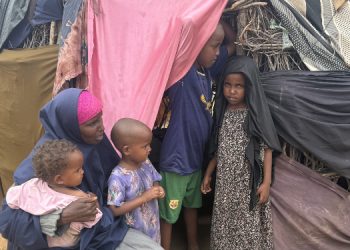
She always wanted her five children to get an education and for the first time can afford the fees. In January she enrolled three of her children in Koranic school for the first time, paying $12.
After just a month of tailoring she has saved $30 that she plans to use to invest.
“I hope to expand my business, I am living in a shack now but I’m planning to construct a new house and take care of my children through this business,” she said.
Khadijo raises her children alone since she and her husband divorced. She used to sell firewood and livestock fodder, walking six km outside the camp and collecting for five hours a day. The sales in town earned her at most $40 a month.
“I was facing hardship but now I thank God because I am very happy. I use my savings to repair the sewing machine when it needs to be serviced,” she said.
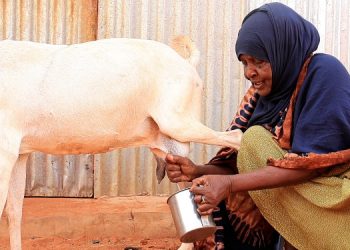
She and her family were living as pastoralists in Buur-heleda, 90 km from Baidoa, until being forced to move to the city in 2017 after their 25 goats and 30 cows died in droughts.
The tailoring training and sewing machines were provided by local NGO GREDO (Gargaar Relief Development Organisation) to around 100 IDPs, including 35 women, in Baidoa to enable them to support their families.
Fadumo Hassan Bulle, 42, a mother of eight, is also pleased with the results. In her first month of tailoring, she earned $195. Her family had been depending on neighbours in Shabelle camp for food.
“I am already seeing improvements through this job. My children are doing well and they eat well, I am no longer worried about their food. We had to depend on others to help us, we would get a kilo or half kilo of food, sometimes a dollar here or there. We were struggling,” she said.
Fadumo has already saved $40 since January and has also made her children happy by sewing them some clothes. She was displaced from Buur-heleda in 2021 after losing her 20 goats to drought.
“I hope to buy land and construct my own house. I am striving to improve my situation, and I pray that God blesses my work,” she said.
Among the men putting the new skills into practice is Sadam Abdullahi Adan, 30, the breadwinner for his family including his parents and seven siblings.
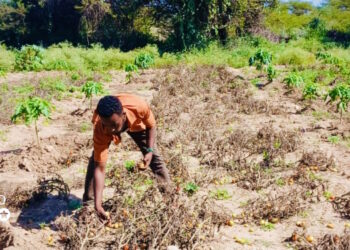
He previously worked on farms for small wages but the heavy El Nino rainfall in the latter months of 2023 left him unemployed for three months. He jumped at the opportunity from GREDO.
“This is a good job, I have a business today. I am just like other business people. I have some clothes I’ve made that I plan to sell, I’ve never been like this!” said Sadam, who is making about $7 a day.
His younger brother used to help out as a shoe-shiner bringing in $1-2 to get them one meal a day.
Sadam’s family were displaced from Warfa-Eylo village, 65 km from Baidoa, where their four-hectare farm dried up in 2017 following successive failed rainy seasons.