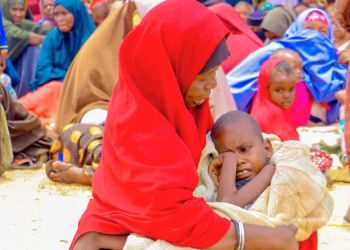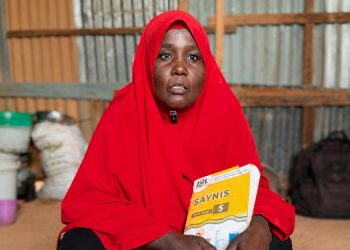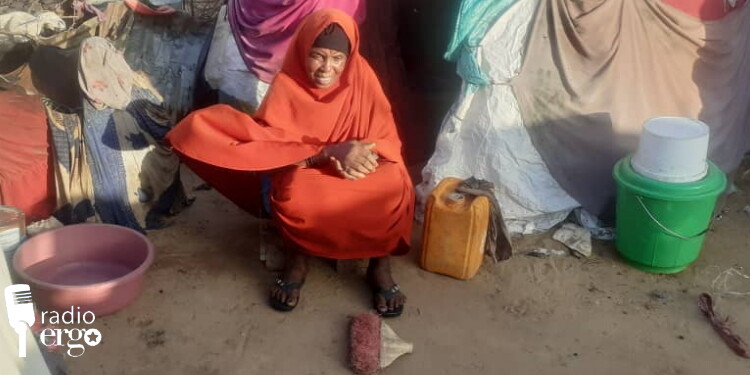
(ERGO) – Saido Mohamed Ali, a displaced mother living in a camp in Mogadishu, can afford to do little but apply herbal remedies to two of her small children suffering from diseases that could kill them.
Two of her six children, ages six and seven, were diagnosed with malaria and typhoid by local doctors visiting Saeed IDP camp in April on a charitable mission.
Saido said both children suffer from high fevers at night and barely sleep. She gives them lemons in the morning and other herbal treatment, but has not seen any improvement.
Although members of the Somali Young Doctors’ Association visited her in the camp and gave free consultation and diagnosis, she cannot afford to buy the prescribed medicines that would cost $64 in a pharmacy.
“I haven’t taken the children to a health centre yet because I am still looking for how we will pay. I don’t have any money to take them to the hospital.
For now, I’m just applying black seed oil on their bodies. You can see our situation, no money means I can’t get my children to the hospital,” Saido told Radio Ergo’s local reporter.
Saido joined the IDP camp in 2021 after being displaced from Kulow village in Lower Shabelle by clan conflict in which her husband was killed. She walks around Deynile district looking for laundry jobs, earning $5-6 at most if she gets work. The family sometimes goes for a day and night without any food.
“If we have breakfast, we don’t have dinner, and if we have dinner, we don’t have breakfast. This is the situation we live in today,” she rued.
Saido appealed to the Somali government and aid organisations to help her children get the medication they need. She says she has no money for transport to get to a government-run hospital where treatment is free.
Another mother of three, Fardowso Mohamud Kulane, is worried about the deteriorating health of her youngest son aged three, who was diagnosed with scabies by the doctors visiting her camp.
The doctors prescribed oral medicine and ointment for him that cost $35 in the pharmacy.
Fardowso stated that she could not afford the fare to take her son 10 kilometres to access free medication in the nearest government-run Deynile hospital. She also said she cannot carry him as the wounds on his skin are too painful.
“Someone who has money thinks about going to the hospital. The disease gets worse and worse and I don’t have money to take him to the hospital or money to take a taxi, I am a poor person and I don’t have anything. My son has been sick since January and I can’t afford a doctor,” she said.
Fardowso’s husband died two years ago and she and her children live in a small shack made of plastic and sticks in Aaran IDP camp. She collects firewood near the camp to sell to restaurants, making about half a dollar (12,000 Somali shillings) a day. Often they have to depend on their neighbours for food.
Her family was displaced in 2019 by fighting between government and Al-Shabab forces in Jilib, Lower Shabelle region, where the small restaurant she ran for a living was destroyed.
The Somali Young Doctors’ Association organised a team of 12 doctors to visit 70 camps in Deynile and Kahda districts, which have high displaced populations, between March and early May to conduct free consultations and diagnosis of diseases.
Shafi Mohamed, one of the team, said their aim was to inform people about diseases so that they can seek medical treatment and save their lives.
“As young doctors, we are determined to use our knowledge to help displaced people and conduct free examinations, so that the people in power can give medicine to these people when they are diagnosed with diseases,” Shafi said.
The doctors found the most common diseases among the displaced people they examined were malaria, meningitis, and skin diseases. They diagnosed 300 children with various skin diseases, linking this in some cases to lack of proper bedding as many sleep on the bare earth.
The doctors’ association said they have shared the tests and their findings with the Banadir regional authority and the federal ministry of health so that they can address the growing health crisis in the camps.
It is unclear if the authorities or other agencies will ensure that the diagnoses are followed up with provision for the impoverished families to access treatment.