Radio Ergo - Somali Humanitarian News and Information
  • Home
  • Topics
    • Latest Stories
    • IDPS/Refugees
    • Natural Disasters
    • Health
    • Social
    • Food Security
    • Education
    • Agriculture & Livestock
  • Programmes
    • Locust Programme
    • Farming Programme
    • Radio Doctor Programme
    • Women Programme
    • Entertainment Programme
  • About Radio Ergo
  • Contact Us
  • blankSomali
  • blankEnglish
No Result
View All Result
Radio Ergo - Somali Humanitarian News and Information
  • Home
  • Topics
    • Latest Stories
    • IDPS/Refugees
    • Natural Disasters
    • Health
    • Social
    • Food Security
    • Education
    • Agriculture & Livestock
  • Programmes
    • Locust Programme
    • Farming Programme
    • Radio Doctor Programme
    • Women Programme
    • Entertainment Programme
  • About Radio Ergo
  • Contact Us
  • blankSomali
  • blankEnglish
No Result
View All Result
Radio Ergo - Somali Humanitarian News and Information
Home LATEST STORIES

Families fleeing conflict face hard times in rural parts of Galgadud

Radio Ergo by Radio Ergo
September 15, 2022
in LATEST STORIES
0
Families fleeing conflict face hard times in rural parts of Galgadud

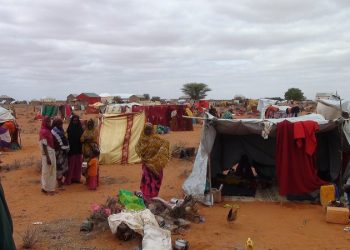
Conflict displaced mother and children camping under a tree/File Photo/Ergo

0
SHARES
Share on FacebookShare on Twitter

(ERGO) – More than 10,000 pastoralist families are estimated to have been displaced from Adakibir, Dhumodle, Marsamage, Qalanqal, Galxagagare and other villages after the boreholes and water catchments were destroyed in an attack by Al-Shabab militia.

These families migrated to Dhaglul, Dhagahdher, Kamasle, and Ardo villages near Adado in Galgadud region, where they are facing severe food and water shortage.

Sahro Adan Mohamed, a disabled mother of nine, fled to Dhagahdher village with her children, 45 km north-west of Dhumodle. They have been sleeping under a tree for five days. Her youngest child is less a year old.

“At night we sleep in the open, and in the day time we rest under the trees. The nights are cold and windy. We had our homes and our water pump to get us water, all that has disappeared,” she said.

Sahro and her family fled for their safety from their two-roomed house with whatever they could carry. She left her 50 goats that provided them with a daily income of $3 from milk sales. They were not able to receive the $100 they usually get monthly from relatives because of lack of network in the area.

Hawa Ibrahim Ali moved to Ardo, 25 km from their home in Adakibir. They now have to get water from reservoirs where a barrel costs $4. They have been taking water on credit and have already racked up a bill of $40. Hawa, a mother of seven, wanted to settle where they could find cheap water but they could not travel any further. She used to sell meat in the market but cannot find any work in Ardo.

“The conflict began when we were sleeping at around 3am with loud explosions. We thought it was an air strike due to its violent nature. In the morning when we woke up, there was another explosion at the water well. Everyone fled and there was no network in the area to communicate. We moved to this bare land where we live now,” she said.

Around 1,500 displaced families in Ardo rely on food from local villagers. Each resident family is helping four to five other families.

Abdi Ali Mohamud, 100 years old, was forced to flee his house in Adakibir where he lived for 50 years. He now lives under a tree withered by the drought that affords him little protection from sun or cold.

“I am 100 years old and I crawled under this tree,” he said. “If I stay hungry I could easily die. I was seated when we were told that we would have to flee by car, we are in a bad situation.”

Abdi said they cannot move to a city as the rent would be unaffordable.

The deputy commissioner of Bahdo district, Ahmed Salad Sheikh Abdullahi Warsame, told Radio Ergo that they have tried assessing the villages where displaced families have arrived but their capacity is stretched. More people have fled the conflict than those who fled the drought.

Telecommunications have been cut by Al-Shabab militias making response more difficult.

“It’s hard to get exact numbers since the phones were cut. We have been moving around the people for five to six days and it’s hard to get exact numbers,” he stated.

Previous Post

Somali mother suffers miscarriage on long trek fleeing drought-hit Bakool

Next Post

Somaliland children herd goats in the morning and study in the afternoon

Related Posts

School closes as UNICEF cuts funding leaving IDP children in Baidoa out of education
EDUCATION

Schools close across Galmudug due to drought

April 14, 2026
Drought-hit Lower Juba pastoralists flee towards the Somali-Kenyan border
IDPS/REFUGEES

Drought-hit Lower Juba pastoralists flee towards the Somali-Kenyan border

April 13, 2026
Low income Hargeisa families forced into IDP camp due to rising prices and shrinking income
FOOD SECURITY

Low income Hargeisa families forced into IDP camp due to rising prices and shrinking income

April 10, 2026
Somalia live news, Somalia latest news, Mogadishu live news, Somali news
FF Feedback

Radio Ergo audience feedback report 2-8 April 2026

April 9, 2026
Human fallout from conflict in South West state – thousands of families displaced and struggling
FOOD SECURITY

Human fallout from conflict in South West state – thousands of families displaced and struggling

April 8, 2026
High prices of water cause health and hygiene problems in Mogadishu IDP camps
FOOD SECURITY

High prices of water cause health and hygiene problems in Mogadishu IDP camps

April 6, 2026
Next Post
Somaliland children herd goats in the morning and study in the afternoon

Somaliland children herd goats in the morning and study in the afternoon

FOLLOW US ON FACEBOOK

DAILY PROGRAMMES

IDAACADDA 16-APR-2026

IDAACADDA 16-APR-2026 by Radio Ergo

IDAACADDA 16-APR-2026
Episode play icon
IDAACADDA 16-APR-2026
April 16, 2026
Episode play icon
IDAACADDA 15-APR-2026
April 15, 2026
Episode play icon
IDAACADDA 14-APR-2026
April 14, 2026
Episode play icon
IDAACADDA 13-APR-2026
April 13, 2026
Episode play icon
IDAACADDA 12-APR-2026
April 12, 2026
Search Results placeholder
Radio Ergo Weekly Newsletter
We respect your privacy.
blank
blank
blank

© Copyright 2014 - 2024 Radio Ergo

No Result
View All Result
  • Home
  • Topics
    • Latest Stories
    • IDPS/Refugees
    • Natural Disasters
    • Health
    • Social
    • Food Security
    • Education
    • Agriculture & Livestock
  • Programmes
    • Locust Programme
    • Farming Programme
    • Radio Doctor Programme
    • Women Programme
    • Entertainment Programme
  • About Radio Ergo
  • Contact Us
  • blankSomali
  • blankEnglish

© Copyright 2014 - 2024 Radio Ergo