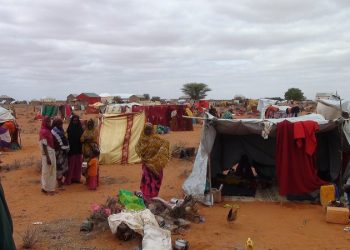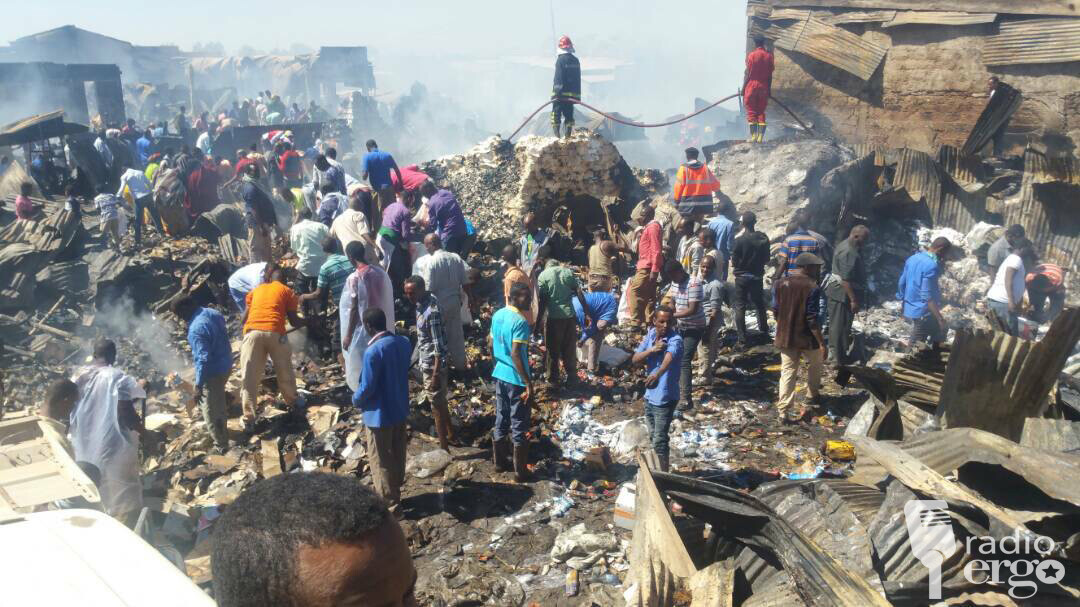
(ERGO) – A fire outbreak in Dadaab refugee camp in northern Kenya has caused misery and desperation among hard-working Somali refugees like Sabriye Mohamed Sheikh, who lost everything in a devastating blaze in Ifo camp market.
All his hard-earned property turned to ashes overnight on 10 June, leaving this father of eight who also takes care of five of his younger siblings relying on food aid and borrowing from his neighbours.
“Our lives have been turned around, I was a self-dependent person and could take care of my household, but now we are dependent on other people…if my children get sick, they open a book to write down the loans I take, the shops also have to write down the money I owe them. I am not able to pay my own expenses,” Sabriye said.
The fire burned down his electronics shop where he sold mobile phones and provided M-Pesa mobile money services. He also ran a small language school for private lessons.
This businesses that he started in 2011 were valued at two million Kenya shillings ($17,000). His employees are now out of work. He still has outstanding loan repayments from starting up.
“My shop was a relatively big one, I was supplying goods to other businesses, I had many assets including two fridges, there was also some cash that I was planning to take but left it behind,” he recalled.
Other businesspeople affected by the fire selling groceries and clothes have set up temporary tables along the roads to sell their goods.
Fadumo Abdirahman Yusuf, a veteran businesswoman, set up a table in front of her burnt shop. She lost 1.6 million shillings ($15,000) worth of clothes.
“I am sitting here just to sell these few pieces of clothing,” she said. “Our records, money and goods have turned to ashes.”
Fadumo’s business supported her own children and four of her relatives who were struggling. Food aid is not enough for the family’s needs.
The chairman of the business community in IFO camp, Mohamed Abdi Olow, said the market was overcrowded. They are thinking of constructing roads to separate the shops to reduce fire risks before rebuilding the market.
“Some people would lose their shops because of the roads, others would lose a metre of space and they are complaining about that,” he said, adding that the refugee authorities and UNHCR were involved in the plans. “People have been tasked with assessing the area and we hope the business people will be given other facilities to carry on their businesses.”