

(ERGO) – Displaced families living in six camps on the outskirts of Galkayo in central Somalia’s Mudug region are enjoying free piped water that was installed in January, putting an end to their water woes and improving their living standards.
Amino Shukri, in Har-Har camp, is among 4,800 IDP families thankful for this regular fresh water supply near their homes. She now has enough water for all her domestic needs and her family’s hygiene has dramatically improved.
“It has changed our lives tremendously. Before, our hygiene was so poor. We used to buy one jerrican and if you had to use it to wash the baby, the clothes, and for ablutions before prayers, it was never enough. Thank God, our hygiene now is 100 per cent perfect! We wash our clothes, we take shower, and bathe our children too,” Amino said.
Eight water points were built in the six IDP camps fed by pipes connected to a well at Har-Har, about a half kilometre away, in a project implemented by International Medical Corps (IMC).
Women like Amino used to have to queue for long periods for just a 20-litre jerrican costing two cents and had to trudge back home carrying the water.
“I used to carry the 20-litre jerrican of water on my back whilst also carrying my baby in my arms. I had to walk slowly, lifting one leg at a time due to the heavy weight on my back and the loam soil that is not easy to walk on. I have no one to help me, my children are away at school and we badly need water,” Amino said.
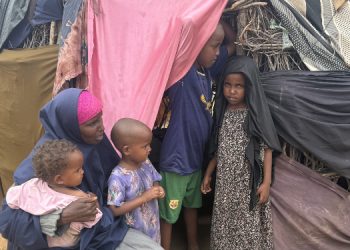
Amino and her children live in a thatched hut in Har-Har camp and face many other challenges including the poor shelter and adequate food. Every morning she goes to Galkayo seeking small laundry jobs to feed her family, making at most five dollars. When she returns in the evening empty handed, the family sleeps hungry.
According to Adan Nur Omar, IMC’s water officer in Mudug region, these families will enjoy the free water until August. He noted that IMC is trying to initiate other projects to solve the numerous challenges that the displaced people in this area are facing.
Muno Adan Muse, a mother of 10, told Radio Ergo she used to fetch water for her family and her mother. As well as footing both families’ water bills she had to carry the water herself.
“There is a difference between water that you bring on your back and water accessible within the camp. We are now relieved and benefit from the running water. Before, when we were at work, we used to receive calls from our children asking for money to buy water. Now that has gone. Thank God, things are totally different, it’s so much better having water in your house than having to struggle for it,” Muno said.
She remembers carrying water on her back whilst heavily pregnant, risking her own health and that of her baby. She now gets 120 litres to 140 litres daily free of charge from the taps in her camp.
However, like Amino, Muno is worried that her family’s flimsy shelter cannot withstand the rain. They also struggle for a living as her husband’s casual work on construction sites had dried up with the severe drought, forcing her to look for domestic jobs in town.