Radio Ergo - Somali Humanitarian News and Information
  • Home
  • Topics
    • Latest Stories
    • IDPS/Refugees
    • Natural Disasters
    • Health
    • Social
    • Food Security
    • Education
    • Agriculture & Livestock
  • Programmes
    • Locust Programme
    • Farming Programme
    • Radio Doctor Programme
    • Women Programme
    • Entertainment Programme
  • About Radio Ergo
  • Contact Us
  • blankSomali
  • blankEnglish
No Result
View All Result
Radio Ergo - Somali Humanitarian News and Information
  • Home
  • Topics
    • Latest Stories
    • IDPS/Refugees
    • Natural Disasters
    • Health
    • Social
    • Food Security
    • Education
    • Agriculture & Livestock
  • Programmes
    • Locust Programme
    • Farming Programme
    • Radio Doctor Programme
    • Women Programme
    • Entertainment Programme
  • About Radio Ergo
  • Contact Us
  • blankSomali
  • blankEnglish
No Result
View All Result
Radio Ergo - Somali Humanitarian News and Information
Home LATEST STORIES

Displaced Somali women enter livestock trade in Luq

Radio Ergo by Radio Ergo
October 19, 2021
in LATEST STORIES
0
Somali News, Somalia News, Radio Ergo News

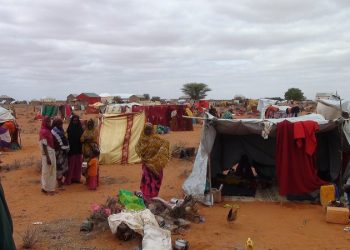
IDP women in Luq join livestock trade as food aid stops/Mohamoud Abdirashid Abdi/Ergo

0
SHARES
Share on FacebookShare on Twitter

(ERGO) – Saqo Ali Ibrahim could not afford to sit idle when food aid stopped being delivered to her IDP camp in Lug, southern Somalia’s Gedo region, so she borrowed money and launched into the male-dominated livestock trade.

“If you sit at home, you won’t get anything, right? But when you make efforts, you get something. The little I get from here is enough to feed my family,” she said.

She borrowed money from a relative to buy her first goat to get started in the livestock trade in April and repaid the loan after selling the goat at a small profit.

Dozens of IDP women in Luq have also gone into the livestock trade. Food aid distributions from both World Vision, and Trócaire via local NGO Somali Humanitarian Relief Action (SHRA), ceased in 2020 due to COVID19 restrictions.

Saqo’s elderly husband does not work so she was forced to step up to support their six children. She is now making a decent 40,000 to 70,000 Somali shillings ($1.48-$2.5) a day selling goats, which enables her to cook twice a day.

“The main market is far from our home, so we buy the goats from the vehicles that transport them from the rural areas to this small livestock market. We sell at a profit of 20,000-40,000 Somali shillings per goat. If there is no market, we take the goat home and feed it before bringing it back the next day for sale,” she explained.

Saqo, who lives in Kulmiye IDP camp, two kilometres from Luq town, walks for over an hour every morning to the livestock market.  Adapting to the work was not hard for her as she comes from a pastoralist community in Dheeka, in Somali region of Ethiopia, where conflict between Oromo and Somali communities forced them to flee.

However, in the last two months, there has been a drop in livestock sales and prices in Luq due to the heavy consequences of prolonged drought in the region.

Saqo borrowed 1.4 million Somali shillings ($51.8) from Dubad Hassan, who has been a broker in the market for seven years. Dubad has lent four women including Saqo a total of 7,573,500 Somali shillings ($280) in the last two months to keep their businesses going. One of the women has repaid the 1,620,000 Somali shillings ($60) she borrowed but the rest still owe him.

“The women have approached us seeking our help. We introduced them to the livestock trade as the casual jobs they used to do were disrupted by COVID19. I don’t pressure them to repay my loans as the market is slow now,” he said.

Halimo Ali, another newcomer to the livestock trade, said she buys three goats every morning and sells at a profit of one dollar per goat. She is managing to cook her nine children two meals a day and has enrolled four of them in Koranic school, paying $16 in monthly fees.

“When the food aid stopped, life became tough. I used to cook one meal for my children, but since I joined this trade, my life has changed for the better,” she said.

However, Halimo, a widow, said she will quit the trade if the food aid distribution restarts as she has no one to look after her young children while she is out at the livestock market.

“My children get into fights with other children while I am busy at the market. Sometimes they are beaten, sometimes they beat other people’s children. I was forced into this trade because I have nothing to cook for my children,” she said.

Previous Post

Innovative Somali farmer builds his own tractor

Next Post

Free high school gives Somali refugee girls in Dadaab a second chance

Related Posts

blank
LATEST STORIES

Small family savings evaporate overnight as Somali 1,000 shilling notes rejected by businesses

May 13, 2026
Baidoa farmers reap benefits of climate knowledge and irrigation
AGRICULTURE & LIVESTOCK

Baidoa farmers reap benefits of climate knowledge and irrigation

May 11, 2026
Clamour for enacting new rape bill as high numbers of rapes are reported in Somaliland
FOOD SECURITY

Harrowing tales of family ruin as courts throw debtors into jail in Galkayo

May 9, 2026
Somalia live news, Somalia latest news, Mogadishu live news, Somali news
FF Feedback

Radio Ergo audience feedback report 30 April to 6 May 2026

May 8, 2026
Floods swamp Somali Region salt mines leaving hundreds in distress
FOOD SECURITY

Floods swamp Somali Region salt mines leaving hundreds in distress

May 8, 2026
Women pushing heavy loads support displaced families in Mogadishu
FOOD SECURITY

Women pushing heavy loads support displaced families in Mogadishu

May 6, 2026
Next Post
Somalia news, Somali news, Somali live news

Free high school gives Somali refugee girls in Dadaab a second chance

FOLLOW US ON FACEBOOK

DAILY PROGRAMMES

IDAACADDA 15-MAY-2026

IDAACADDA 15-MAY-2026 by Radio Ergo

IDAACADDA 15-MAY-2026
Episode play icon
IDAACADDA 15-MAY-2026
May 15, 2026
Episode play icon
IDAACADDA 14-MAY-2025
May 14, 2026
Episode play icon
IDAACADDA 12-MAY-2026
May 13, 2026
Episode play icon
IDAACADDA 13-MAY-2026
May 13, 2026
Episode play icon
IDAACADDA 11-MAY-2026
May 11, 2026
Search Results placeholder
Radio Ergo Weekly Newsletter
We respect your privacy.
blank
blank
blank

© Copyright 2014 - 2024 Radio Ergo

No Result
View All Result
  • Home
  • Topics
    • Latest Stories
    • IDPS/Refugees
    • Natural Disasters
    • Health
    • Social
    • Food Security
    • Education
    • Agriculture & Livestock
  • Programmes
    • Locust Programme
    • Farming Programme
    • Radio Doctor Programme
    • Women Programme
    • Entertainment Programme
  • About Radio Ergo
  • Contact Us
  • blankSomali
  • blankEnglish

© Copyright 2014 - 2024 Radio Ergo