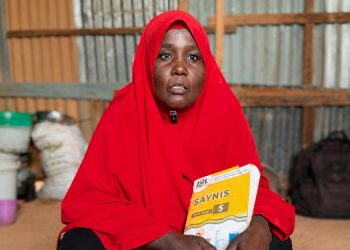


(ERGO) – Thirty women living in Salaam IDP camp on the outskirts of Abudwaq in central Somalia’s Galgadud region have improved their daily lives by setting up their own small businesses with loans from relatives.
Sahro Abdi Samatar borrowed $150 in June from a relative who owns a shop in town, and started selling samosas in the streets earning daily profits of $5-$6 profit daily. She put two dollars towards repaying the loan, which she cleared in August.
She has now upgraded to a small table shop in front of her home inside the camp, selling dry food, tea leaves, soap, women’s clothes, and bed sheets.
“Some days when I don’t get any customers at my table shop, I pack the bed sheets, women’s clothes and henna packets on my shoulder and sell them on the streets. Some people pay me on the spot, while others buy on credit,” she said.
Sahro, a mother of seven, used to go out early in the morning to beg food from local shops and better off relatives, cooking once for her children at night.
“The life we lived before is not comparable to how we are now. We have our own source of income now, but previously we were very poor. We depended on food handouts from people,” she said.
Sahro and her family fled to Salaam IDP camp after losing 250 goats and 15 camels in the 2017 drought. The shock of losing their livestock pushed her husband into depression, she said, and he is now struggling with mental health.
Sahro said she and the other women in Salaam were motivated by a story they heard on Radio Ergo, about another group of IDP women in Hobyo, Galmudug region, who established a new source of income for themselves using cash support from a nationwide humanitarian fund.
“We were inspired to become self-employed by the women we heard in the story on Radio Ergo, who improved their livelihood and that of their families with their small businesses. I thank God I was successful in my attempt. I am now self-sufficient and providing for my family,” she said.
Fadumo Saleban Jama, 65, started her small business selling goat meat in June and is now paying $35 monthly fee for her two grandsons in year 10 and her granddaughter in year eight. The children, who are staying with Fadumo in Abudwaq were born by her daughter.
Fadumo, whose 73-year-old husband is blind, was given a goat on credit by her husband’s relative, a broker in the livestock market. She slaughtered the goat, sold the meat, and managed to pay back the price of the goat in just two days.
“I used to borrow goats on credit with the help of that man acting as my guarantor. But now my customers have increased. I can buy two goats in cash,” she said triumphantly.
Salaam IDP camp chairman, Indiris Adan Abdulle, said the women’s successful businesses were having a multiplier effect within the camp community.
“Each of the women who set up their own businesses help at least two of their neighbours who don’t have anything to cook. They give them the little they can afford and no one is sleeping hungry. We are glad people are helping each other,” he said.