

(ERGO) – Rukia Mohamed Sheikh, a Somali mother of eight living in the northern coastal city of Bosaso, has been struggling to feed her family for the past two months – whilst one of their biggest expenses is use of the public pay toilets in their displacement camp.
The family lives in Farjanno camp, on privately owned land, where the landlord runs the toilets. If eight older family members use the toilet once in a day, it costs Rukia about one dollar. Going more than once would be at a price. The small children use empty cans that they toss into the sea, to save money.
“We pay the public toilet fee with money that my husband is borrowing from relatives,” Rukia told Radio Ergo.
Since her husband lost his casual job collecting construction stones in February, they have racked up a growing debt of $30 for using the toilets.
Rukia sold vegetables in front of her house until prices rose sharply in April, due to shortages of fresh produce in the dry season. She bought three kilograms of coffee with the four dollars she had saved and is now selling small packs of coffee, which is widely used in the city during the Islamic holy month of Ramadan, earning her less than a dollar a day.
She is feeding her family twice a day.
“We are living in hardship and we don’t know where to seek help!” she said.
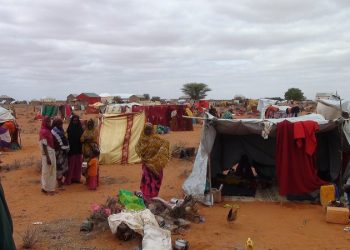
Each of the 800 families living in Farjanno has to pay monthly rent of five dollars to the landowner, a resident of Bosaso. The contract prohibits the camp occupants from building their own toilets. The landowner runs the 20 pay toilets he built as part of his business.
The attraction of Farjanno is that it is close to the city, where people seek work. Commuting to the city for jobs from one of the other IDP camps with free services such as toilets incurs costly daily bus fares.
Rukia settled in Farjanno camp in 2002, after fleeing conflict in Mogadishu. She has spent hundreds of dollars over that time on accessing the toilets.
This year, however, the drought, decrease in wage jobs, impact of Coronavirus, and rejection of the Somali shilling have combined to devastating effect on poor families like hers.
Rukia has the added burden of caring for her mentally ill sister and four children. In February, she had to pull her children out of Koranic school as she could not raise the $21 in fees.
The chair of Farjanno camp, Arda Abdullahi Muse, lived there as an IDP for nearly 30 years. She told Radio Ergo they were forced to accept the landlord’s conditions, as they were unable to find other land to settle on near the city.
“The residents are facing a lot of problems in this camp. Imagine a life where you aren’t free to build your own toilet at your home, it is tough!” she said.
She called on the Bosaso local government and aid agencies to help them resettle in a camp with proper facilities.
Ali Ahmed Mohamud, the director of Bosaso social affairs department, told Ergo that the government is aware of the challenges facing the IDPs in Farjanno but is unable to find government land to accommodate hundreds of families within the city.
However, land is being developed in Gerible, on the eastern side of Bosaso, with the support of the UN’s refugee agency, UNHCR, and would be completed by the end of 2021.
“Under UNHCR’s Durable Solutions project, the government has already developed 200 of the targeted 380 houses. Once we complete the development, the government will resettle the families,” he said.
The government is currently conducting awareness campaigns in Farjanno camp to avoid an outbreak of diseases.
“We have distributed hand sanitisers and soap for cleaning. We also have vehicles fitted with speakers making rounds in the camp every morning to create awareness,” Ali said.