

(Ergo) – Four months after receiving fishing equipment from the Galmudug ministry of fishing, life has changed dramatically for 60 fishermen in Labad village, 30 km from Hobyo, in central Somalia’s Mudug region.
Abdikarim Abdullahi Ali, one of the fishermen, told Ergo that he now makes a monthly income of $300-$400 from fishing, boosted by the equipment.
“We were poor, we couldn’t afford any of the equipment. We were given a fishing net, a freezer and a motorboat. The equipment was not enough for all, and we were asked to share the freezer and the motorboat in groups of 10 fishermen but still it has helped us a lot,” Abdikarim told Ergo.
“My family used to sleep without supper on some days, but now, thank God, we are missing nothing!”
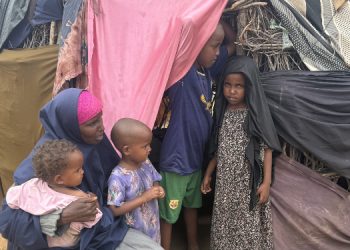
In early 2020, Abdikarim had moved to an IDP camp in Labad after losing 150 goats to drought and giving up on pastoralism. But now the father of seven has managed to move the family out of the camp to a rented house. He told Radio Ergo that he is planning to enroll three of his children in school and also sends $100 every month to two of his brothers who are still pastoralists.
Another local fisherman, Abdirahin Abdullahi Mohamed, a father of six, used to make at most $60 a month from fishing. He is now making several hundred a month, paying fees for his children at the Koranic school, and for two nephews studying at a secondary school in Mogadishu.
He has warmed to fishing not just as his only option, which it was, but as a reliable living that he enjoys.
“My children are living a better life now, I pay their fees from the earnings I make from fishing,” Abdirahin said.
When they bring in a good catch of fish, they sell to traders from as far away as Galkayo, Dhusamareb and Guriel. On other days, they sell what they can locally.
The director of Galmudug Ministry of Fisheries, General Abshir Hashi Ali, told Radio Ergo that the equipment was supported by the Food and Agriculture Organisation (FAO). A study conducted by the ministry has confirmed the positive impact of the project and they plan to expand equipment distribution to hundreds of other fishermen this year.
“Before we made the equipment distribution, the fishermen used to catch 1kg of fish but now that has changed and one fisherman catches almost 500-600kg per day,” Abshir told Radio Ergo.
“We aim to bring fishermen to a level where they are self-sufficient. We also want to attract those who earn their living from selling charcoals. We want them to join fishing and stop cutting the trees,” he added.
Four months after receiving fishing equipment from the Galmudug ministry of fishing, life has changed dramatically for 60 fishermen in Labad village, 30 km from Hobyo, in central Somalia’s Mudug region.
Abdikarim Abdullahi Ali, one of the fishermen, told Ergo that he now makes a monthly income of $300-$400 from fishing, boosted by the equipment.
“We were poor, we couldn’t afford any of the equipment. We were given a fishing net, a freezer and a motorboat. The equipment was not enough for all, and we were asked to share the freezer and the motorboat in groups of 10 fishermen but still it has helped us a lot,” Abdikarim told Ergo.
“My family used to sleep without supper on some days, but now, thank God, we are missing nothing!”
In early 2020, Abdikarim had moved to an IDP camp in Labad after losing 150 goats to drought and giving up on pastoralism. But now the father of seven has managed to move the family out of the camp to a rented house. He told Radio Ergo that he is planning to enroll three of his children in school and also sends $100 every month to two of his brothers who are still pastoralists.
Another local fisherman, Abdirahin Abdullahi Mohamed, a father of six, used to make at most $60 a month from fishing. He is now making several hundred a month, paying fees for his children at the Koranic school, and for two nephews studying at a secondary school in Mogadishu.
He has warmed to fishing not just as his only option, which it was, but as a reliable living that he enjoys.
“My children are living a better life now, I pay their fees from the earnings I make from fishing,” Abdirahin said.
When they bring in a good catch of fish, they sell to traders from as far away as Galkayo, Dhusamareb and Guriel. On other days, they sell what they can locally.
The director of Galmudug Ministry of Fisheries, General Abshir Hashi Ali, told Radio Ergo that the equipment was supported by the Food and Agriculture Organisation (FAO). A study conducted by the ministry has confirmed the positive impact of the project and they plan to expand equipment distribution to hundreds of other fishermen this year.
“Before we made the equipment distribution, the fishermen used to catch 1kg of fish but now that has changed and one fisherman catches almost 500-600kg per day,” Abshir told Radio Ergo.
“We aim to bring fishermen to a level where they are self-sufficient. We also want to attract those who earn their living from selling charcoals. We want them to join fishing and stop cutting the trees,” he added.