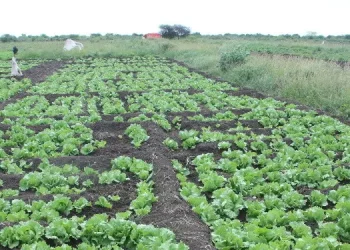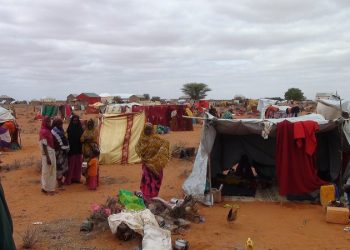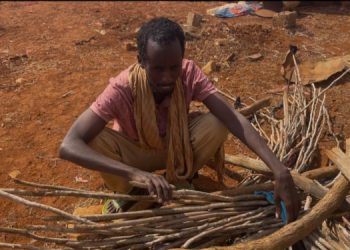


(ERGO) – Mohamed Abddullahi Wayel, a father of nine, has just seen the family’s four-hectare farm and all the work they put into it wiped out by floods for the third time in just over a year.
Only 20 days before the anticipated harvest, the river Shabelle washed over their farm just outside Jalalaqsi, in southern Somalia’s Hiran region, leaving them penniless.
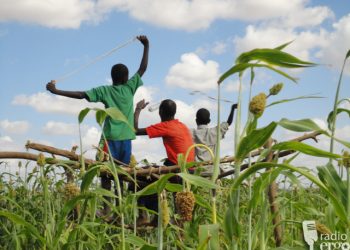
“I was growing maize, beans, tomatoes, pumpkins, and potatoes. I grew everything, but we had to escape when the floods came and just watch helplessly as they washed away all my toil,” Mohamed told Radio Ergo bitterly. “I tried to save some maize stalks to sell to buy food for a day or two for my family but the rest is still under water. Two people alone cannot salvage a whole farm’s stock.”
He has been borrowing goods on credit from shops in Jalalaqsi. With no harvest to sell to pay back the loans, he has also asked relatives to bail him out.
Mohamed says the constant flooding of the river Shabelle is the biggest obstacle they face in trying to make a decent living. The farm is near the river and there is no form of assistance to cushion farmers against the constant flood losses. He has still not been able to repay the $1,450 he borrowed to buy farming inputs.
“I’m yet to pay for a ton of seeds I borrowed from another man. He also lent me the generator and I told him I would repay him when I harvested my crops. My children too expect me to provide for them. But the harvest did not materialise, everything was lost,” he said.
Osman Nur Rahole, who heads the village administration in Balgoys, five kilometres outside Jalalaqsi town, and also leads the local farmers’ cooperative, said the floods that struck around 15 August 2020 destroyed farms in 13 villages in the district.
The farmers met and agreed to implement flood control measures at the beginning of August. But their efforts were not successful in keeping the river from overflowing.
“We tried hard, we bought sandbags on credit from the town, women filled them with sand while men placed them along the river banks, but it was
destined to happen this way and in the end, we had to escape for our dear lives,” Osman told Radio Ergo.
Farmers in this area have faced multiple challenges in recent years and have suffered failed harvests for nearly two years, amassing huge debts to keep their families alive.
Ahmed Mohamed Nur, a father of 13, lost all the sesame, maize, beans, and potatoes planted on his eight and a half hectare farm. The floods reached them on 16 August and all his crops were submerged in the water.
“Imagine if you are not getting any remittances from abroad and you lack other income except the farm you depend on, and your crops are destroyed by floods,” Ahmed said. “We were hoping in 20 days to be relishing our first maize cob. We indeed have a big problem and nowhere to escape.”
As the family is dependent on the farm, all he can do now is to try to earn some cash doing occasional casual jobs for other farmers.
Abdihakim Muhumed Elmi, an agronomist, said the extensive effects of floods on farm production in Hiran, Lower Shabelle and Middle Shabelle regions was being felt across the country. Certain produce like onions and beans are in short supply and selling at high prices.
He said that the flood water level reaches up to two metres and there are no flood-resistant seeds that could be used by farmers. The solution, he said, could be to farm on higher ground and to plan harvesting well ahead of the flooding.
“It is recommendable that farmers benefit from crops that take between two to three months to grow, as those that take five months may be affected by floods,” he advised.