Radio Ergo - Somali Humanitarian News and Information
  • Home
  • Topics
    • Latest Stories
    • IDPS/Refugees
    • Natural Disasters
    • Health
    • Social
    • Food Security
    • Education
    • Agriculture & Livestock
  • Programmes
    • Locust Programme
    • Farming Programme
    • Radio Doctor Programme
    • Women Programme
    • Entertainment Programme
  • About Radio Ergo
  • Contact Us
  • blankEnglish
No Result
View All Result
Radio Ergo - Somali Humanitarian News and Information
  • Home
  • Topics
    • Latest Stories
    • IDPS/Refugees
    • Natural Disasters
    • Health
    • Social
    • Food Security
    • Education
    • Agriculture & Livestock
  • Programmes
    • Locust Programme
    • Farming Programme
    • Radio Doctor Programme
    • Women Programme
    • Entertainment Programme
  • About Radio Ergo
  • Contact Us
  • blankEnglish
No Result
View All Result
Radio Ergo - Somali Humanitarian News and Information
Home IDPS/REFUGEES

IDP youth in Dollow make charcoal using waste

Radio Ergo by Radio Ergo
February 17, 2020
in IDPS/REFUGEES, LATEST STORIES
0
IDP youth in Dollow make charcoal using waste

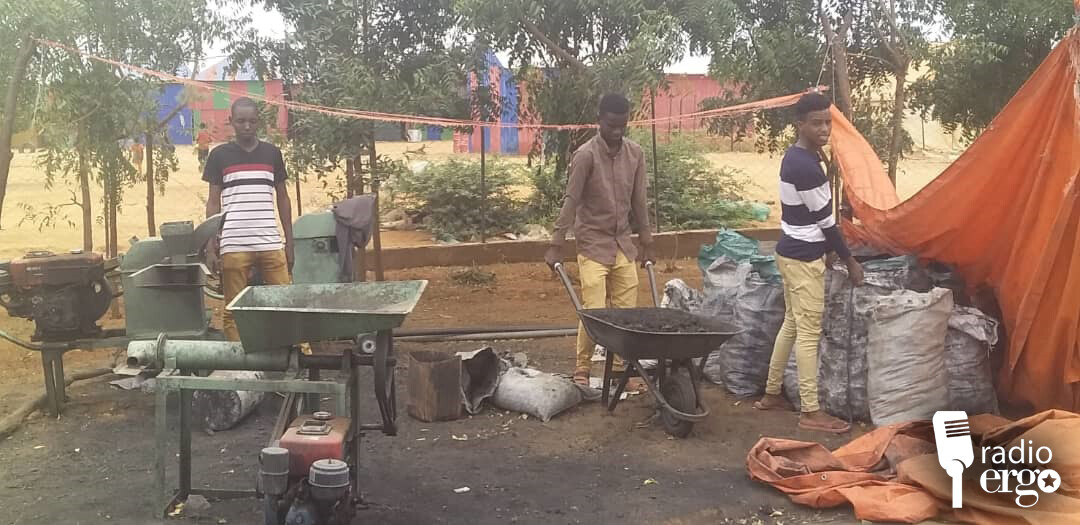
Some of the youth group working on producing charcoal with their new machines in Dollow/Mohamud Abdirashid/Ergo

0
SHARES
Share on FacebookShare on Twitter

(ERGO) – A group of young displaced people in Dollow, southern Somalia’s Gedo region, are using garbage and an invasive tree species as alternative materials to make charcoal.

The 12 youth, including three women, have three machines, each producing three sacks of charcoal a day, making the group an average of $72 a day through sales of the fuel.

Mohamed Hussein Ali, a member of the group living in Kambaso IDP camp on the outskirts of Dollow, said the method is much easier than the traditional way of burning charcoal, and is also more environmentally sound.

As well as waste collected from the camp, they use the Algaroba tree, a non-indigenous parasite tree that has invaded large areas of land making it unusable.

“It used to take us 25 days to make each batch of charcoal and we suffered a lot from that process,” Mohamed said.

“Everyone earns $5 a day, and we keep the rest until the end of the month to save to invest in the cooperative so we can buy bigger machines and increase production.” The group averages monthly savings of $180.

Abdirizak Abdirisak Mohamed Abdirahman, another member of the new group, had been producing charcoal traditionally for nearly four years, after he and his family of five children were displaced from Wajid district in Bakool region. Joining a charcoal gang was the only job he could find in the camp.

He became aware of the considerable environmental destruction they we causing in cutting down valuable indigenous trees to make the charcoal. It was also a highly inefficient method, with unpleasant working conditions, and he never earned enough to pay his bills. Fatuma Kahin Hassan, a mother of seven children, used to operate a donkey cart with her husband transporting charcoal in Garaash, just north of town. She says this is a far more efficient business. “We used to cut our hands cutting and chopping the trees with an axe. Also there was a lot of pressure to stop deforestation and we were told to stop,” she said.

The fuel produced by these machines, using waste and the parasite tree, is becoming popular as it is cheap and easy to burn
Previous Post

Free maternity services at Lasanod hospital to help vulnerable women in Somaliland

Next Post

‘No high school, no hope’ for Somali teenagers in Elbarde district of Bakool

Related Posts

Credit crunch faces drought-stricken pastoralist households in Adado
FOOD SECURITY

Credit crunch faces drought-stricken pastoralist households in Adado

April 20, 2026
Airstrikes wipe out livelihoods in Lower Shabelle farming village
FOOD SECURITY

Airstrikes wipe out livelihoods in Lower Shabelle farming village

April 17, 2026
Somalia live news, Somalia latest news, Mogadishu live news, Somali news
FF Feedback

Radio Ergo audience feedback report 9-15 March 2026

April 17, 2026
Hard-up Awdal farmers turn to gold digging
FOOD SECURITY

Jobless men turn to gold mining in Sanag region

April 16, 2026
Marginalised families in Puntland displacement camps face hunger, discrimination and neglect
FOOD SECURITY

Selling thatching grass in Bari valley provides new income for drought-hit families

April 15, 2026
School closes as UNICEF cuts funding leaving IDP children in Baidoa out of education
EDUCATION

Schools close across Galmudug due to drought

April 14, 2026
Next Post
‘No high school, no hope’ for Somali teenagers in Elbarde district of Bakool

‘No high school, no hope’ for Somali teenagers in Elbarde district of Bakool

FOLLOW US ON FACEBOOK

DAILY PROGRAMMES

IDAACADDA 22-APR-2026

IDAACADDA 22-APR-2026 by Radio Ergo

IDAACADDA 22-APR-2026
Episode play icon
IDAACADDA 22-APR-2026
April 22, 2026
Episode play icon
IDAACADDA 21-APR-2026
April 21, 2026
Episode play icon
IDAACADDA 20-APR-2026
April 20, 2026
Episode play icon
IDAACADDA 19-APR-2026
April 19, 2026
Episode play icon
IDAACADDA 18-APR-2026
April 18, 2026
Search Results placeholder
Radio Ergo Weekly Newsletter
We respect your privacy.
blank
blank
blank

© Copyright 2014 - 2024 Radio Ergo

No Result
View All Result
  • Home
  • Topics
    • Latest Stories
    • IDPS/Refugees
    • Natural Disasters
    • Health
    • Social
    • Food Security
    • Education
    • Agriculture & Livestock
  • Programmes
    • Locust Programme
    • Farming Programme
    • Radio Doctor Programme
    • Women Programme
    • Entertainment Programme
  • About Radio Ergo
  • Contact Us
  • blankEnglish

© Copyright 2014 - 2024 Radio Ergo