

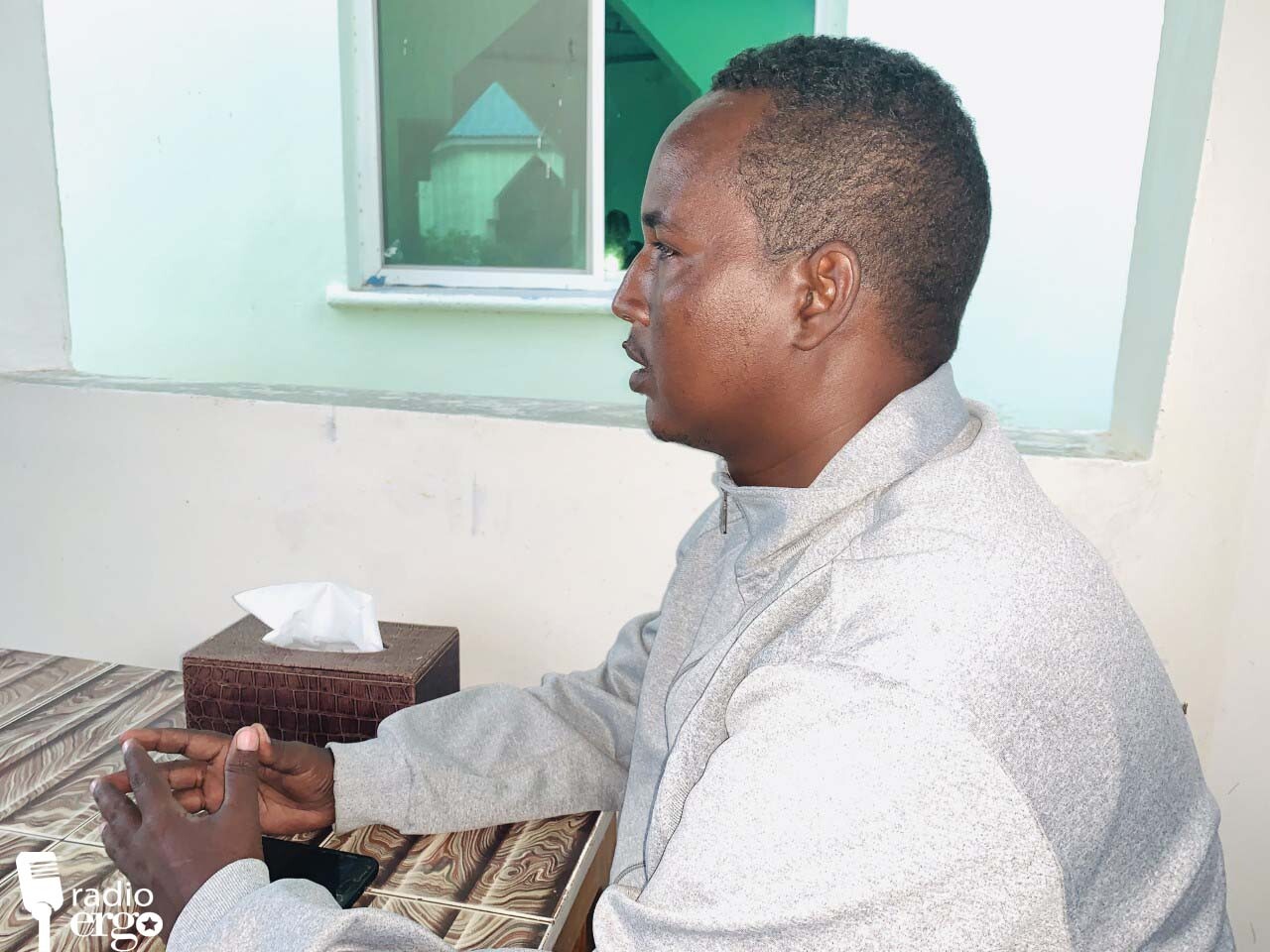
(ERGO) – Bashir Osman Awad is a Somali policeman heading a police station in Garowe, Puntland. He has come out publicly to share his status as a person living with HIV/AIDS. Bashir was recently promoted from captain to major and is leading a campaign to get Somalis to open up and break the stigma around the virus.
Radio Ergo’s local reporter in Garowe spoke to Bashir about the challenges he has faced in his personal life and how he has overcome them.
Bashir: My life is good; I feel no pain. Since I started using anti-retroviral drugs I am OK, I am just like any other person. The only disturbing thing is the stigma. When people hear the word HIV/AIDS, they start running. The only burden is the stigma within the society. That is why I came forward to start an awareness campaign. I speak on TV stations. I am doing this because of what I have experienced.
Ergo: What have you had to endure since you first came out publicly?
Bashir: The first time, when I was diagnosed with the virus, some of the junior police officers at the station avoided greeting me. It was unfortunate to see my police officers ignoring me. At that time, anything said to me hurt me because the condition was new to me. Since that time, however, I am not disturbed by anything. I share my problem openly with the country and the world. I want to talk to Somali speakers and anyone else who can understand me. I will continue this campaign. I witnessed an incident where [the body of] a person who had died of AIDS was washed with water and a broom. I have also seen someone rejected by his relatives who denied that he was theirs. The most concerning thing is that when someone gets infected with the virus they lose all hope in life. To me, I believe that if the person trusts God, nothing will go wrong.
Ergo: How did you become infected with HIV?
Bashir: I got married in August 2016 and three months after my marriage, I felt symptoms of heartburn, fever and vomiting. By the fourth month of our marriage I became weak. The woman apparently knew her [positive] status and was taking anti-retrovirals. I saw her taking the drugs but didn’t know what they were at the time. When I asked her, she told me they were antihistamines. Actually I thought she was using the drugs to avoid pregnancy, so I waited to find out more information about the drugs she was taking. Later, she started going out frequently and we started to argue. One night she took everything in the house except my bag. In the morning, I came home with a friend of mine for breakfast to find an empty house with only my bag inside. I called her to ask why she moved out. She told me ‘you will die, you are poisoned and you don’t even know’, and then hung up on me.
Ergo: Were there any issues between your family and hers?
Bashir: No, we had no issues. She was not from this region, but from another region in Somalia that I won’t mention. I am not giving this interview to get money, but to inform Somali people so that those getting married get more information about their partner and to tell those living with the virus to be responsible and not infect others.
Ergo: What happened after that?
Bashir: My friend suggested that she [my wife] might be HIV positive. I became suspicious about my symptoms. So I went to the hospital. I did not know there was an HIV testing centre. I told them I had come as a blood donor and paid one dollar for the service. Then inside the room I told the doctor I hadn’t really come to give blood but wanted to get tested. The doctor carried out the test. I wasn’t given the results immediately but when I went to ask I was told the test was positive.
Ergo: How did you feel at that point?
Bashir: I was OK, I felt afraid during the pre-test counselling but once I was told I was positive I just accepted and became calm.
Ergo: What did you do then?
Bashir: People who test positive are asked to come with a relative to support them, so I called a cousin. I also have another wife and asked her to come to the centre for testing. She tested negative. She stood by my side and calmed me.
Ergo: How do you raise awareness about HIV/AIDS?
Bashir: First and foremost, I speak on the media. I started doing this recently and I will continue. My mission is to keep campaigning because I have seen that there is a problem. The problem in Somalia is that there are an estimated 11,700 people living with the condition. That is just an estimate, not the real figure. But there are only just over 3,000 who have sought treatment. My worry is what will happen in Somalia if people don’t act on this.