

(ERGO) – Selling herbal medicines, toothbrush sticks and smuggled vegetables are some of the ways the resilient people of Diinsor have adopted as means of survival, as the southern Somali town remains under long-term siege by Al-Shabab forces.
Since the town in Bay region was recaptured in 2015 by Somali forces backed by African Union troops, a circle of Al-Shabab fighters around the outskirts has prevented the free movement of people and trade.
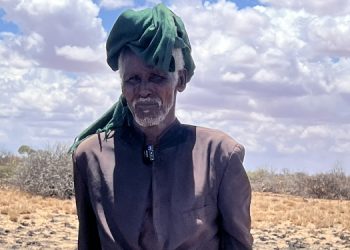
Mohamed Yarow Ibrahim, 57, like parents and heads of household in most of the town’s 30,000 families, is preoccupied by the need to earn enough to pay for food and school fees for his children.
Three times a week, Mohamed treks off into the bush to gather the plant known locally as diinsi (Balanophoraceae), a type of parasitic flowering root plant that grows prolifically in the area and is widely used medicinally.
Mohamed is one of the pioneers of the diinsi trade in Diinsor. He grinds the plant and prepares a herbal tea that is believed to be a natural antibiotic and is used to treat diarrhoea and other complaints.
“I am satisfied with the profit I get from this business,” Mohamed says. “I prepare the medicinal tea in an icebox and sell it to my customers. It sells very well.”
As times are hard residents of Diinsor, 125 km from the regional capital Baidoa, have to diversify their sources of income if they possibly can.
During the rainy season, Mohamed goes to farm his eight hectares of land36km outside the town. The farmer earns 200,000 shillings (around $8) per day from his business to support his 12-member family.
Along with the profits from the medicinal tea, Mohamed manages to pay monthly school fees of 550,000 shillings ($22) for seven of his children.
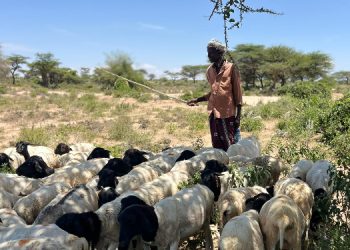
“I support my family and my relatives. I have now bought goats and paid school fees for my children and buy the daily food needs for my family,” he stated.
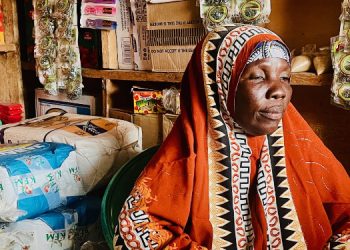
Asho Abdirahman, meanwhile, is a mother of six and the sole breadwinner in her family. She sells vegetables in Diinsor market. The vegetables are imported from parts of neighboring Gedo region secretly, as Al-Shabaab has blockaded the main routes to prevent goods coming in.
Asho keeps the family going and pays the 100,000 shilling ($4) monthly school fees for two of her children, although her livelihood is precarious due to the risks involved.
Another resident, Ahmed Abdullahi Hussein, came to Diinsor after losing his herd of 40 cows in the severe drought in his village of Gurbaanin 2016.
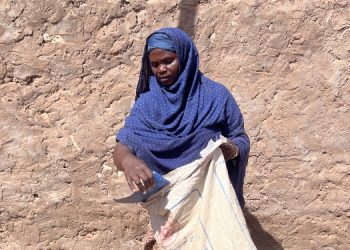
He told Radio Ergo that he earns 80,000 ($3.2) a day selling toothbrush sticks that he cuts from the tree locally known as geed-caday (Salvadorapersica).
Radio Ergo’s correspondent visited the town on 13 March during a tour by South West State president, Abdiaziz Hassan Mohamed, who opened the newly renovated airstrip for commercial.
According to our correspondent, the residents have been facing water and food shortages. Food and other commodities have been coming in from neighbouring regions only under difficult circumstances due to the road blocks.