

(ERGO) – Over 10,000 Somali refugees, who have been denied legal refugee status in northern Kenya’s Dadaab camps, are lacking access to basics such as food, shelter, and healthcare.
The UN’s refugee agency UNHCR reports that 10,454 Somali refugees, uprooted from their homes by drought and the threat of Al-Shabaab, have found way into the camps in recent months, where there is no registration process enabling them to access identity documents.
According to UNHCR’s head of operations in Dadaab, Jean Bosco Rushatsi, 1,800 of the new arrivals were among refugees who had returned to Somalia from the camps under a voluntary repatriation initiative.
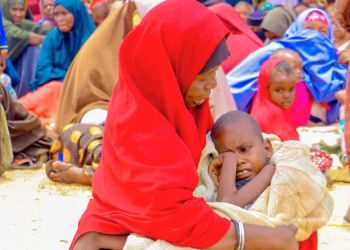
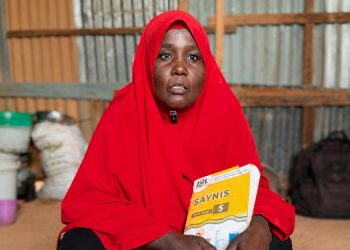
Sharif Nurey, a mother of eight who has not been registered, lacks access to the goods and services provided by aid agencies including food, shelter, and healthcare.
She has been living in IFO camp for the last two years since returning from Dinsor town in southern Somalia’s Bay region. She had left Dadaab prior to that in 2013 to try to rebuild her life back home.
Sharif said she fled Dinsor again because of insecurity and drought.
Speaking to Radio Ergo, Sharif said the seasonal rains which started recently destroyed her shanty hut made of old rags, clothes, and sticks.
“For the last two nights, my children and have slept under this leaky hut as rains pound the camp,” she said.
She was left with no option but to beg from her other refugees who are registered to receive food rations, even though they receive very little themselves.
For the last two months, UNHCR has been negotiating with the Kenyan government to give the unregistered refugees temporary cards to access urgent support. However, the UN agency cannot fully accommodate the refugees unless the government overturns the ban it imposed in 2016 on the registration of new arrivals.
After a long struggle, Sharif was given a temporary card by UNHCR to get food but she has not been given access to other services including shelter and health care.
“Now I got some millet and oil with the card I was given, although the food is not enough but it helped us to fill our stomachs,” she noted.
Sharif and thousands of other families every morning go to the office of UNHCR hoping that they will be registered.
Duniya Abdikadir Arif, another undocumented refugee, has been living with the family of a relative in Hagardera camp since 2016.
“Previously I used to sleep at the compound of the family but with the rains now, I share the room with the family of five,” said Duniya, a widow with six children, who fled El-Barde town in 2017.
Habiba Mohamed Ibrahim was among thousands of Somalis who were voluntarily repatriated back to Somalia from Dadaab. But then the drought struck, and she lost 50 goats in 2017, forcing her to cross the border to Kenya again.
“I have been relying on other refugees in the camp for survival since I came back and I am hopeful that one day I will be registered,” said Habiba, who made herself a flimsy hut as a shelter in Ifo camp.
The Kenyan government announced in mid-2016 that it would close the Dadaab camp citing insecurity and deterioration of the environment.
The High Court in Nairobi ruled in February 2017 that closing the camps would be illegal, forcing the Kenyan authorities to hold back their plans.
Kenya, which is a signatory to the 1951 UN Convention on the Status of Refugees, and the 1967 Optional Protocol, stopped granting asylum to new Somali refugees in 2016.