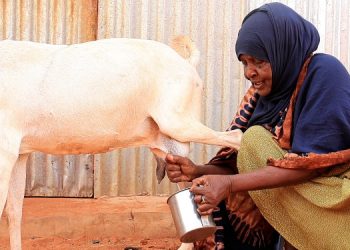
Nadifo Elmi Wasuge, 34, is pleased with the decision she made to sell up her remaining livestock and go into business by opening a small restaurant in Beledweyne.
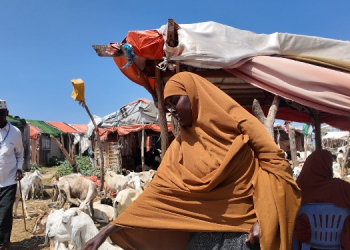
She auctioned off her remaining 28 goats last July, selling them for $414 after visiting the livestock market three days in a row waiting for the best offer. Six months into her restaurant business, she is really glad she made the livelihood change.
“I took a decision to do this because I no longer had a good reason to hold on to the feeble livestock I had left. Those animals could no longer offer a stable livelihood and none of them was strong enough to give birth. I thought of starting a business from selling them off,” Nadifo said.
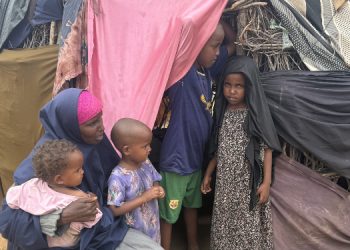
Life now in the town is a far cry from the pastoralist life she was leading in Yasoman village, 30 km east of Bulo-Burte, in Hiran region. The drought hit the family hard and they lost 142 goats. Her husband also died and she remains with five children to care for alone.
Nadifo does the cooking in the restaurant and employs one waiter at $2 a day to serve mainly manual workers who are her regular customers. She buys fresh produce cheaply from the local farms.
The money she makes in the restaurant covers her rent, two children’s school fees, and other basic needs for the family.
This income has transformed her family’s lives. After migrating from the rural area and living on hand-outs from relatives in El-Jalle village on the outskirts of town, she now rents a two-room house in Beledweyne she rents for $20.
Nadifo has enrolled her eldest two children at a local school, with fees of $10 a month for each child.
“I have no plans to return to the previous pastoralist life, as I enjoy a better living standard in the town and I am happy that my children can go to school, which they could not do in the rural areas,” she told Radio Ergo.
In the past three years of drought around 11,500 people have migrated to Beledweyne, according to the records kept by Sheikh Hussein Osman Ali, vice-commissioner of social affairs in Hiran’s administration.
These pastoralist families came from other part of Hiran and neighbouring Bay and Bakol regions. They were forced to join IDP camps in and around Beledweyne. Most need support in order to resume their previous livelihood, if that is their choice, or to take up other ways of life.