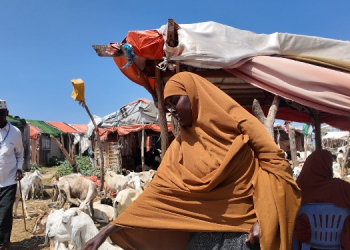
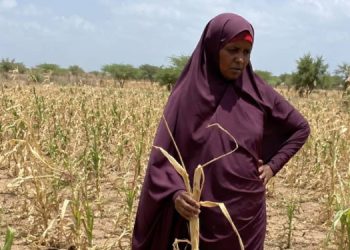
(ERGO) – Ali Hassan Idow, a pastoralist in southern Somalia’s Middle Shabelle, took his seven cows back home from the market on Wednesday as the thin, bony animals attracted no buyers. The same thing happened the week before.
Ali’s family is among 164 nomadic families who migrated from Madahgisi a month ago, walking 40 km towards the river and stopping at Danyerey village, just outside Jowhar
Ali’s livelihood depends on the sale of animals. Now he can only provide for his wife and seven children by purchasing food on credit from stores. His friend who welcomed him to the village gave him 50 kg of beans and took him to food stores to get food on credit, hoping to pay off his debts when he can sell his animals.
Hassan Osman Noor, a broker in Jowhar market, said before October livestock traders were buying animals and fattening them up on rented grassland in order to take them to sell in cities like Mogadishu, Beletweyne and Bosaso. But that business has stopped because the costs of fattening increasingly weak animals in a time of worsening drought led to losses for the traders.
Huundi Ali, a pastoralist, has hired five hectares of grassland near the river for 17m ($708) Somali shillings in Nukay on the outskirts of Jowhar.
Huundi Ali is among some 150 nomads who have migrated around 40 km from Burdere to Jowhar over the past three weeks. He has rented five hectares of grassland near the river at Nukay for 17m Shillings ($708). He has managed to pay seven million ($292) but does not know how he can raise the rest.
“I expected to sell 23 cows in the middle of this month but nobody bought them and I had to take them back,” he told Radio Ergo. He visits the market three times a week hoping to sell his animals.
According to Ahmed Eymoy, head of livestock sales at the market, out of the 1,000 or so animals brought to the market this week only 100 have been sold.