Radio Ergo - Somali Humanitarian News and Information
  • Home
  • Topics
    • Latest Stories
    • IDPS/Refugees
    • Natural Disasters
    • Health
    • Social
    • Food Security
    • Education
    • Agriculture & Livestock
  • Programmes
    • Locust Programme
    • Farming Programme
    • Radio Doctor Programme
    • Women Programme
    • Entertainment Programme
  • About Radio Ergo
  • Contact Us
  • blankEnglish
No Result
View All Result
Radio Ergo - Somali Humanitarian News and Information
  • Home
  • Topics
    • Latest Stories
    • IDPS/Refugees
    • Natural Disasters
    • Health
    • Social
    • Food Security
    • Education
    • Agriculture & Livestock
  • Programmes
    • Locust Programme
    • Farming Programme
    • Radio Doctor Programme
    • Women Programme
    • Entertainment Programme
  • About Radio Ergo
  • Contact Us
  • blankEnglish
No Result
View All Result
Radio Ergo - Somali Humanitarian News and Information
Home AGRICULTURE & LIVESTOCK

FARM LABOURERS OUT OF WORK SINCE RIVER SHABELLE DRIED UP

admin by admin
April 11, 2016
in AGRICULTURE & LIVESTOCK
0
FARM LABOURERS OUT OF WORK SINCE RIVER SHABELLE DRIED UP

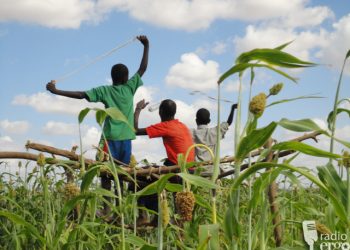
Photo | File photo/Ergo

0
SHARES
Share on FacebookShare on Twitter

(ERGO) – Thousands of farm workers in villages in Afgoye district in Lower Shabelle are out of work because agricultural activities have ceased following the drying up the river Shabelle towards the end of last month.

The chairperson of the farmers’ cooperative society in Lower Shabelle, Hassan Malaaq Hussein, told Radio Ergo that an assessment committee sent to the fields found a total of 27,000 farm workers, mostly women, in 183 villages around the river had lost their jobs.

“They were doing manual jobs such as collecting fruit and vegetables, digging, planting, packing and loading the crops after harvest,” he said.

There were no other sources able to corroborate the estimated numbers of those affected.

Fatumo Noor Osman, a widow with 10 children in Adaliyow village, seven km from Afgoye, told Radio Ergo she had not worked for a month.

“When I was working I used to give my children three meals a day. Now I am cooking only once a day,” she said. Fatumo has no other skills to fall back on. She said she was getting some donated food from neighbours. She used to earn around $1.5 a day doing farm labour.

Mohamud Addow Hassan said his three children had been sent home from their primary school in Balballey village. “I used to work and meet the needs and the education of my children, but now things have changed,” he said

Most of these families earn a hand to mouth existence and even in good times do not manage to save to cover themselves for such times of crisis.

Habibo Mohamed Noor told Radio Ergo she was feeding her eight children by borrowing from shops in Afgoye town, four km from her village Dhajalaq. “I have no other option to manage our lives, I will repay the loans if I go back to my work and things change,” she said. Like many, her hopes rest on the Gu’ rains that have started in parts of Somalia providing enough rainfall to revive local farming.
Previous Post

HASSAN’S TENT FARM BRINGS NEW IDEAS TO GAROWE

Next Post

SOMALI HERDERS SEE BENEFITS OF FARMING IN BUHODLE, TOGDHEER

Related Posts

blank
AGRICULTURE & LIVESTOCK

Farmers in Bari, Puntland, weighed down by drought and unpayable debts

March 4, 2026
blank
AGRICULTURE & LIVESTOCK

Drought and disease kill off pastoralists’ herds in remote Sanag villages

February 17, 2026
Pastoralists with nothing left descend on Lasanod town and surroundings in Sool
AGRICULTURE & LIVESTOCK

Pastoralists with nothing left descend on Lasanod town and surroundings in Sool

February 10, 2026
Somali refugees in Dadaab decry cutting of cash transfers for food
AGRICULTURE & LIVESTOCK

War and drought in Puntland continue to punish displaced families in Bari region

February 3, 2026
Lower Juba farmers get good harvests that help recovery from 2023 river floods
AGRICULTURE & LIVESTOCK

Mudug pastoralists earning good income from farming vegetables

January 27, 2026
blank
AGRICULTURE & LIVESTOCK

Baidoa IDP camps fill up with drought-hit farming and herding families

January 26, 2026
Next Post
SOOL HERDERS WORRIED ABOUT SHEEP DEATHS

SOMALI HERDERS SEE BENEFITS OF FARMING IN BUHODLE, TOGDHEER

FOLLOW US ON FACEBOOK

DAILY PROGRAMMES

IDAACADDA 17-APR-2026

IDAACADDA 17-APR-2026 by Radio Ergo

IDAACADDA 17-APR-2026
Episode play icon
IDAACADDA 17-APR-2026
April 17, 2026
Episode play icon
IDAACADDA 16-APR-2026
April 16, 2026
Episode play icon
IDAACADDA 15-APR-2026
April 15, 2026
Episode play icon
IDAACADDA 14-APR-2026
April 14, 2026
Episode play icon
IDAACADDA 13-APR-2026
April 13, 2026
Search Results placeholder
Radio Ergo Weekly Newsletter
We respect your privacy.
blank
blank
blank

© Copyright 2014 - 2024 Radio Ergo

No Result
View All Result
  • Home
  • Topics
    • Latest Stories
    • IDPS/Refugees
    • Natural Disasters
    • Health
    • Social
    • Food Security
    • Education
    • Agriculture & Livestock
  • Programmes
    • Locust Programme
    • Farming Programme
    • Radio Doctor Programme
    • Women Programme
    • Entertainment Programme
  • About Radio Ergo
  • Contact Us
  • blankEnglish

© Copyright 2014 - 2024 Radio Ergo